


37 products
37 products
Sale
Quick view


|
Notecarriers are companion development boards and designed to make it easy to prototype and deploy IoT solutions with the Notecard. Notecarrier XS is the companion Notecarrier to Starnote and Notecard, providing a platform for prototyping with Satellite failover. Notecarrier XS includes two M.2 Key E connector sockets and internal connectivity for Notecard to Starnote communication. Notecarrier XS also includes JST connectors for LiPo battery and charging support, as well as Qwiic and ESLOV ports for connecting Notecard to host MCUs over I2C. |
Included is Flexible LTE, Wi-Fi, or GPS/GNSS Antenna. If you require a dual LTE/GPS antenna, we recommend adding on the flexible LTE+GPS antenna (or you may choose to use your own preferred antenna).
Notecarriers require a Notecard to function. The Notecarrier XS is compatible with Notecard Cellular, Notecard Cellular (Legacy), Notecard Cell+WiFi, and Notecard WiFi. See the Notecards section for more details or get started with a Starnote Starter Kit.
Key Notecarrier XS Specs
-
Notecard M.2 Key E connector socket and mounting screw receptacle.
-
Starnote M.2 Key E connector socket and mounting screw receptacle.
-
USB-C port to power Notecarrier and provide a USB Serial command interface to Notecard.
-
External Nano-SIM slot for use of an optional secondary SIM.
-
2-Pin JST PH connectors for LiPo battery power and charging support.
-
1 Qwiic/StemmaQT I2C port for attaching external peripherals.
-
1 ESLOV port for attaching the Notecard to Arduino MKR or PRO boards.
Additional Resources


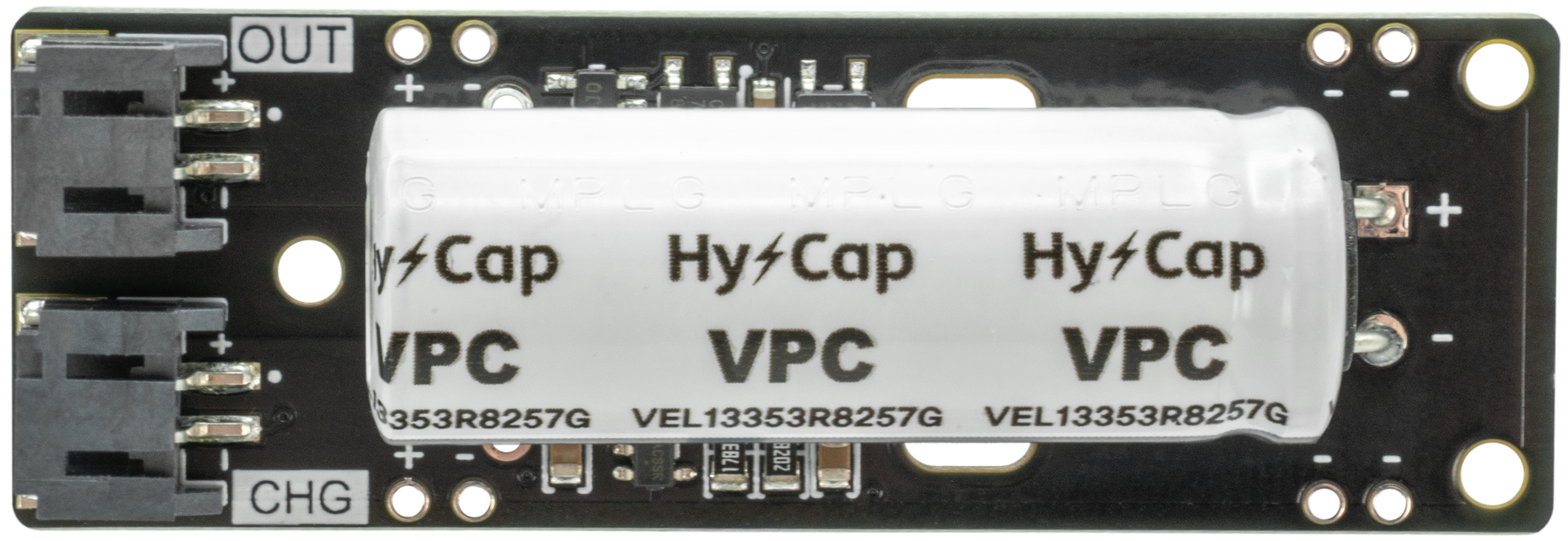
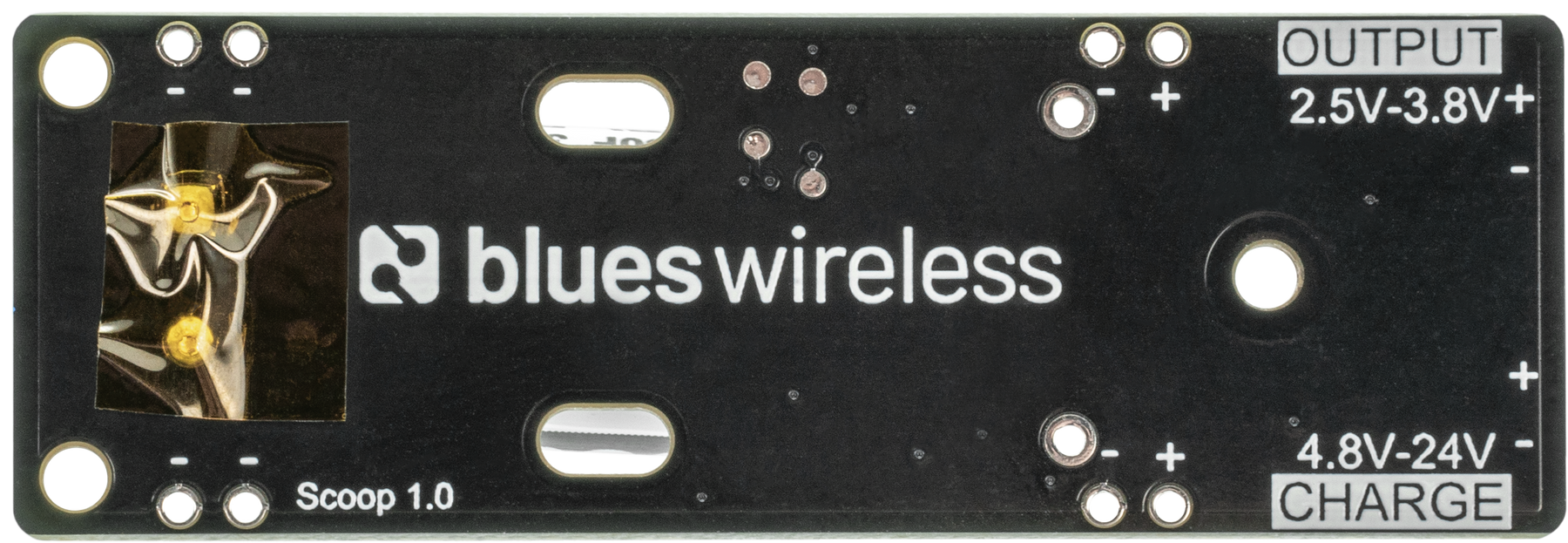
Scoop is designed to provide backup power and facilitate power management in a variety of applications. It features a large capacitor, two JST connectors, and four pairs of header pins for flexible connectivity.
The Scoop component can be powered via its charge connector or a pair of header pins, which accepts an input voltage of 4.8V-24V. The output connector can deliver a voltage in the range of 2.5V-3.8V, making it suitable for powering a wide range of devices.
Based on internal testing, Scoop is able to power up to approximately 20 on/off cellular connection cycles, or up to 240 minutes of a single cellular connection. Results may vary depending on the type of wireless coverage in the area and the amount and frequency of data being sent.
Key Scoop Specs
- Capacitor: Lithium Ion 250F 3.8V -10% +30%
- Connectors: JST PH 2P M SIDE ENTRY Surface Mount
- Charge Connector: Accepts 4.8V-24V
- Output Connector: Outputs 2.5V-3.8V
- Header Pins: 4 pairs of header pins
Additional Resources


|
The Starnote for Iridium Starter Kit contains everything you need to add global, pole-to-pole satellite failover to any cellular or WiFi Notecard-based solution. Powered by Iridium's Low Earth Orbit (LEO) constellation, Starnote for Iridium delivers coverage anywhere on the planet, including open ocean and the most remote locations where terrestrial and regional satellite networks can't reach. Starnote for Iridium bundles 10KB of satellite uplink and downlink data into the cost of the device itself. When your application needs to fall back to satellite, it's ready — no activation required, no recurring cost. Starnote for Iridium is designed to challenge the assumption that global satellite connectivity demands expensive hardware and mandatory monthly fees, even when devices aren't actively transmitting. |
As an accessory, Starnote for Iridium is not a Notecard; it is meant to be used with Notecard, and works with Notecard Cellular and Notecard Cell+WiFi. From a developer’s point of view, Starnote for Iridium operates as an additional available radio access technology (RAT) for Notecard. Use the same JSON API to specify when Notecard should fallback to Satellite, and Notecard handles communications between itself and Starnote for Iridium.
Notecarrier XI is the companion Notecarrier to Starnote for Iridium and Notecard, providing a platform for prototyping with Satellite failover. Notecarrier XI includes two M.2 Key E connector sockets and internal connectivity for Notecard to Starnote communication. Notecarrier XI also includes JST connectors for solar, LiPo battery and charging support, as well as Qwiic ports for connecting Notecard to host MCUs over I2C.
Kit Contents
-
1x Starnote for Iridium
-
1x Notecard Cell+WiFi (LTE Cat 1 bis | Global)
-
1x Notecarrier XI
-
1x Iridium Helical Satellite Antenna
-
1x 5000 mAh LiPo battery
Key Starnote for Iridium Specs
-
JSON-based API for configuration and communication with Notecard
-
M.2 Key E connector for board-to-board usage
-
On-board u.Fl connector for attaching the included, pre-certified Iridium helical antenna
-
NTN-capable satellite modem with zero-touch configuration
-
Bundled with 10KB of satellite data from Iridium, enough to send 1 message per day for 6 months. Additional data is priced $0.00075/byte, with a minimum of 10 bytes per transmitted or received satellite data packet, billed monthly in arrears.
Key Notecarrier XI Specs
- Notecard M.2 Key E connector socket and mounting screw receptacle.
- Starnote M.2 Key E connector socket and mounting screw receptacle.
-
USB-C port to power Notecarrier and provide a USB Serial command interface to Notecard.
-
External Nano-SIM slot for use of an optional secondary SIM.
-
2-Pin JST PH connectors for solar, LiPo battery power and charging support.
-
1 Qwiic/StemmaQT I2C port for attaching external peripherals.
-
On-board cellular antenna from Ignion
Additional Resources


|
Add satellite failover to any cellular or WiFi Notecard-based solution for $54 with data and no monthly fees. Starnote for Skylo is an affordable satellite IoT backup device that, much like the Notecard does with cellular, includes satellite uplink and downlink data with the cost of the device, in partnership with Skylo. Starnote offers a JSON-based programing interface consistent with Notecard, providing developers with access to yet another major Radio Access Technology (RAT) using straightforward, accessible semantics. |
Starnote for Skylo is a Notecard accessory that is intended to disrupt the conventional wisdom that using satellite requires a high hardware investment (in the hundreds of dollars), and monthly device fees even when devices aren’t communicating with satellites.
As an accessory, Starnote is not a Notecard. It is meant to be used with Notecard, and works with Cellular, Cell+WiFi, and WiFi. From a developer’s point of view, Starnote for Skylo operates as an additional available RAT for the Notecard. A developer uses the Notecard API to specify in Notecard’s mode of operations when to fallback to Satellite, and Notecard handles communications between itself and Starnote.
Available Variations
-
Onboard Satellite and GPS Antennas
-
u.FL Connectors with Provided External Antennas
Key Starnote for Skylo Specs
-
JSON-based API for configuration and communication with Notecard
-
M.2 Key E connector for board-to-board usage and a six-pin JST for wire-to-board applications
-
Available with onboard satellite and GPS antennas or external via u.FL connectors
-
NTN-capable satellite modem with zero-touch configuration
-
Bundled with 10KB of satellite data from Skylo, enough to send 1 message per day for 6 months. Additional data is priced $0.00075/byte, with a minimum of 50 bytes per transmitted or received satellite data packet, billed monthly in arrears.
-
No satellite provider subscriptions, fees, or monthly minimums apply.
Additional Resources


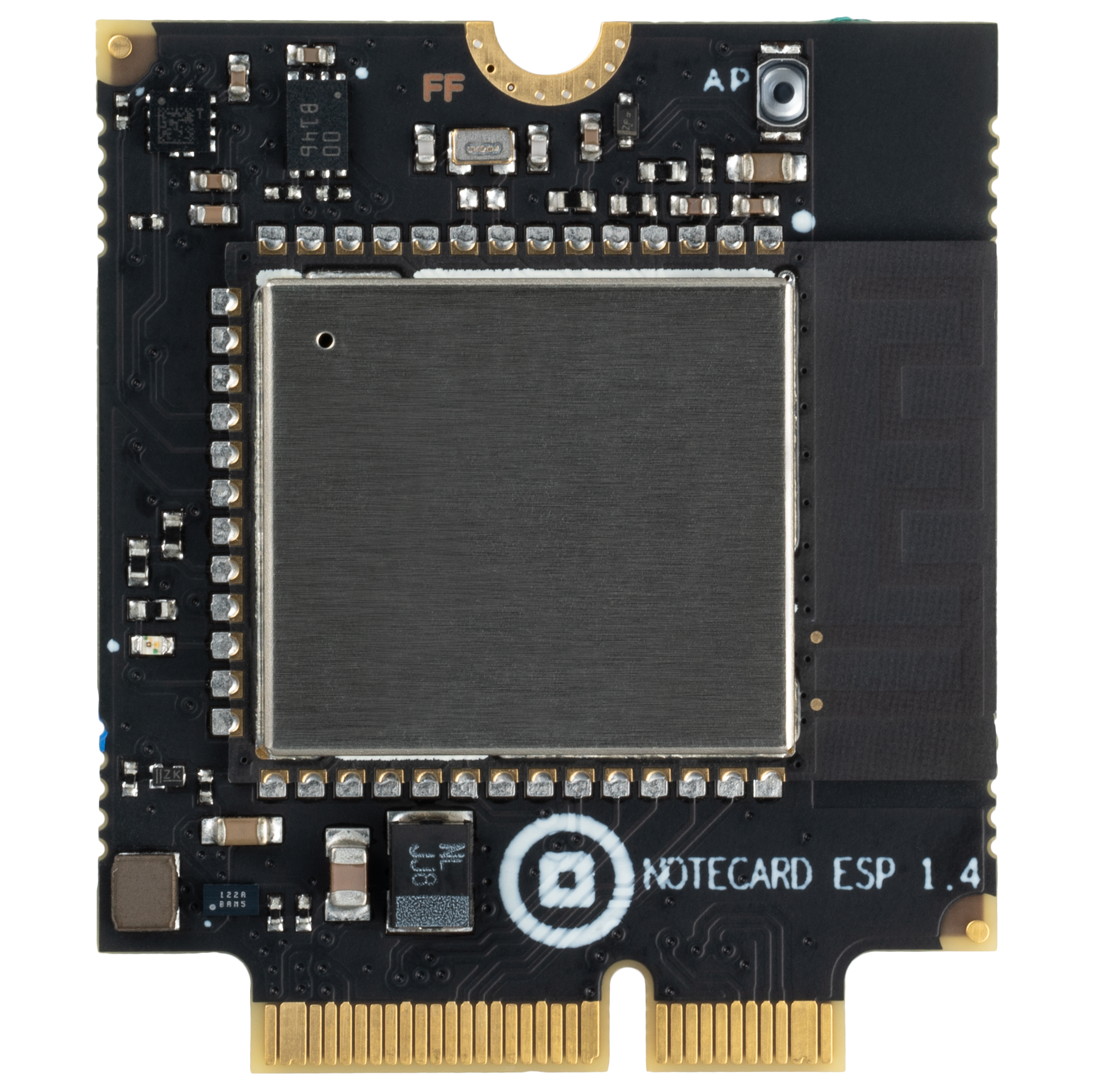

The Starnote for Skylo Starter Kit contains everything you need to add satellite failover to any cellular or WiFi Notecard-based solution. Starnote includes satellite uplink and downlink data with the cost of the device in partnership with Skylo. Starnote for Skylo also provides a JSON-based programing interface consistent with Notecard, providing developers with access to yet another major Radio Access Technology (RAT) using straightforward, accessible semantics. And with 10KB of data included and no monthly fees, it's an affordable satellite IoT backup device!
Starnote for Skylo is a Notecard accessory that is intended to disrupt the conventional wisdom that using satellite requires a high hardware investment (in the hundreds of dollars) of monthly device fees even when devices aren’t communicating with satellites.
As an accessory, Starnote for Skylo is not a Notecard; it is meant to be used with Notecard, and works with Cellular, Cell+WiFi, and WiFi. From a developer’s point of view, Starnote for Skylo operates as an additional available RAT for Notecard. A developer uses the Notecard API to specify in Notecard’s mode of operations when to fallback to Satellite, and Notecard handles communications between itself and Starnote for Skylo.
Kit Contents
-
1x Starnote for Sklyo u.FL
-
1x Notecard WiFi
-
1x Notecarrier XS
-
1x Satellite Antenna
-
1x GPS Antenna
- 1x 500 mAH LiPo battery
The Starnote for Skylo (Antenna) accessory is an optional add on available for purchase with the Starter Kit.
Key Starnote for Skylo Kit Specs
-
JSON-based API for configuration and communication with Notecard
-
M.2 Key E connector for board-to-board usage and a six-pin JST for wire-to-board applications
-
External via u.FL connectors
-
NTN-capable satellite modem with zero-touch configuration
-
Bundled with 10KB of satellite data from Skylo, enough to send 1 message per day for 6 months. Additional data is priced $0.00075/byte, with a minimum of 50 bytes per transmitted or received satellite data packet, billed monthly in arrears.
Additional Resources


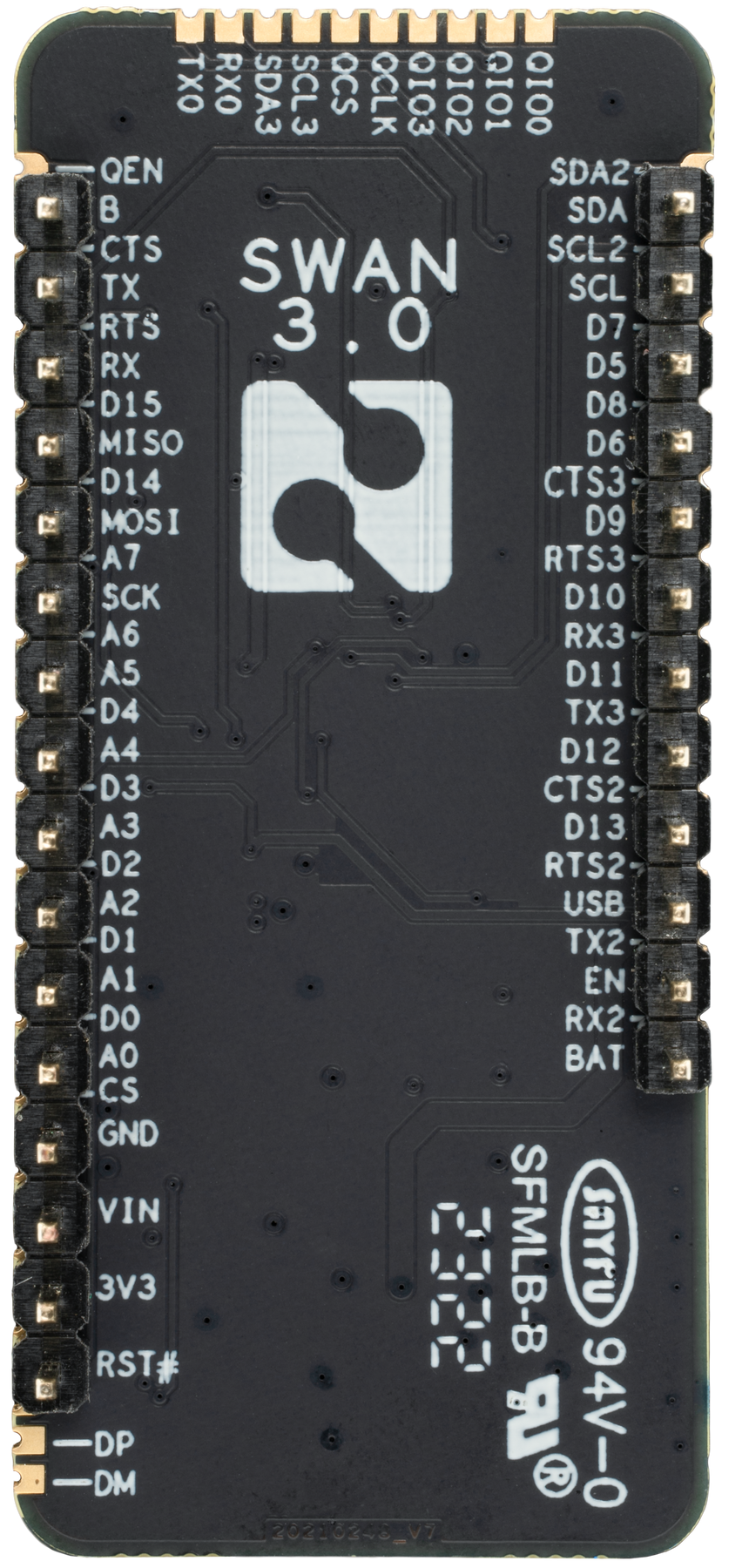
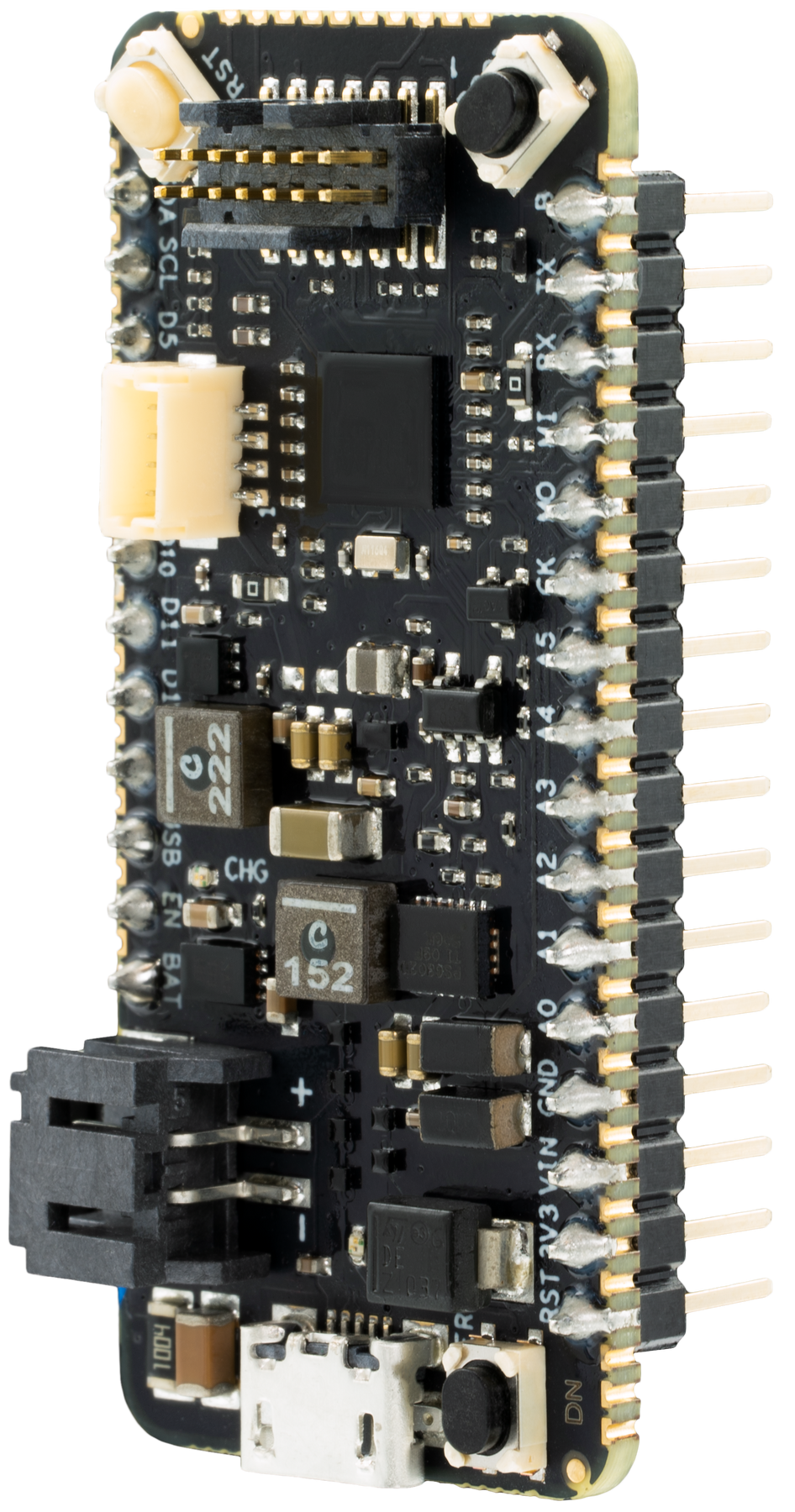
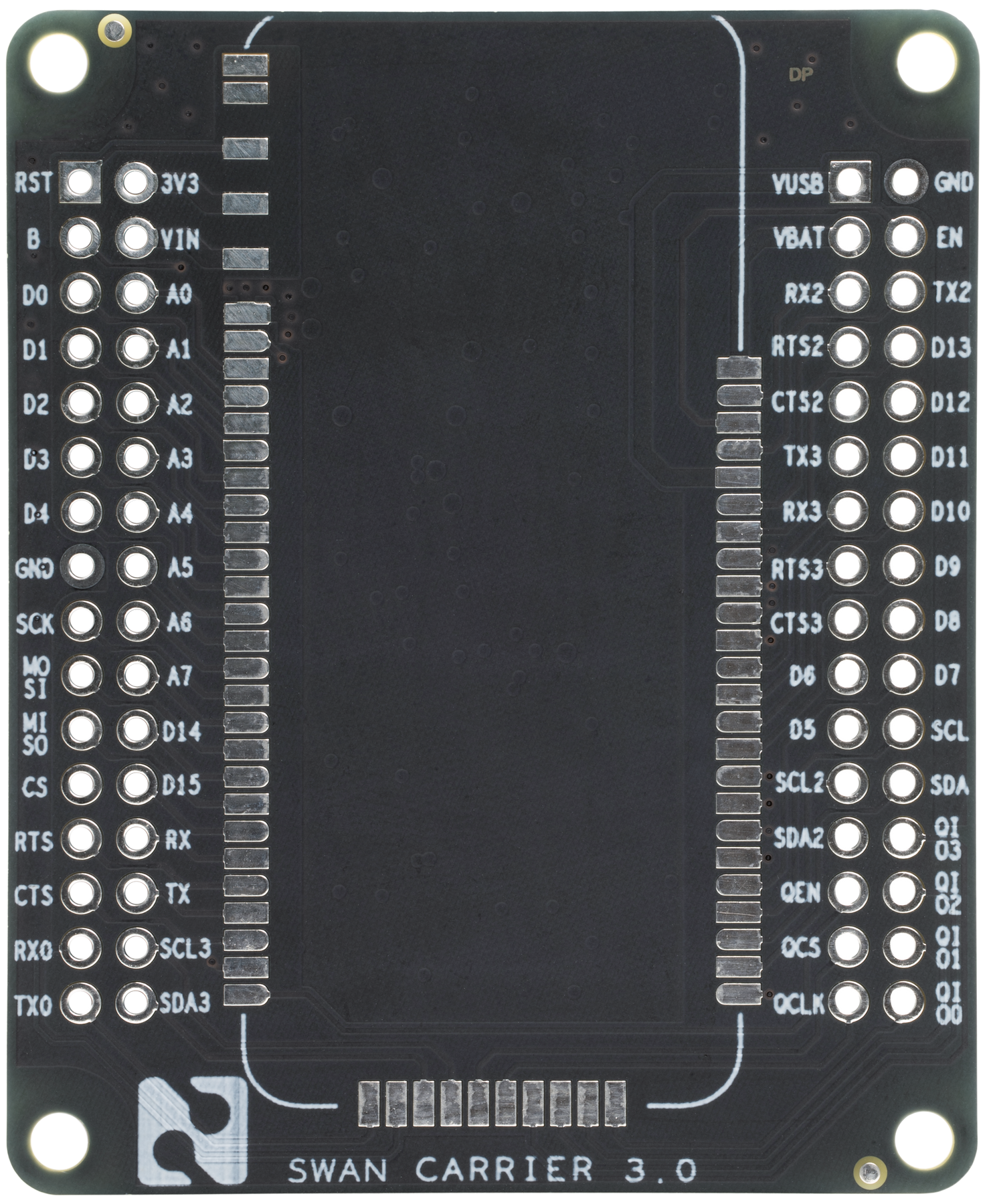
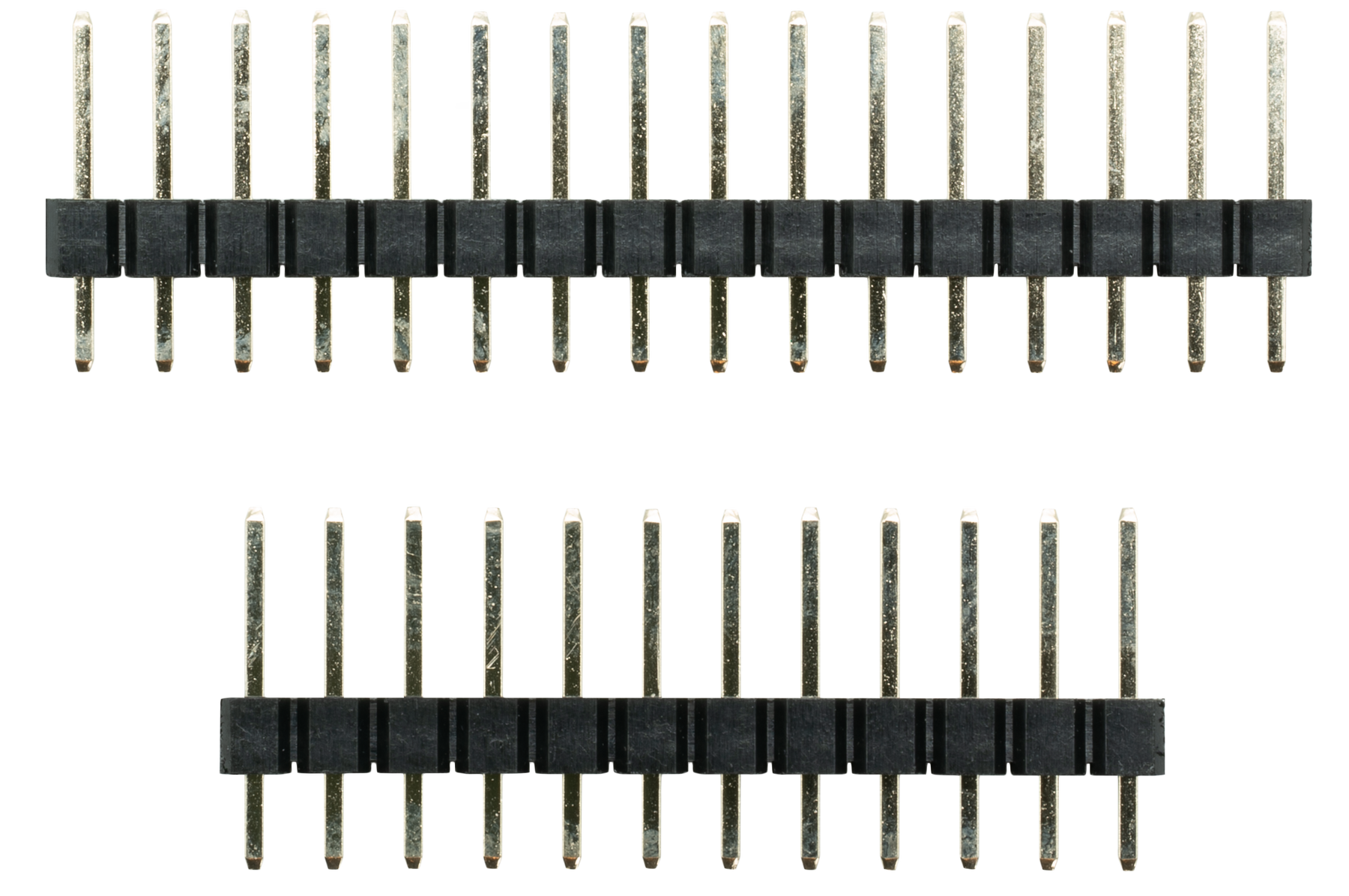
Swan is a low-cost, embeddable STM32L4-based microcontroller designed to accelerate the development and deployment of battery-powered IoT solutions. It is especially useful for applications requiring a large amount of memory or a high degree of I/O expandability at an affordable cost, such as edge inferencing and remote monitoring.
Uniquely for Feather-compatible boards, we designed Swan to satisfy developers’ needs spanning from early prototyping to high-volume deployment. Developers can use Swan in conjunction with Adafruit’s myriad sensors and FeatherWing-compatible carriers. Due to its novel design, for high-volume deployment the low-cost Swan can also be soldered directly to a parent PCB integrating those sensors, utilizing the full range of Swan’s I/O capabilities.
The board has three independent power options – USB, battery, or line power – and provides a software-switchable 2 Amp regulator for powering external sensors. When operating in its low-power operating mode, the entire Swan board draws only 8uA while retaining all of its memory, making it ideal for battery-powered devices.
Swan features support for C/C++, Arduino, and CircuitPython, and includes a CORTEX Debug connector, enabling the use of advanced development environments such as Visual Studio Code, IAR, and STM32CubeIDE. Be sure to add an STLNK-V3MINIE to get that step-debugging goodness!
Swan is available as a standalone board or in a Blues Starter Kit that includes Notecard and Notecarrier.
Available Variations
Key Swan Specs
- Ultra low-power Arm Cortex-M4 core clocked at 120Mhz.
- STM32L4R5-based microcontroller.
- 2MB of flash and 640KB of RAM.
- Castellated-edge access to 55 GPIO ports including:
- 8 analog
- 16 digital
- 4x I2C, 3x SPI
- USB OTG full speed
- 1x 14-channel DMA
- tRNG
- 12-bit ADC, 2 x 12-bit DAC
- Low-power RTC, and CRC calculation peripherals
- Qwiic/StemmaQT connector.
- Support for Notecard Outboard Firmware Update.
Additional Resources


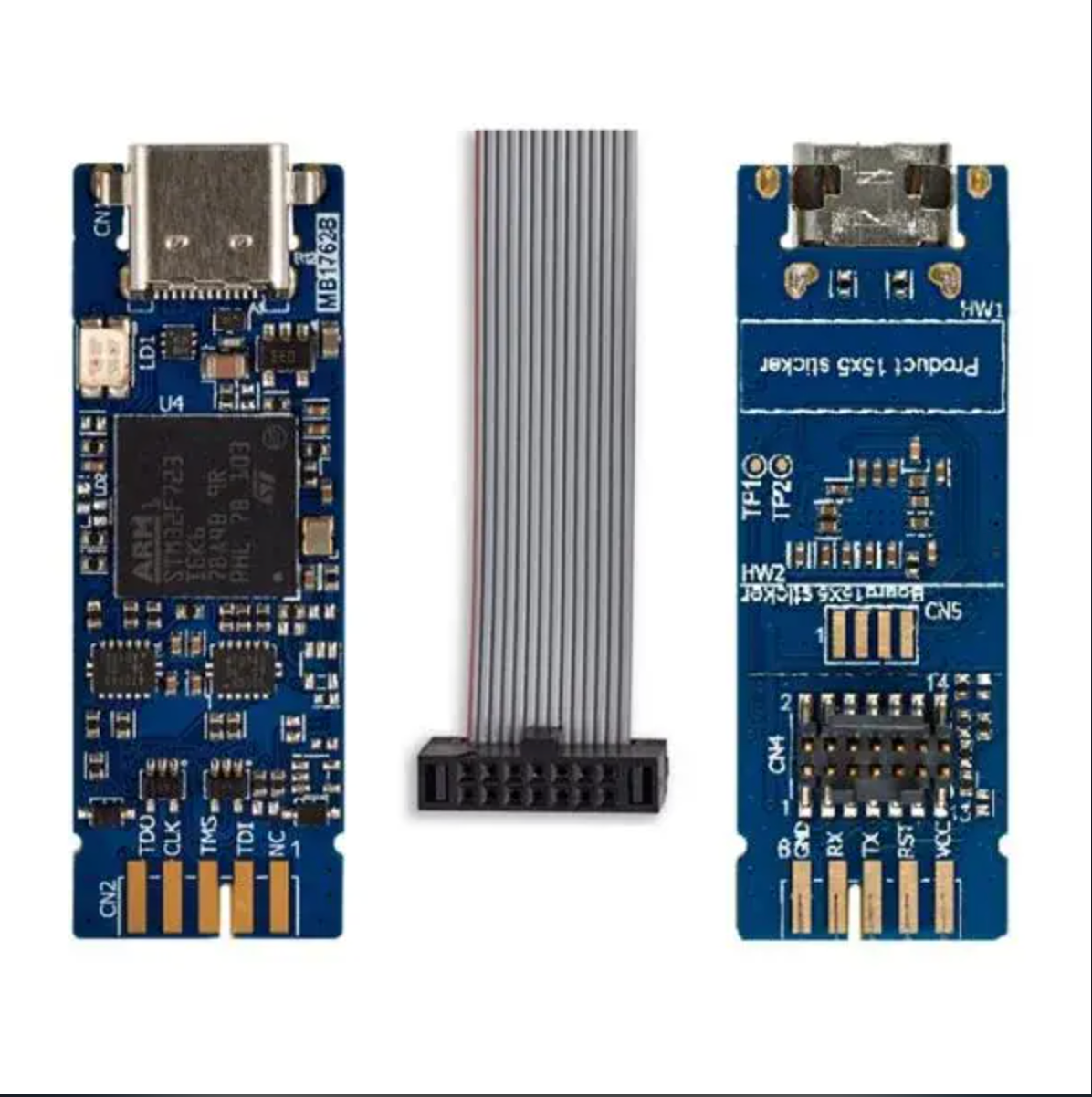
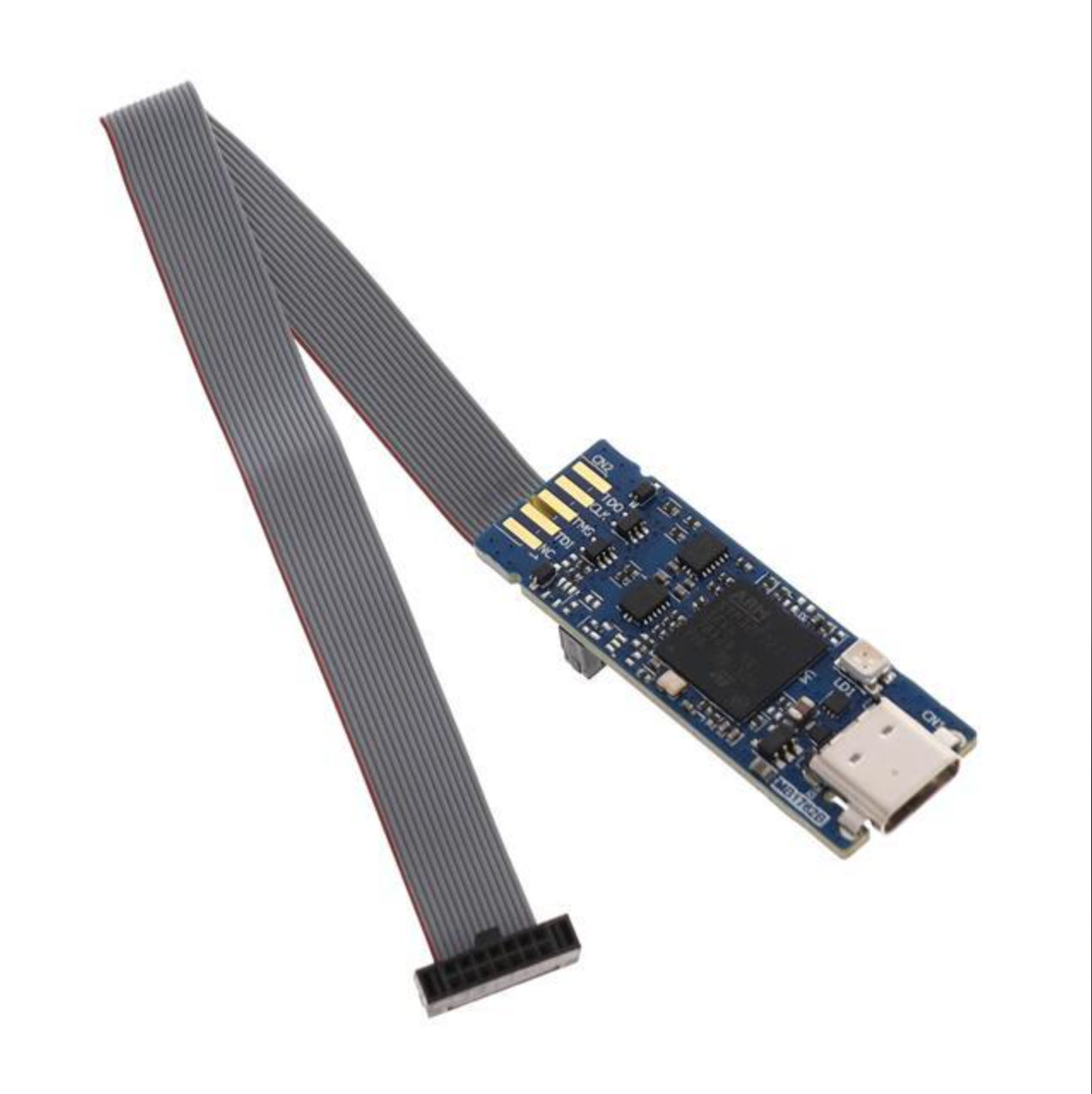
Program and debug your STM32-based Swan apps in VSCode, IAR, and STM32CubeIDE!
STLINK-V3MINIE is a stand-alone debugging and programming tiny probe for STM32 microcontrollers like Blues Swan. The JTAG/SWD interfaces are used to communicate with any STM32 microcontroller located on an application board. STLINK-V3MINIE also provides a Virtual COM port interface for the host PC to communicate with the target microcontroller through one UART.
NOTE: A USB-C cable is required to use the STLINK-V3MINIE (not included).

Add wireless connectivity to your micro PLC projects with Blues Notecard! The Wireless for OPTA adds Cellular and WiFi connectivity, powered by Notecard and Notehub.
The Wireless for OPTA Expansion Module can quickly add Cellular and WiFi capability to any Opta PLC inexpensively with a pluggable module that uses the standard AUX expansion port on an Arduino® Opta® or a Finder OPTA®, and can be daisy-chained with up to 8 other Expansion modules. The Opta communicates with the Expansion and its Notecard via I2C and can leverage the Blues' note-arduino library for configuring Notecard and its backhaul.
Wireless for OPTA Key Specs
- 12 to 24 V Supply Voltage
- Cellular and WiFi communication powered by Notecard (LTE Cat 1 North America or LTE Cat 1 EMEA) including 500 MB of data and 10-years of service with no activation fees or monthly commitments.
- Network backhaul via Blues Notehub cloud service, with support for AWS, Azure, GCP and dozens of other cloud services.
- Communication test button and Neopixel for connectivity status.
- USB C port for direct Notecard programming and debugging.
- External SIM slot for bringing your own Cellular connectivity.
- Power outage detection and notification via an integrated Lithium-Ion Capacitor.
Available Variants
"Arduino" and "Opta" are registered trademarks of Arduino SA.
Finder OPTA® is a registered trademark of Finder S.p.A.