


37 products
37 products
Sale
Quick view


|
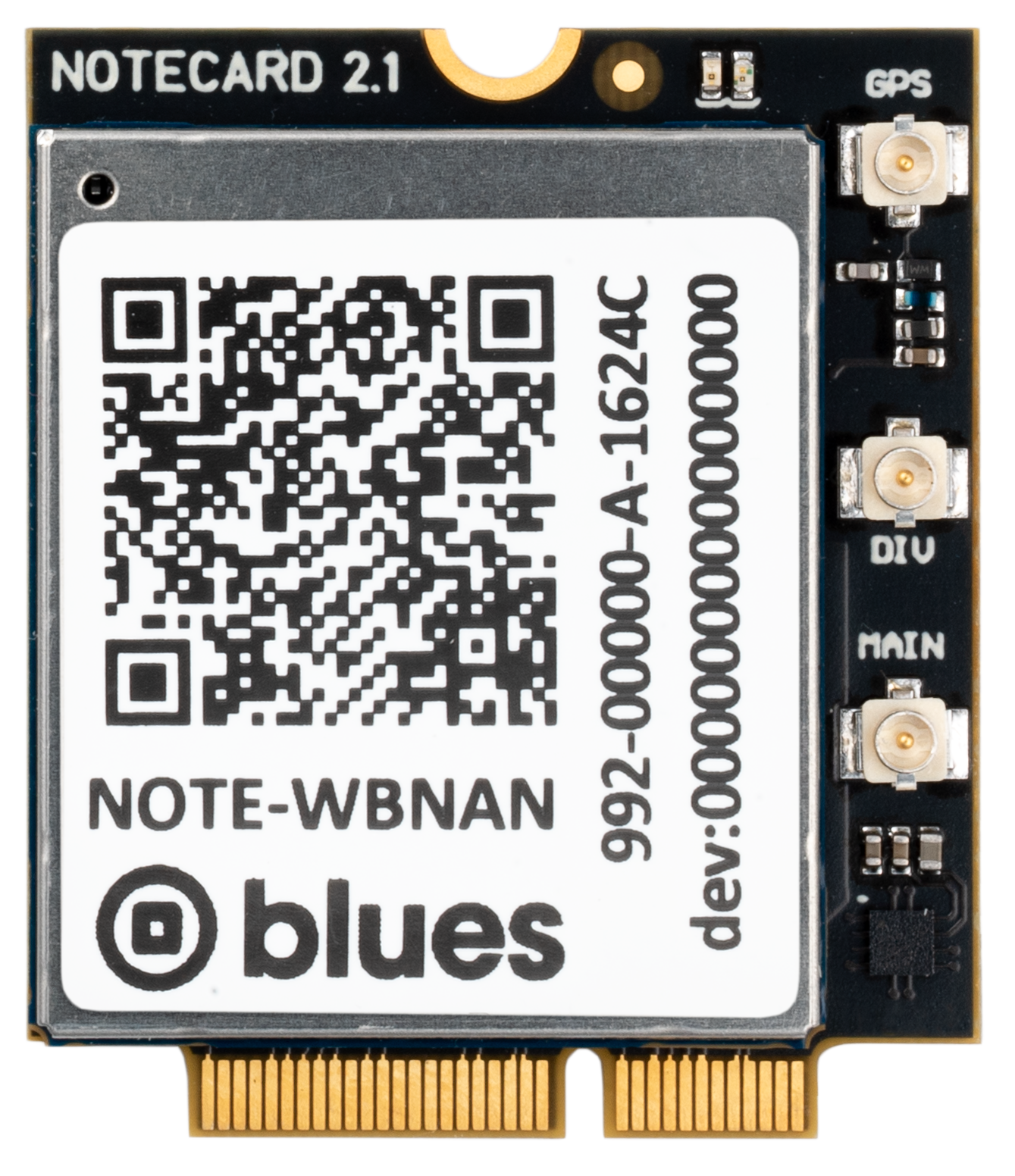
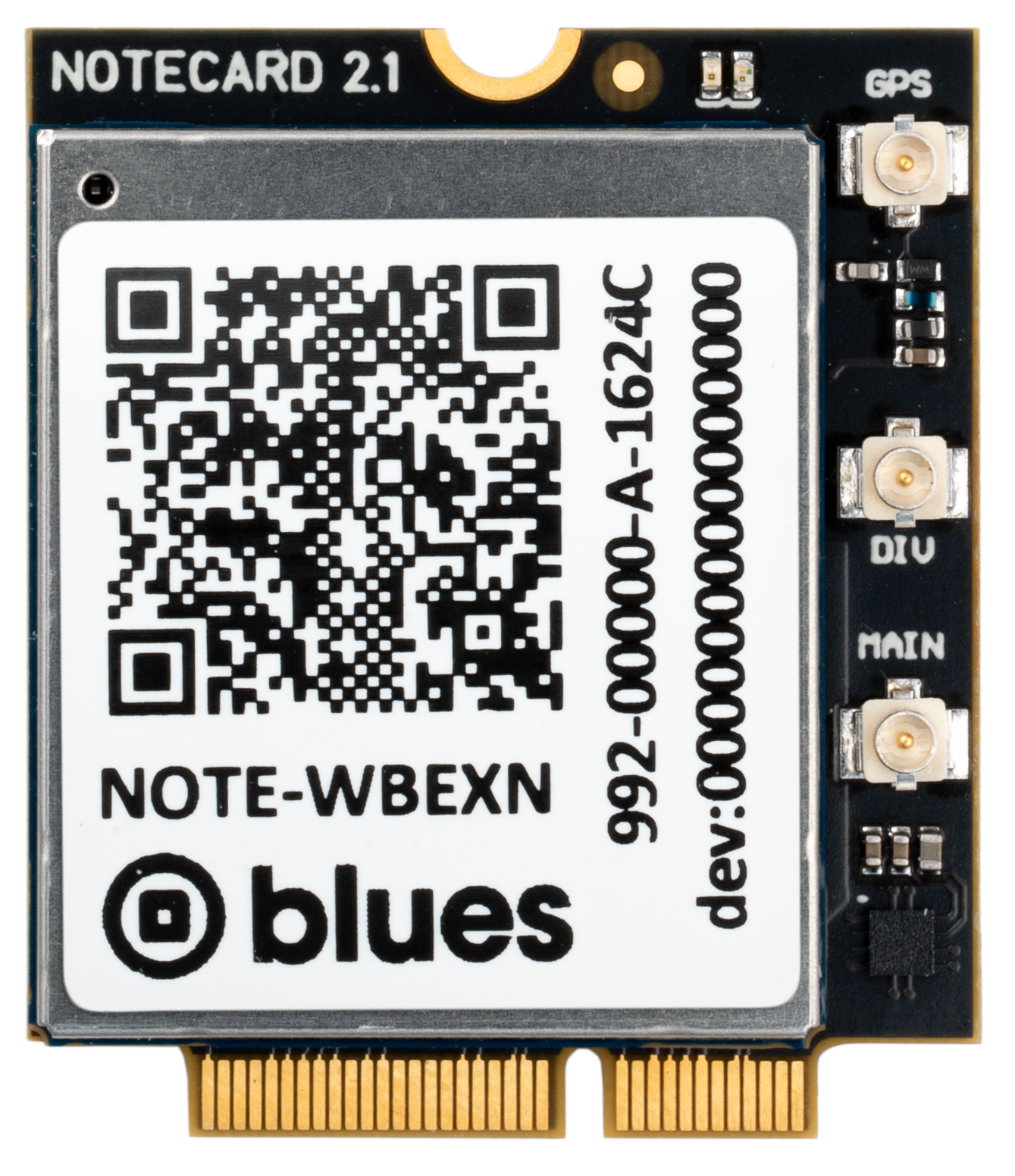
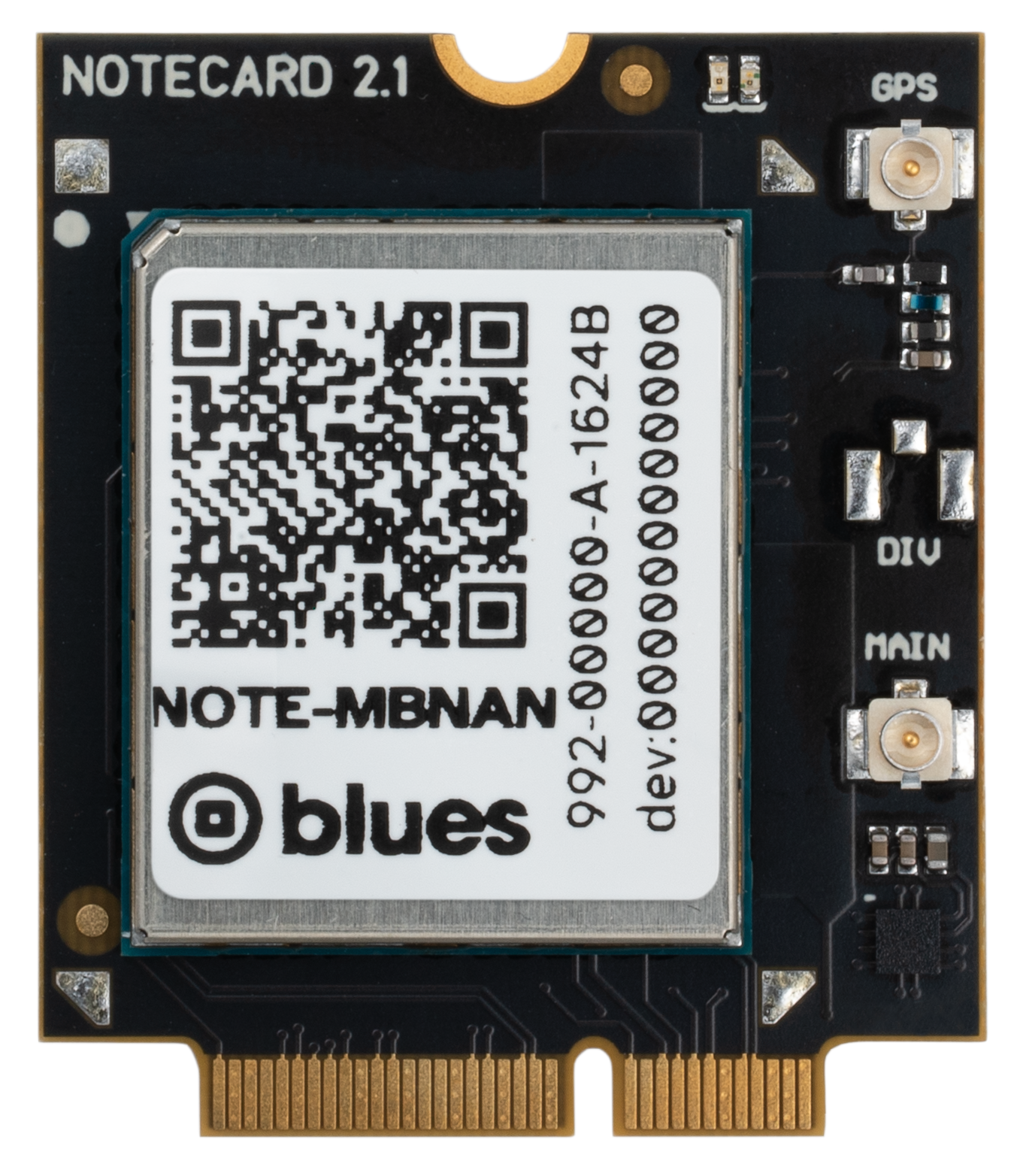
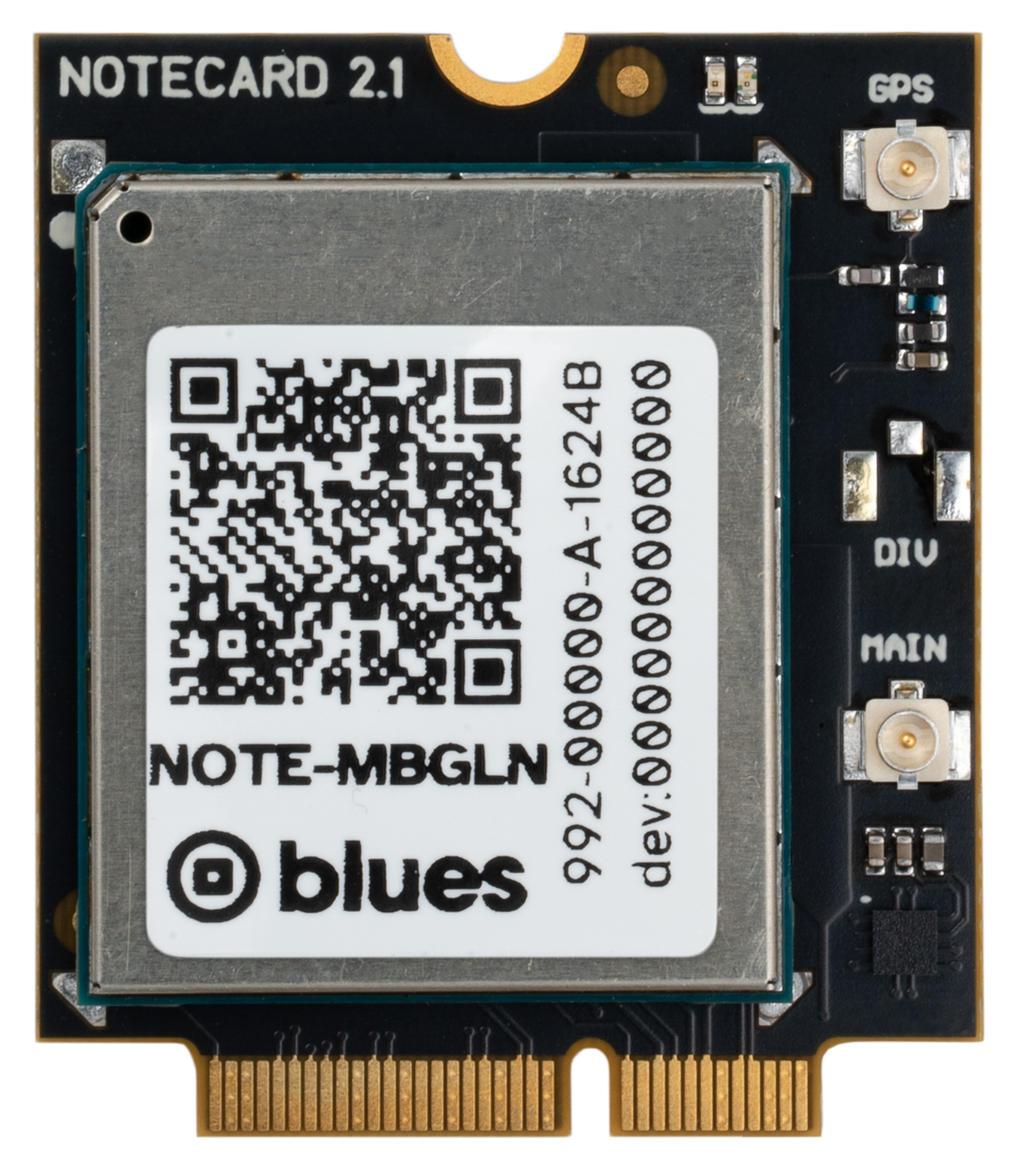
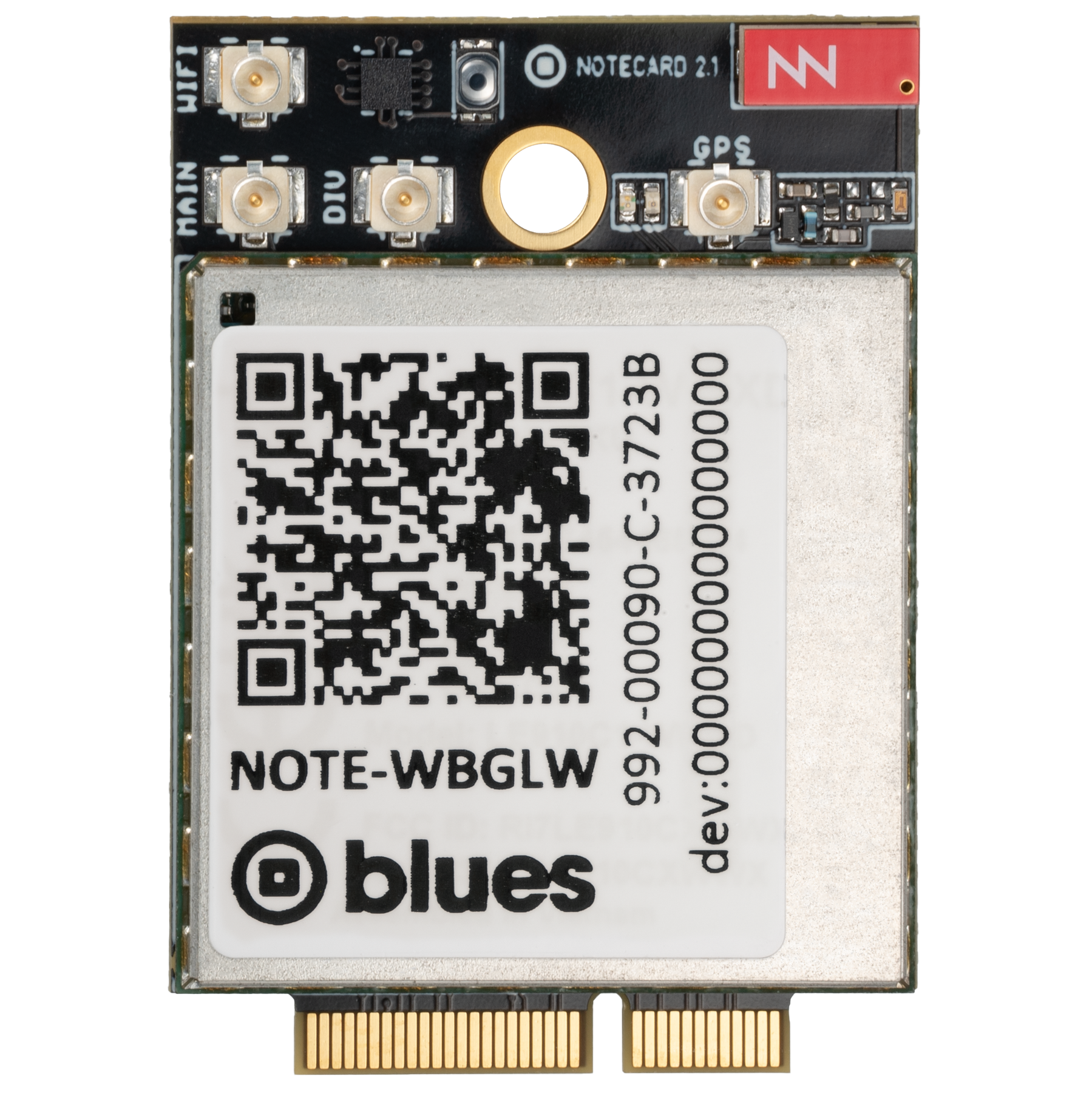
Featuring an improved STM32 MCU, an onboard dual SIM capability, and an improved Low IQ power supply, Notecard Cellular is a drop-in functional replacement for original "Green" Notecard at a lower price. Notecard is a device-to-cloud data pump that reduces the complexity of building connected solutions with secure, reliable cellular. As an embeddable system on module (SoM), Notecard can be used with any microcontroller for both greenfield and retrofit projects using your own design, or one of our custom designed Notecarriers. |
With just two lines of code you can send data to the cloud in minutes, with no complex device registration or provisioning required. With a powerful JSON-based API, you can program Notecard over USB, or control it from your preferred microcontroller or single-board computer using one of our open-source firmware libraries. Connect from your preferred host to Notecard using Serial or I2C.
Notecard is designed to work with a cloud service for ingesting and processing device data. Notehub provides secure device connectivity, project and fleet management, and simple routing to 3rd party cloud services.
Notecard is meant to be used with a Notecarrier. Notecard Cellular is compatible with all available Notecarriers. See the Notecarriers section for more details or get started with a Blues Starter Kit.
Ordering Note: Notecards purchased from the Blues Shop will ship with a Developer Firmware Release version pre-installed. If you require a Long-Term Support (LTS) version for a Shop order, please contact Sales for assistance.
Available Variations
- Wideband (LTE Cat 1)
- LTE Cat-1 for North America (Datasheet and Country Coverage)
- LTE Cat-1 for EMEA (Datasheet and Country Coverage)
- Midband (LTE Cat 1 bis)
- LTE Cat-1 bis for North America (Datasheet and Country Coverage)
- LTE Cat-1 bis for Global (Datasheet and Country Coverage)
Key Notecard Cellular Specs
-
Includes a secure element with a factory-installed ECC P-384 certificate, provisioned at chip manufacture.
-
Integrated GPS and accelerometer.
-
Designed to operate on battery power, be "always-on" to maintain time and location, while typically drawing less than 8µA@5V, when idle.
-
Bundled with 10 years of service and 500MB of cellular data.
-
No cellular subscriptions, SIM fees, or monthly minimums apply.
-
PTCRB Certified Module.
Additional Resources




|
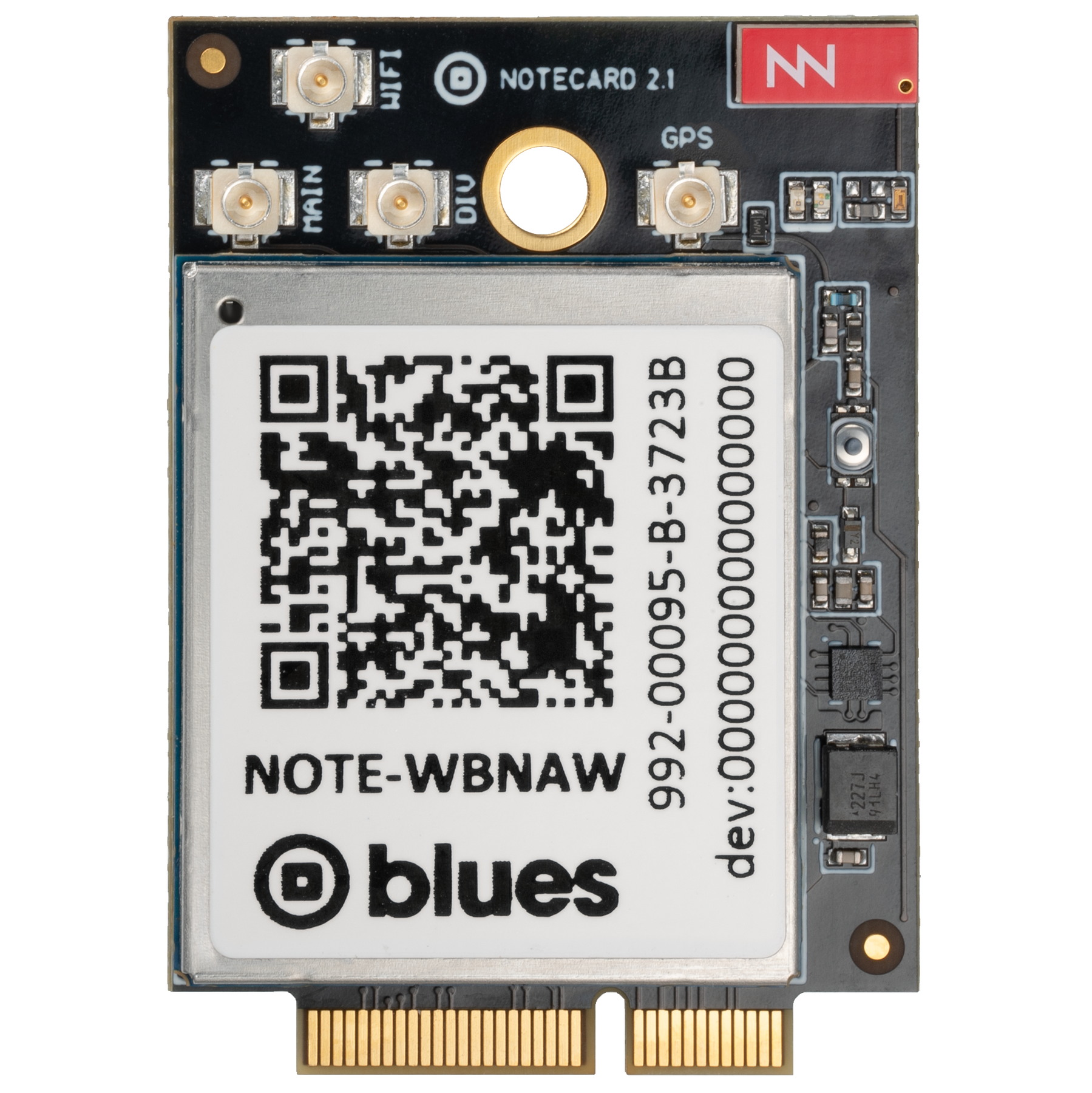
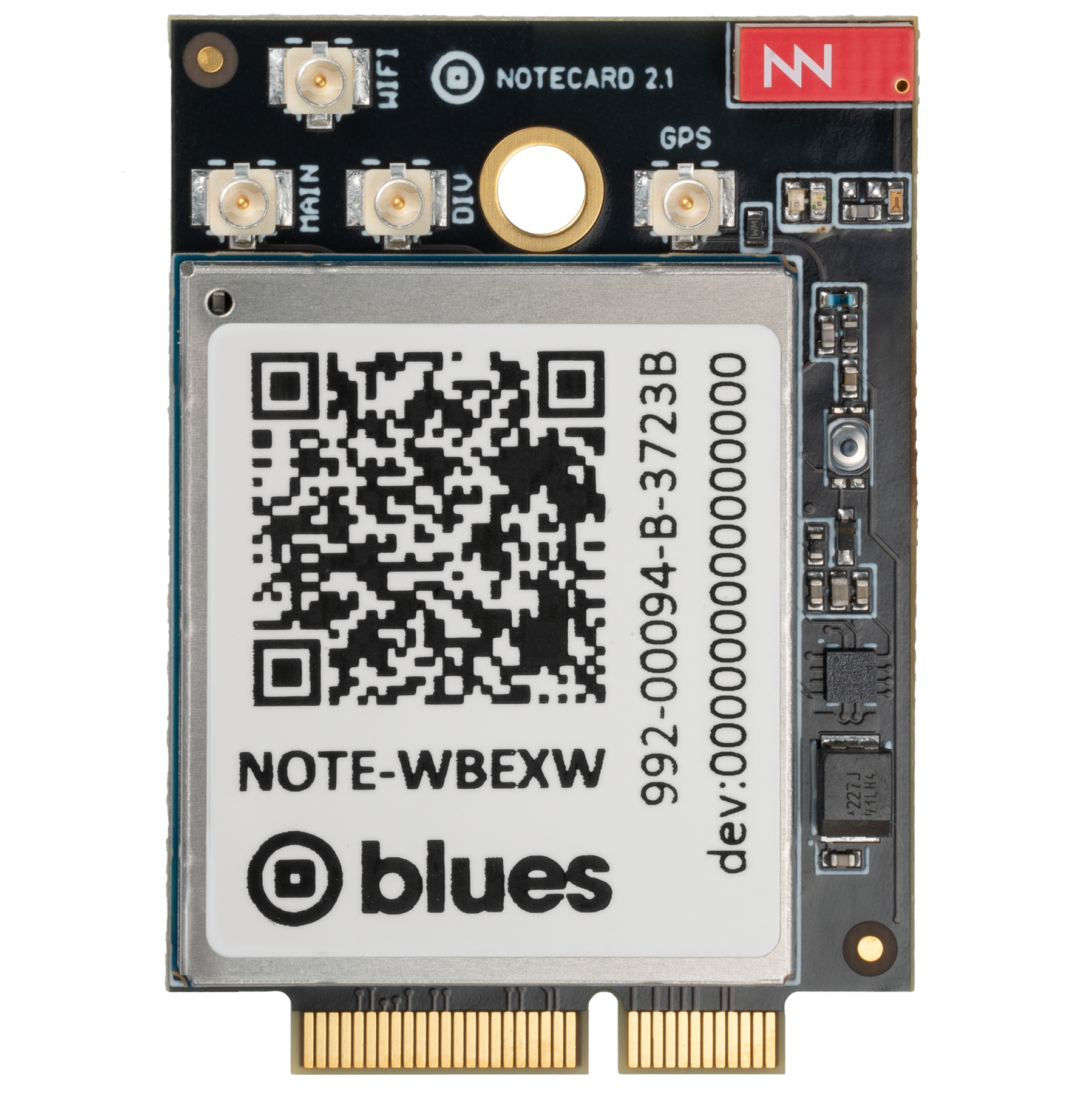
Notecard is a device-to-cloud data pump that reduces the complexity of building connected solutions with secure, reliable cellular and WiFi. As an embeddable system on module (SoM), Notecard can be used with any microcontroller for both greenfield and retrofit projects using your own design, or one of our custom designed Notecarriers. Notecard Cell+WiFi allows for dynamic fallback from WiFi to cellular and indoor location tracking via WiFi Triangulation. |
Notecard Cell+WiFi (MB) adds an LTE Cat 1 bis Notecard to complement our existing Notecard SKUs. This "Midband" Notecard provides a step-up in performance from 2G/3G, Cat-M, and NB-IoT without a big step-up in price.
With just two lines of code you can send data to the cloud in minutes, with no complex device registration or provisioning required. With a powerful JSON-based API, you can program Notecard over USB, or control it from your preferred microcontroller or single-board computer using one of our open-source firmware libraries. Connect from your preferred host to Notecard using Serial or I2C.
Notecard is designed to work with a cloud service for ingesting and processing device data. Notehub provides secure device connectivity, project and fleet management, and simple routing to 3rd party cloud services.
Notecard is meant to be used with a Notecarrier. Notecard Cell+WiFi is compatible with all available Notecarriers. See the Notecarriers section for more details or get started with a Blues Starter Kit.
Ordering Note: Notecards purchased from the Blues Shop will ship with a Developer Firmware Release version pre-installed. If you require a Long-Term Support (LTS) version for a Shop order, please contact Sales for assistance.
Available Variations
- Wideband (LTE Cat 1)
- LTE Cat 1 and 2.4 GHz WiFi for Global Use (Datasheet and Country Coverage)
- LTE Cat 1 and 2.4 GHz WiFi for North America (Datasheet and Country Coverage)
- LTE Cat 1 and 2.4 GHz WiFi for EMEA (Datasheet and Country Coverage)
- Midband (LTE Cat 1 bis)
- LTE Cat 1 bis and 2.4 GHz WiFi for Global Use (Datasheet and Country Coverage)
- LTE Cat 1 bis and 2.4 GHz WiFi for North America (Datasheet and Country Coverage)
Key Notecard Cell+WiFi Specs
- Includes a secure element with a factory-installed ECC P-384 certificate, provisioned at chip manufacture.
- Integrated GPS and accelerometer.
- Designed to operate on battery power, be "always-on" to maintain time and location, while typically drawing less than 8µA@5V, when idle.
- Bundled with 10 years of service and 500MB of cellular data.
- No cellular subscriptions, SIM fees, or monthly minimums apply.
- PTCRB Certified Module.
- Includes a 2.4 GHz WiFi module with WiFi to Cellular fallback capabilities.
Additional Resources


|
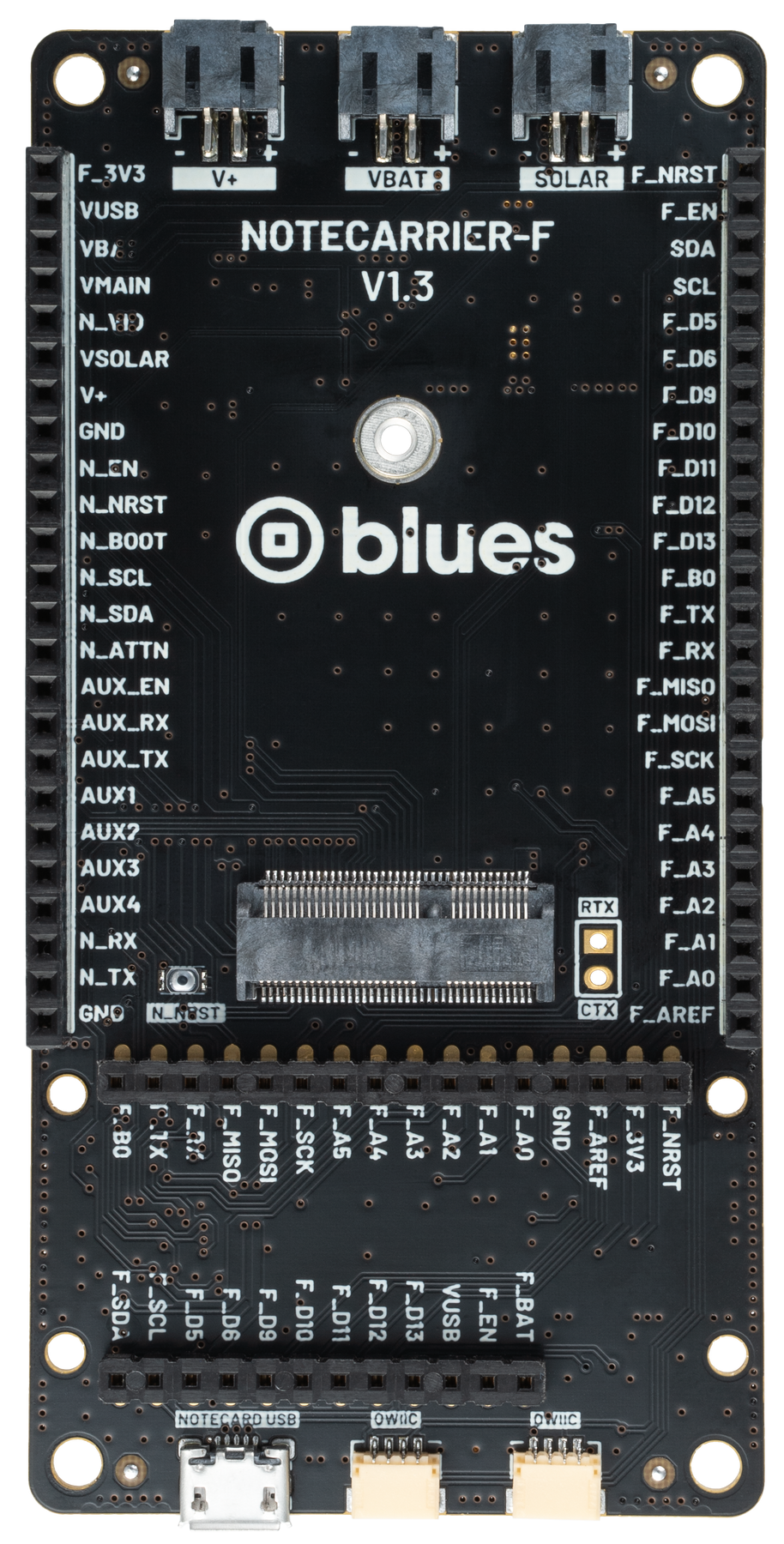
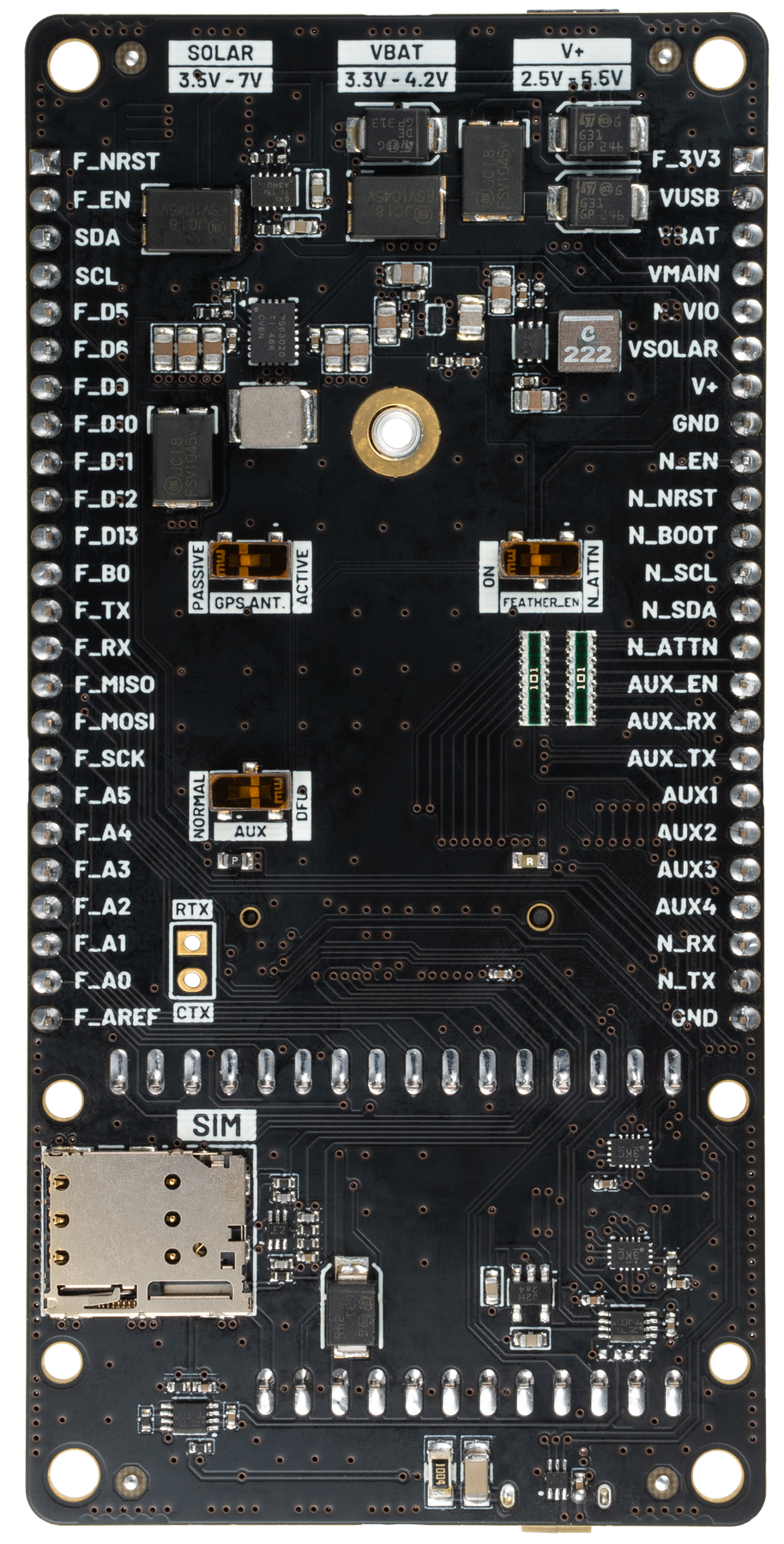
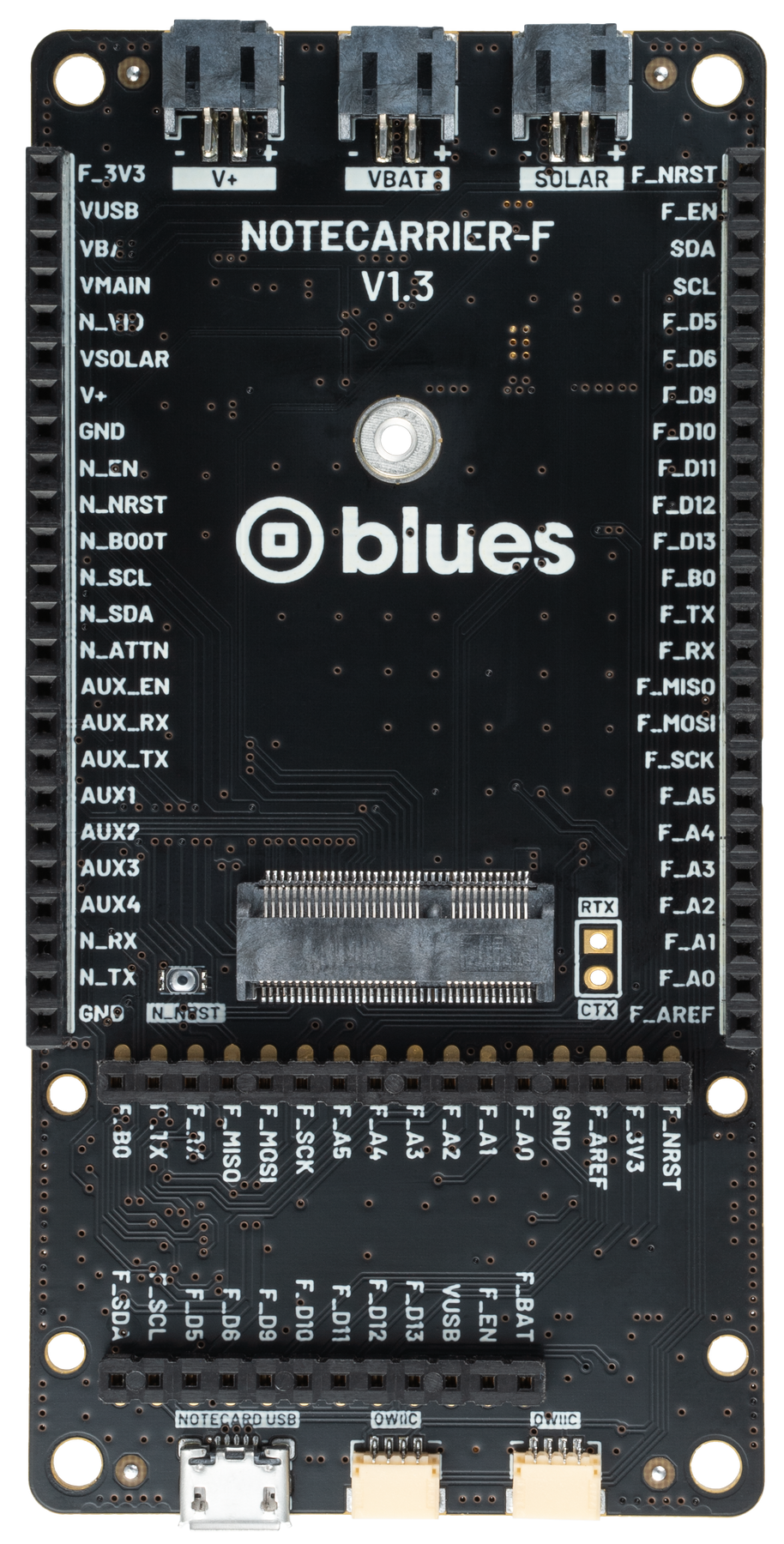
Notecarriers are companion development boards designed to make it easy to prototype and deploy IoT solutions with the Notecard. Notecarrier F is a carrier board designed for quick prototyping with Adafruit Feather-based microcontrollers. It can be used with any Feather-compatible device and includes Qwiic ports for connecting I2C peripherals. |
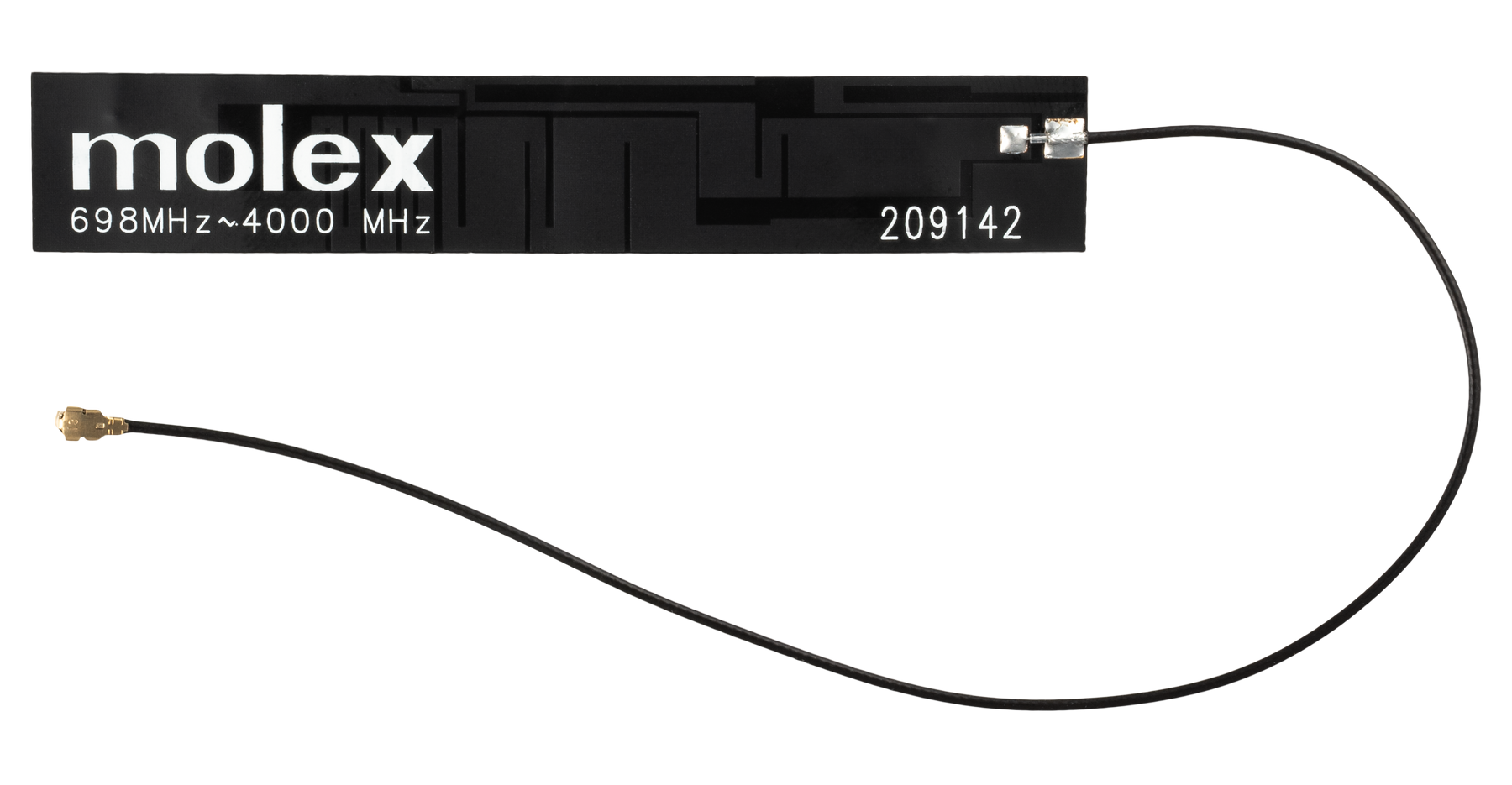
Included is a flexible Molex 209142 antenna for use with either LTE or GPS. If you require a dual LTE/GPS antenna, we recommend adding on the flexible LTE+GPS antenna (or you may choose to use your own preferred antenna).
Notecarrier F also features a switch to enable Notecard Outboard Firmware Update. This capability supports "over the air" firmware updates and does not involve firmware running on the host MCU directly.
Notecarriers require a Notecard to function. Notecarrier F is compatible with all available Notecards. See the Notecards section for more details or get started with a Blues Starter Kit.
Available Variations
- Notecarrier F with Pre-soldered Headers (Datasheet)
- Notecarrier F with Loose Header Pins (Datasheet)
Key Notecarrier F Specs
- Adafruit Feather-compatible header socket.
- Breadboard-compatible Notecard 13-pin header.
- Breadboard-compatible 24-pin Adafruit Feather breakout header.
- Notecard M.2 Key E connector socket and mounting screw receptacle.
- Micro USB port to power Notecarrier and provide a USB Serial command interface to Notecard.
- External Nano-SIM slot for use of an optional secondary SIM.
- 2 Qwiic/StemmaQT I2C ports for attaching external peripherals.
- JST PH connector for a LiPo battery.
- JST PH connector for a solar panel.
- JST PH connector for V+.
- JST SH 3.3V I2C connector.
- Battery slide switch to disconnect battery when not in use.
- Front and back pin labels.
Additional Resources


|
Notecarriers are companion development boards designed to make it easy to prototype and deploy IoT solutions with the Notecard. Notecarrier A is designed for building battery-powered wireless applications, exposes all of the pins of Notecard via the provided headers, and has onboard cellular and GPS/GNSS antennas. |
Notecarriers require a Notecard to function. Notecarrier A is now compatible with all available Notecards. See the Notecards section for more details or get started with a Blues Starter Kit.
Available Variations
- Notecarrier A with Loose Header Pins (Datasheet)
Key Notecarrier A Specs
- Onboard cellular and GPS/GNSS antennas by Ignion.
- Notecard M.2 Key E connector socket and mounting screw receptacle.
- USB C port to power Notecarrier and provide a USB Serial command interface to Notecard.
- JST connector for a LiPo battery.
- JST connector for a solar panel.
- 2 Qwiic/StemmaQT I2C ports for attaching external peripherals.
- External Nano-SIM slot for use of an optional secondary SIM.
Additional Resources


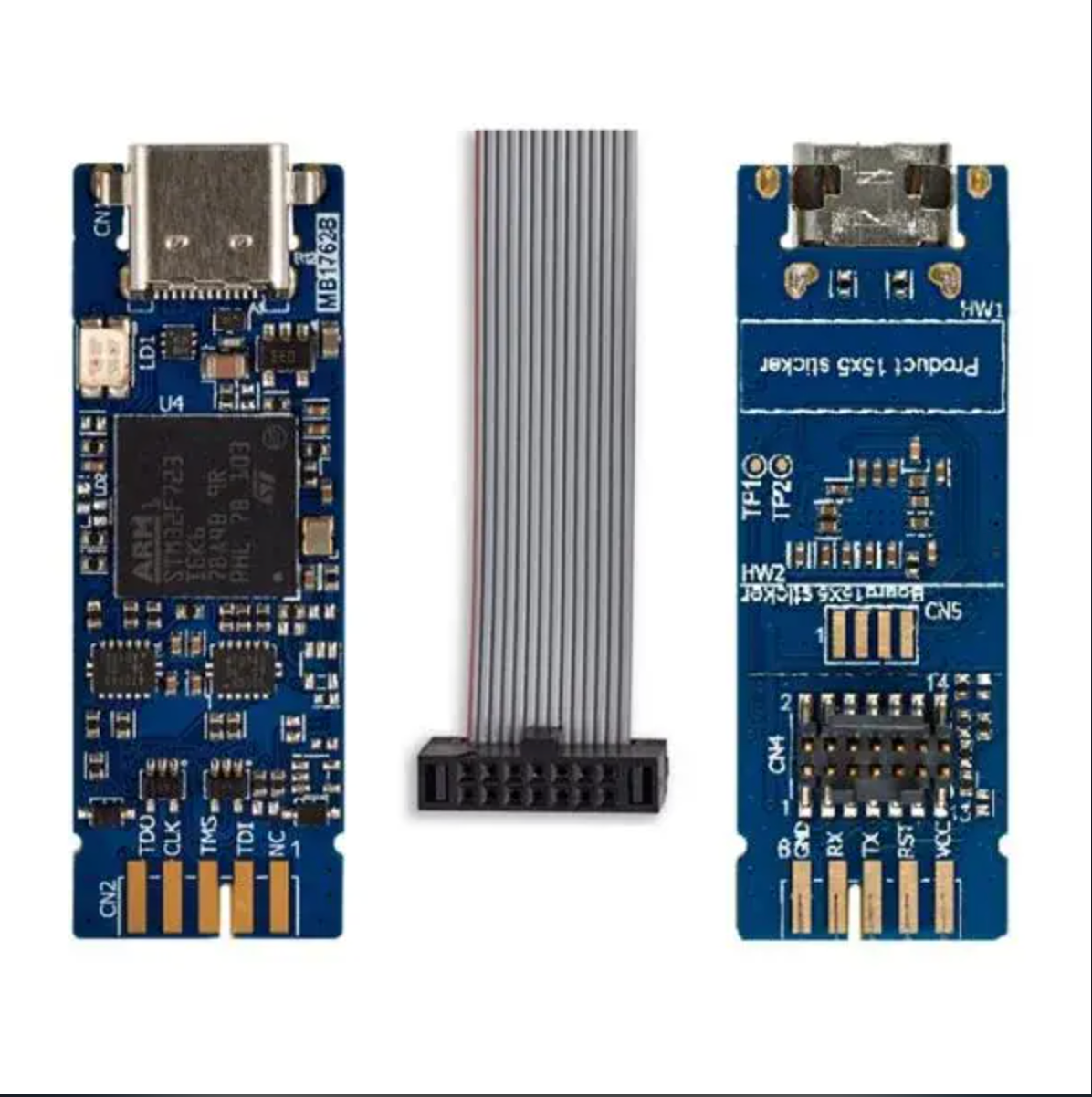
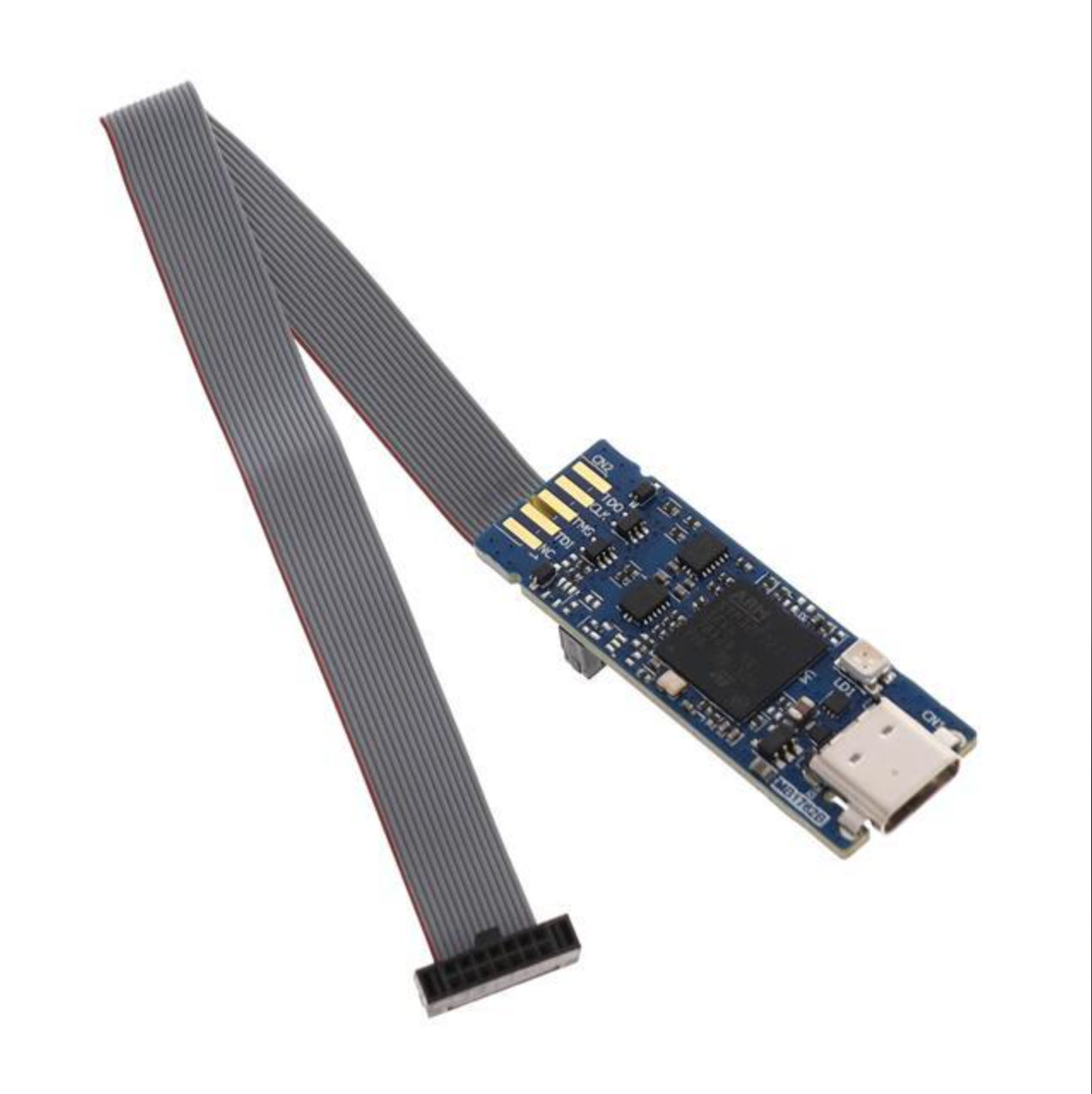
Program and debug your STM32-based Swan apps in VSCode, IAR, and STM32CubeIDE!
STLINK-V3MINIE is a stand-alone debugging and programming tiny probe for STM32 microcontrollers like Blues Swan. The JTAG/SWD interfaces are used to communicate with any STM32 microcontroller located on an application board. STLINK-V3MINIE also provides a Virtual COM port interface for the host PC to communicate with the target microcontroller through one UART.
NOTE: A USB-C cable is required to use the STLINK-V3MINIE (not included).


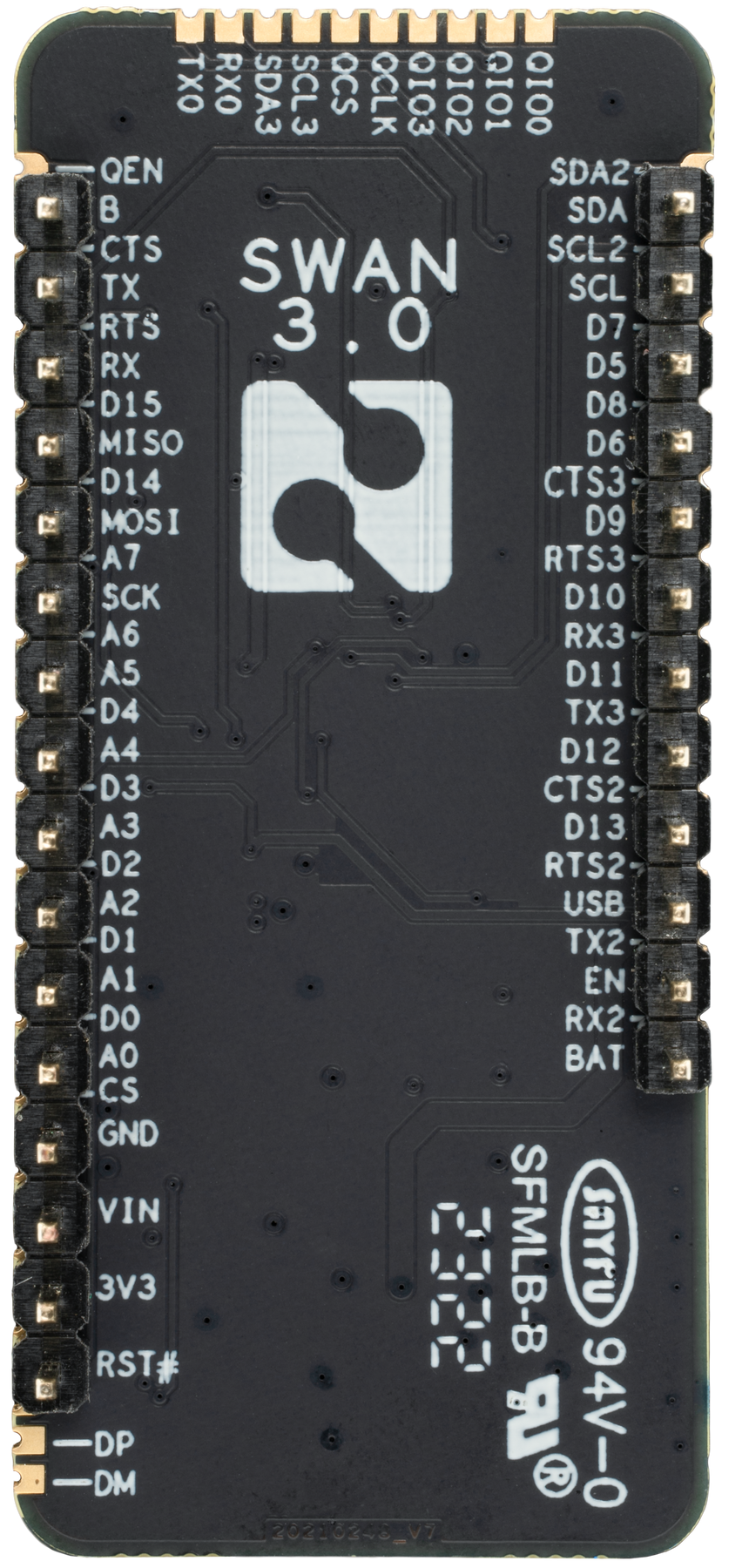
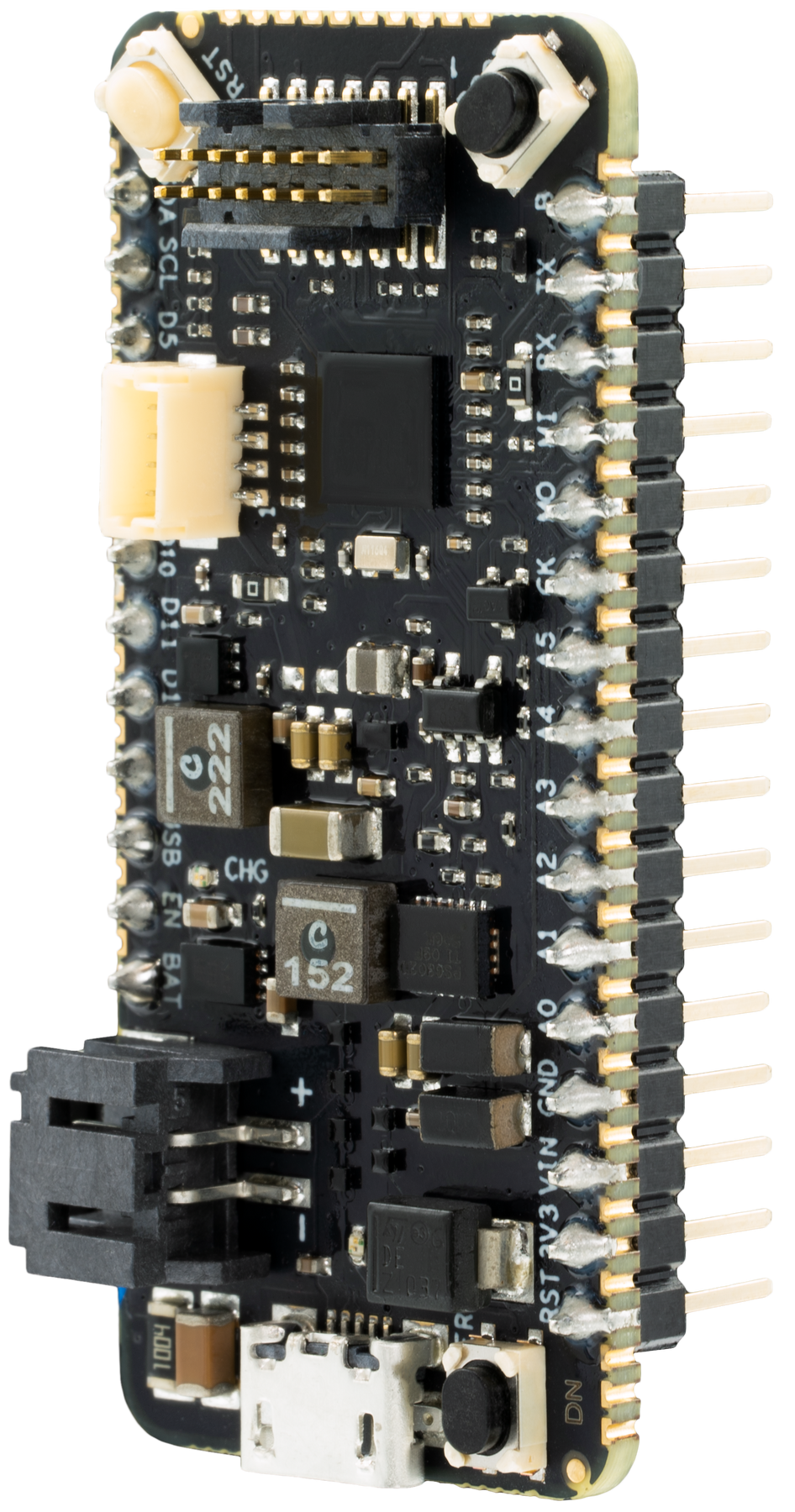
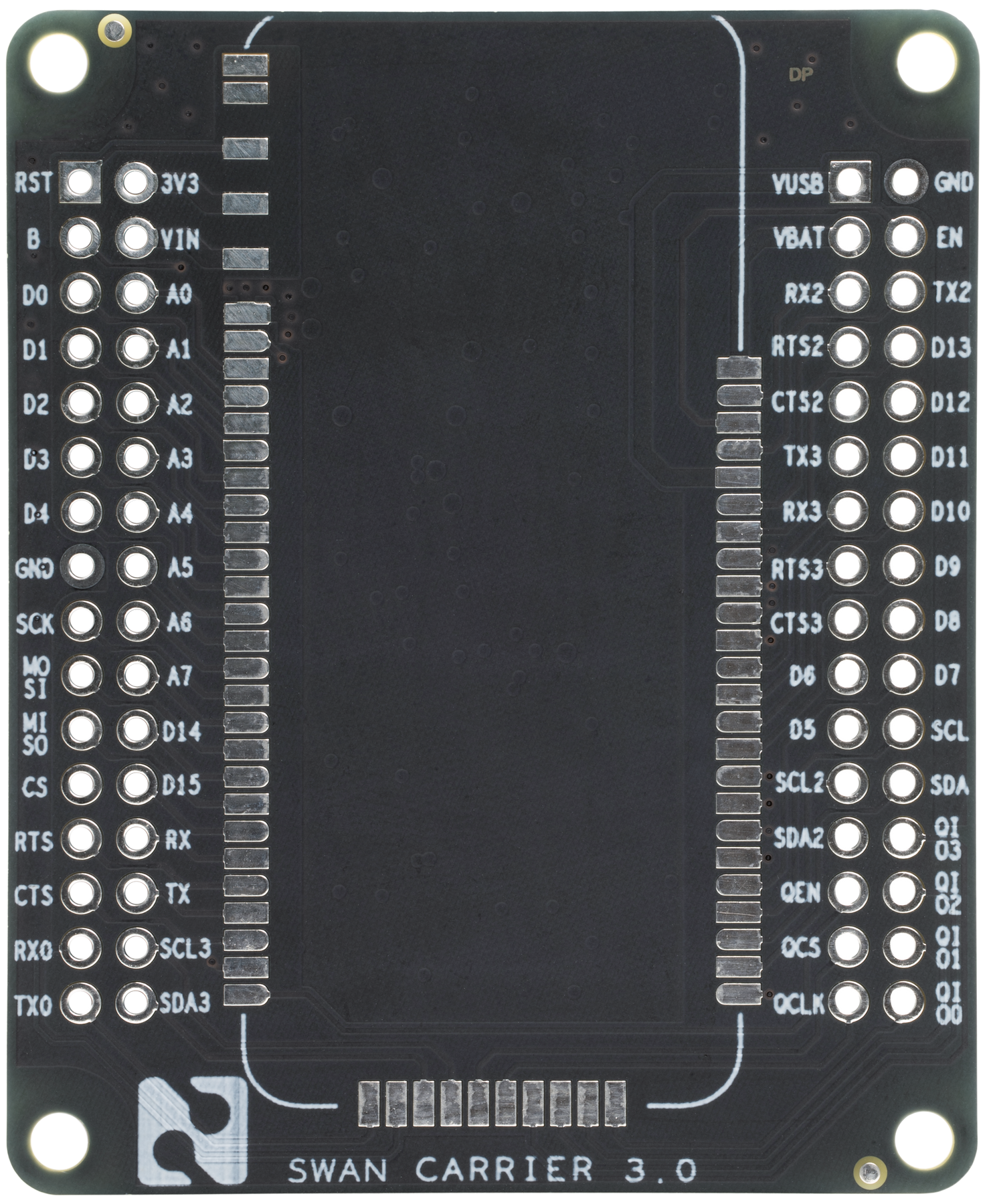
Swan is a low-cost, embeddable STM32L4-based microcontroller designed to accelerate the development and deployment of battery-powered IoT solutions. It is especially useful for applications requiring a large amount of memory or a high degree of I/O expandability at an affordable cost, such as edge inferencing and remote monitoring.
Uniquely for Feather-compatible boards, we designed Swan to satisfy developers’ needs spanning from early prototyping to high-volume deployment. Developers can use Swan in conjunction with Adafruit’s myriad sensors and FeatherWing-compatible carriers. Due to its novel design, for high-volume deployment the low-cost Swan can also be soldered directly to a parent PCB integrating those sensors, utilizing the full range of Swan’s I/O capabilities.
The board has three independent power options – USB, battery, or line power – and provides a software-switchable 2 Amp regulator for powering external sensors. When operating in its low-power operating mode, the entire Swan board draws only 8uA while retaining all of its memory, making it ideal for battery-powered devices.
Swan features support for C/C++, Arduino, and CircuitPython, and includes a CORTEX Debug connector, enabling the use of advanced development environments such as Visual Studio Code, IAR, and STM32CubeIDE. Be sure to add an STLNK-V3MINIE to get that step-debugging goodness!
Swan is available as a standalone board or in a Blues Starter Kit that includes Notecard and Notecarrier.
Available Variations
Key Swan Specs
- Ultra low-power Arm Cortex-M4 core clocked at 120Mhz.
- STM32L4R5-based microcontroller.
- 2MB of flash and 640KB of RAM.
- Castellated-edge access to 55 GPIO ports including:
- 8 analog
- 16 digital
- 4x I2C, 3x SPI
- USB OTG full speed
- 1x 14-channel DMA
- tRNG
- 12-bit ADC, 2 x 12-bit DAC
- Low-power RTC, and CRC calculation peripherals
- Qwiic/StemmaQT connector.
- Support for Notecard Outboard Firmware Update.
Additional Resources


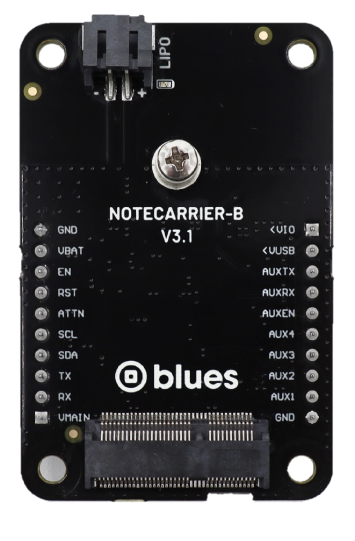
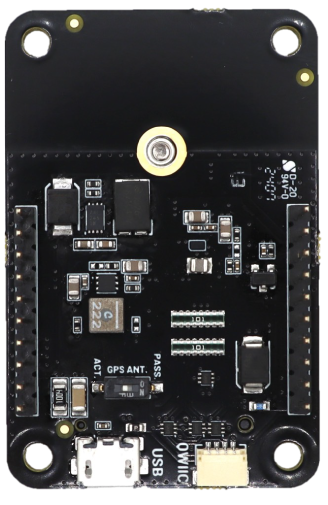
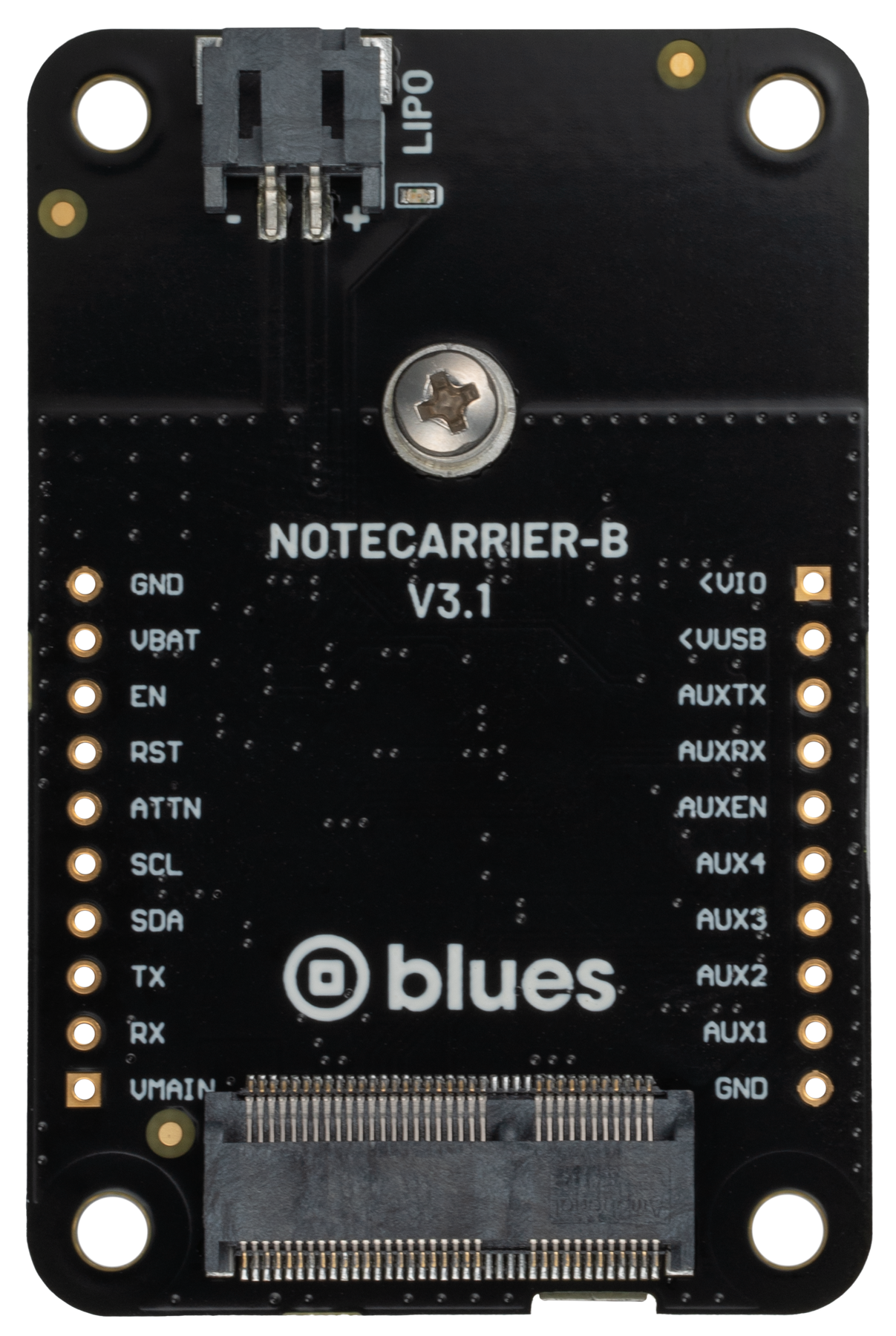
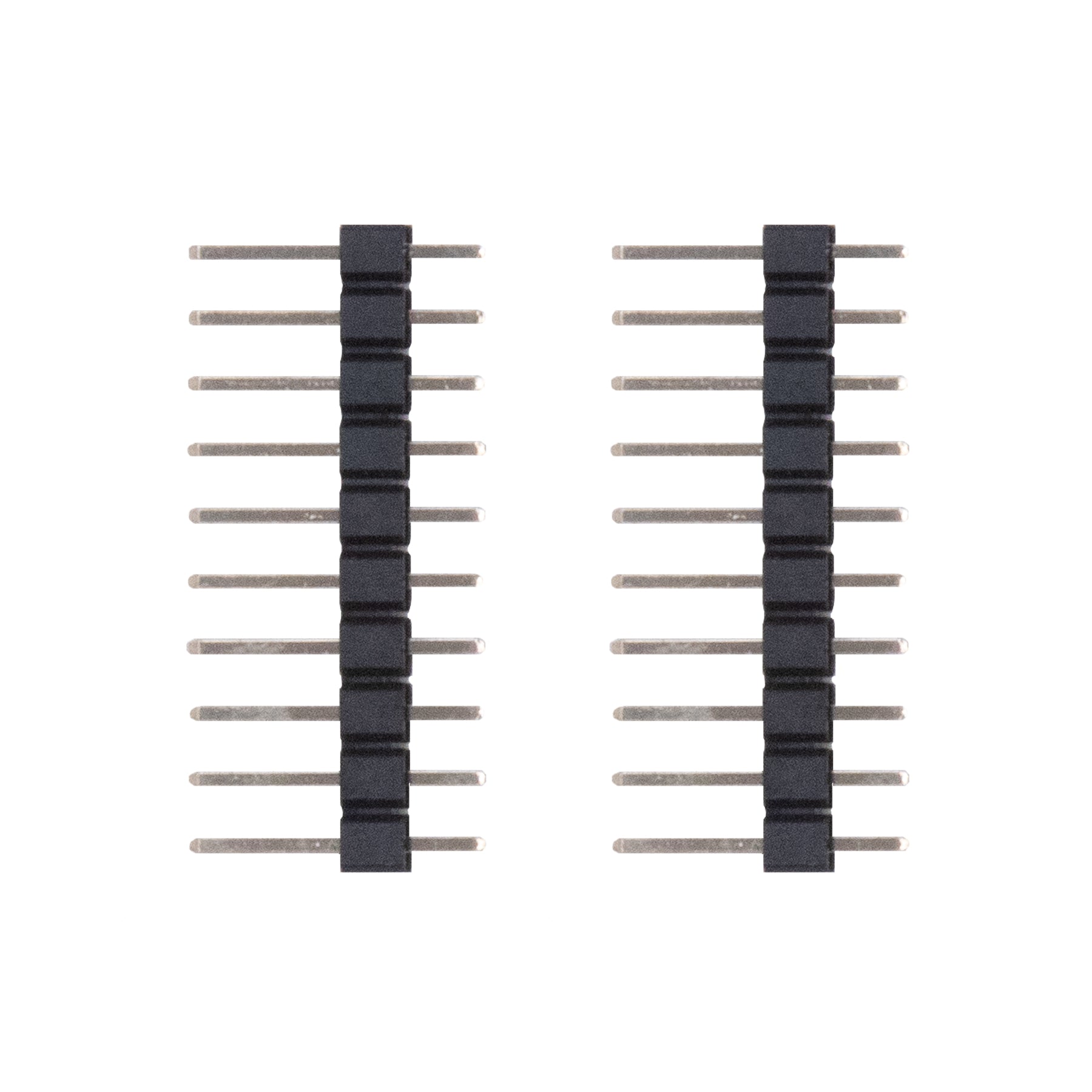
Notecarriers are companion development boards designed to make it easy to prototype and deploy IoT solutions with Notecard.
Notecarrier B is a small form-factor Notecarrier, only slightly larger than Notecard itself. Unlike other Notecarriers, Notecarrier B does not include an external SIM slot.
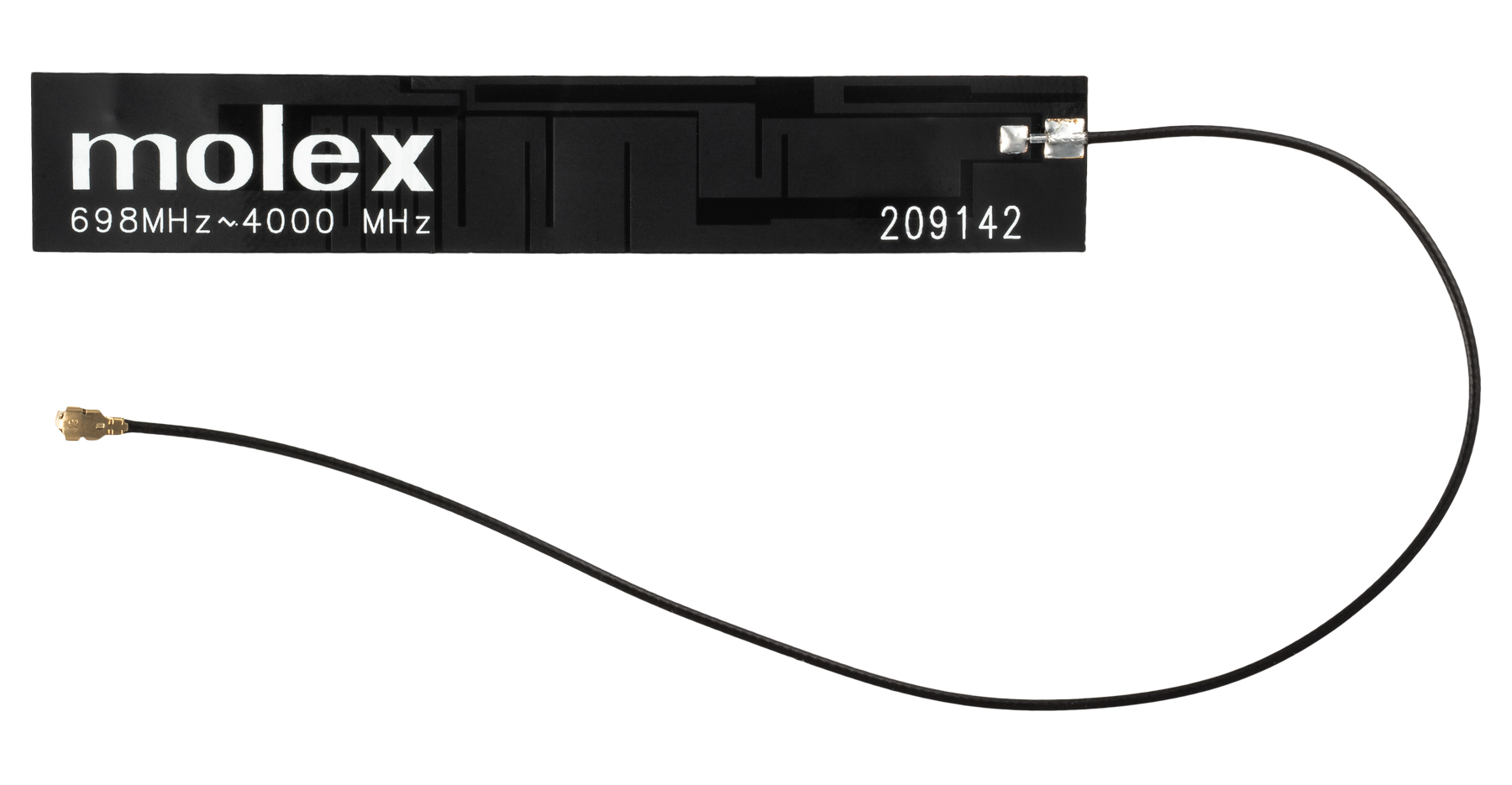
Included is a flexible Molex 209142 antenna for use with either LTE or GPS. If you require a dual LTE/GPS antenna, we recommend adding on the flexible LTE+GPS antenna (or you may choose to use your own preferred antenna).
Notecarriers require a Notecard to function. Notecarrier B is compatible with all available Notecards. See the Notecards section for more details or get started with a Blues Starter Kit.
Available Variations
- Notecarrier B with Pre-soldered Headers (Datasheet)
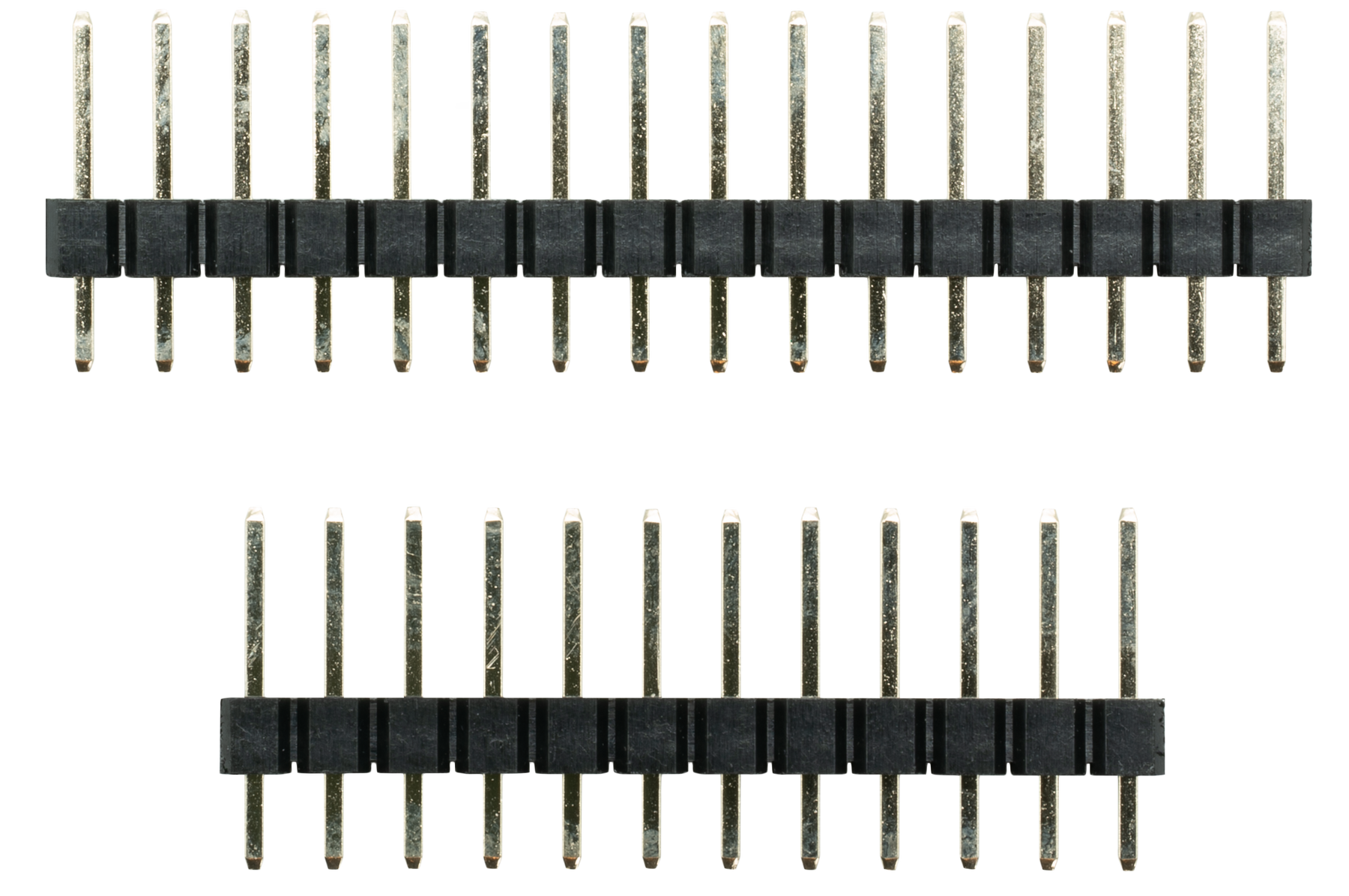
- Notecarrier B with Loose Header Pins (Datasheet)
Key Notecarrier B Specs
- Notecard M.2 Key E connector socket and mounting screw receptacle.
- 2-Pin JST PH connecter for LiPo battery power support.
- 1 Qwiic/StemmaQT I2C port for attaching external peripherals.
- Dip switch for using active or passive GPS/GNSS antenna.
Additional Resources

With a supported frequency range of 700–960 MHz and 1710–2690 MHz for LTE, with a u.FL terminator, this Quectel YCA001BA flexible antenna is a quick way to get your Notecard online via LTE or WiFi and GPS/GNSS.
Key Antenna Specs
- Manufacturer: Quectel
- Dimensions: 128.2mm x 23.3mm
- Frequency Range: LTE: 700–960 MHz, 1710–2690 MHz, GNSS: 1560–1620 MHz
- Input Impedance: 50Ω
- VSWR: LTE ≤ 4.81, GNSS ≤ 2.0
- Gain: LTE ≤ 5 dBi, GNSS ≤ 2 dBi
- Polarization Type: Linear
- Working & Storage Temperature Range: -40 °C to +85 °C
Additional Resources


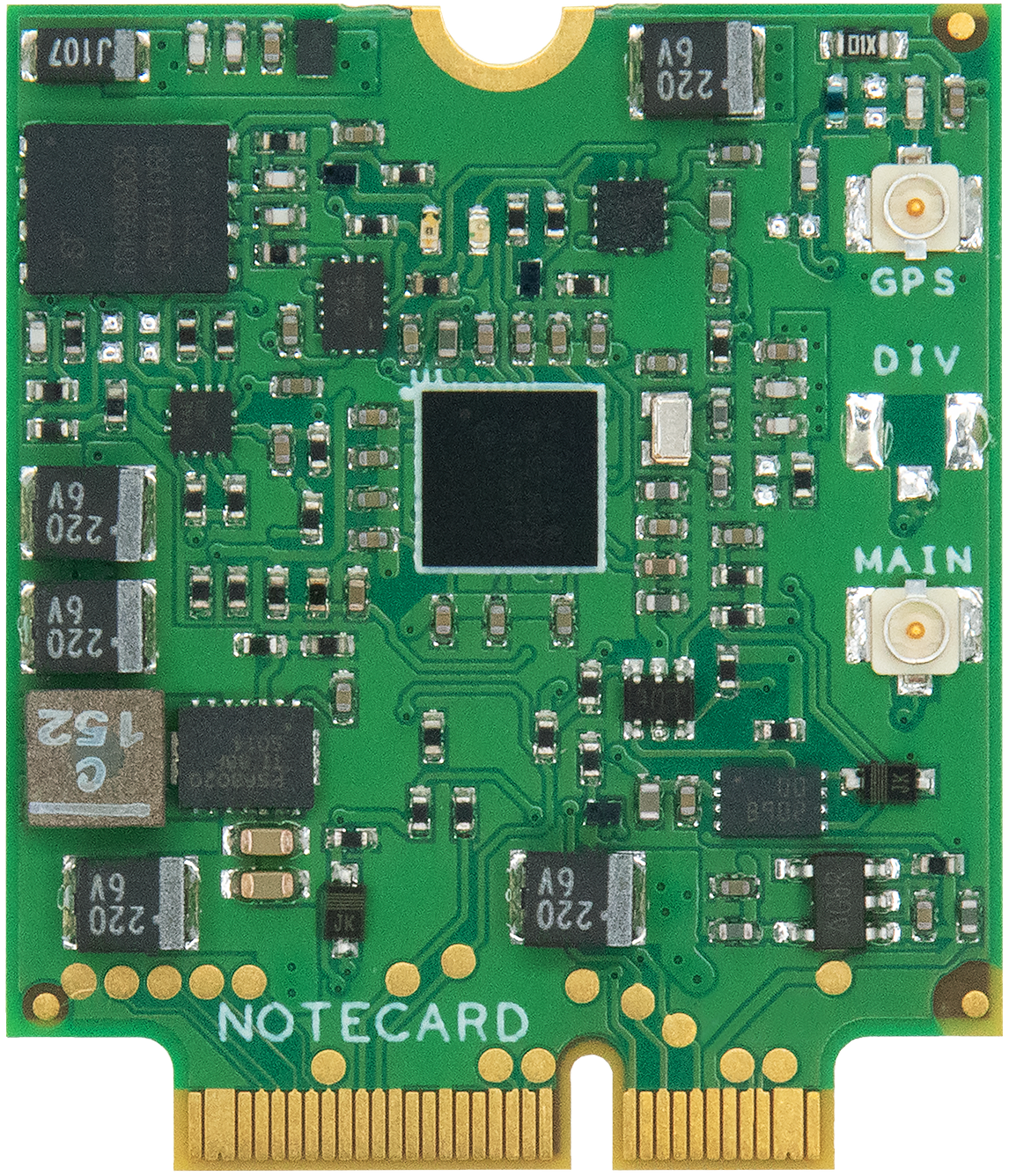
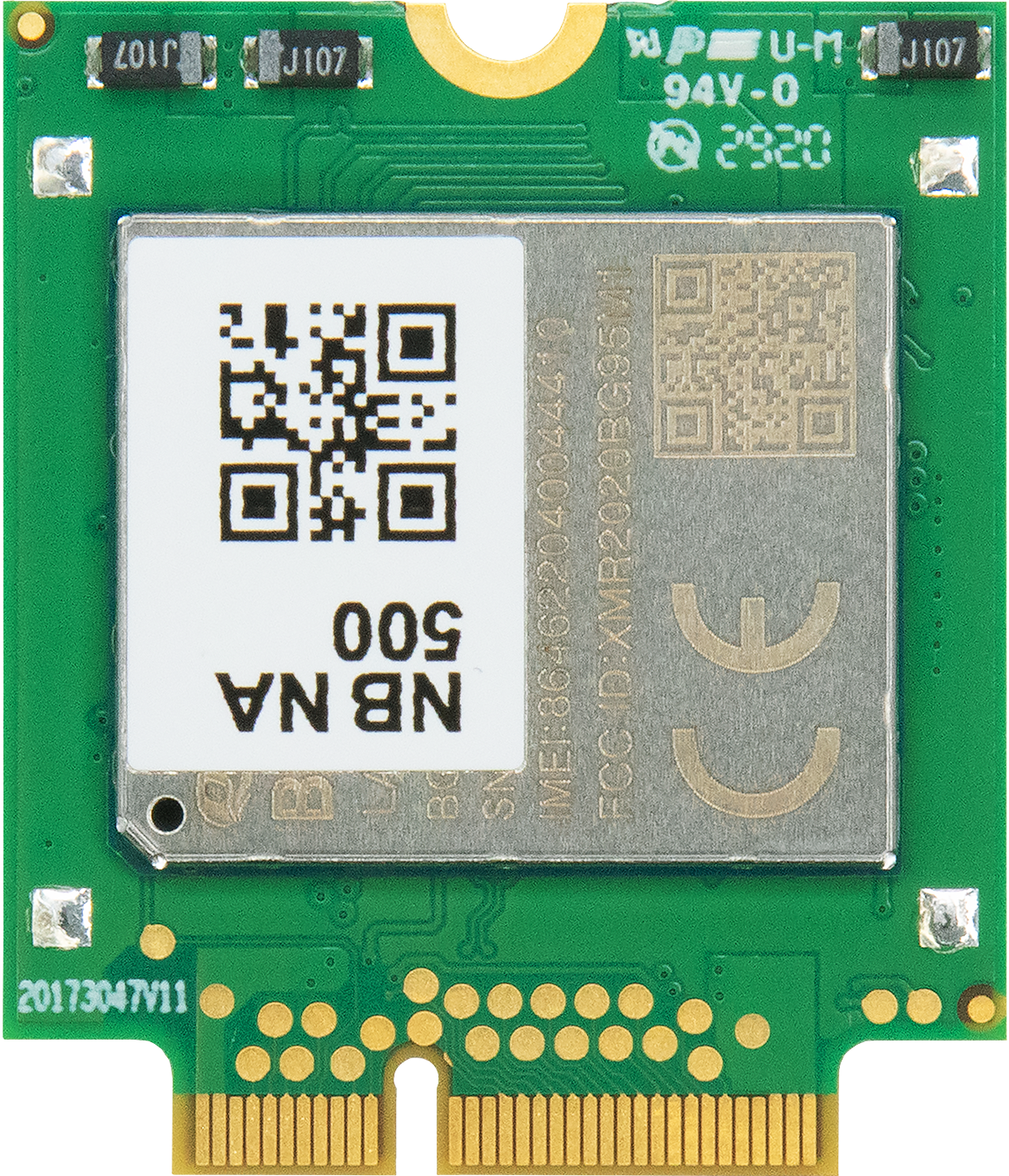
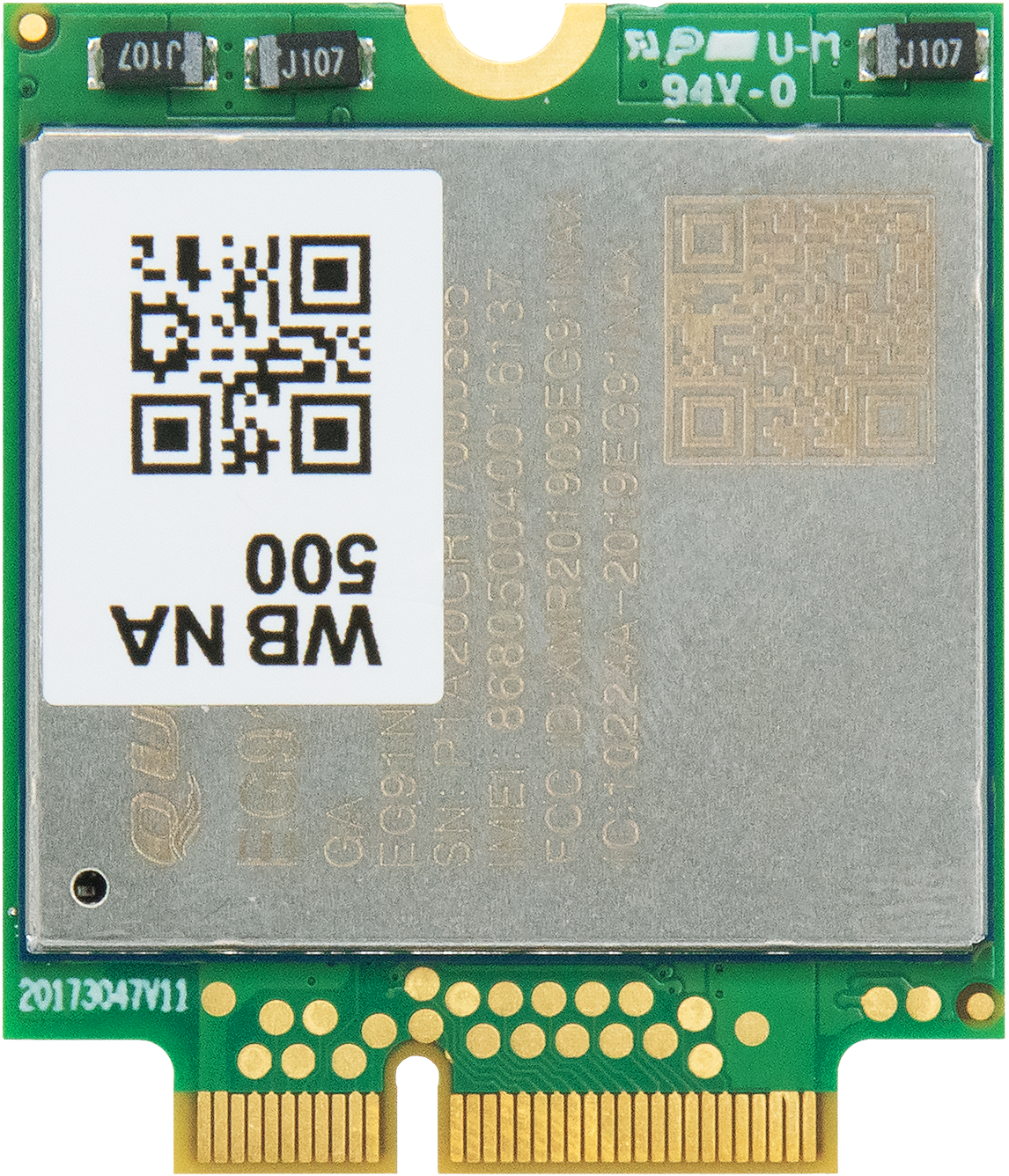
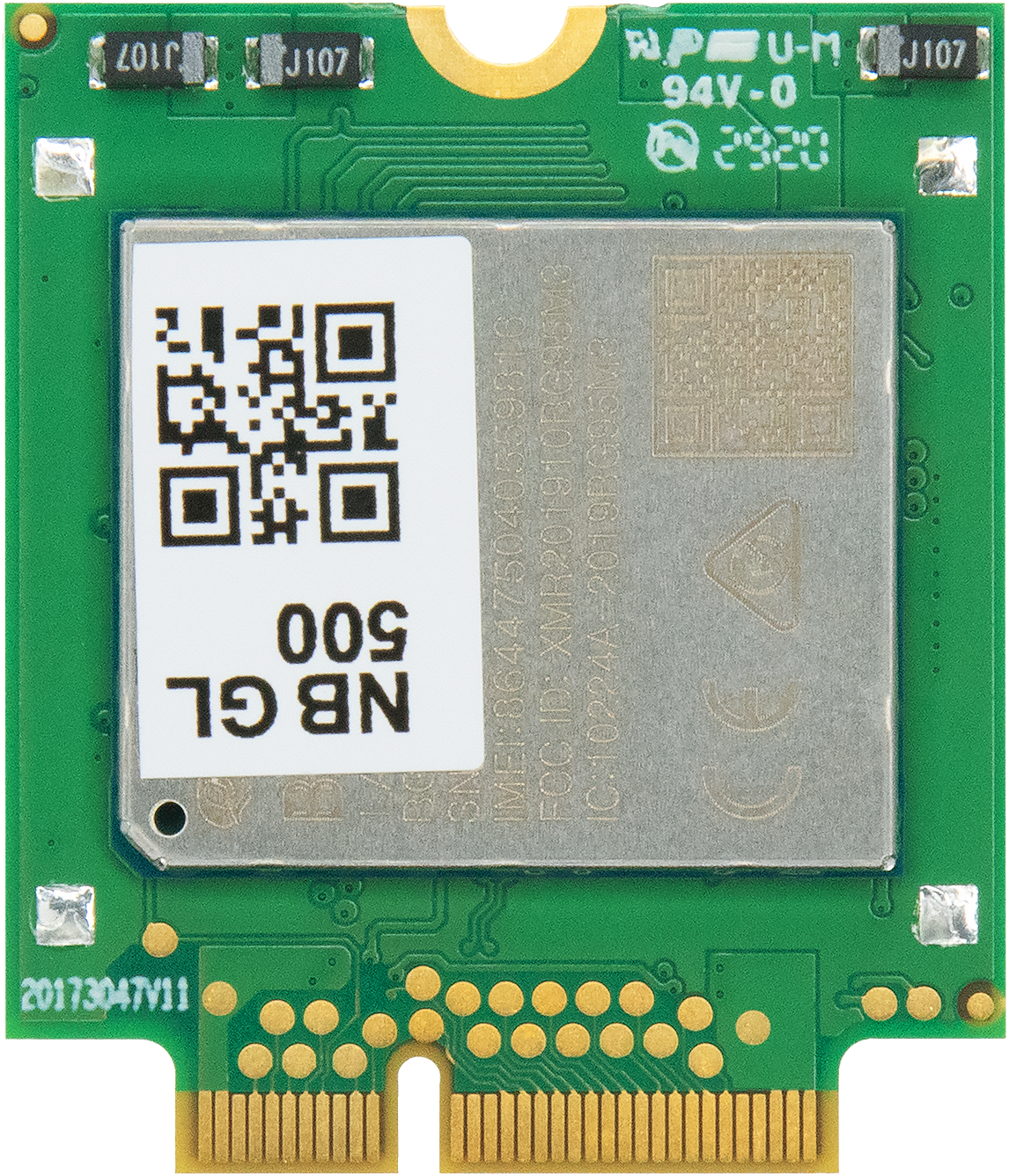
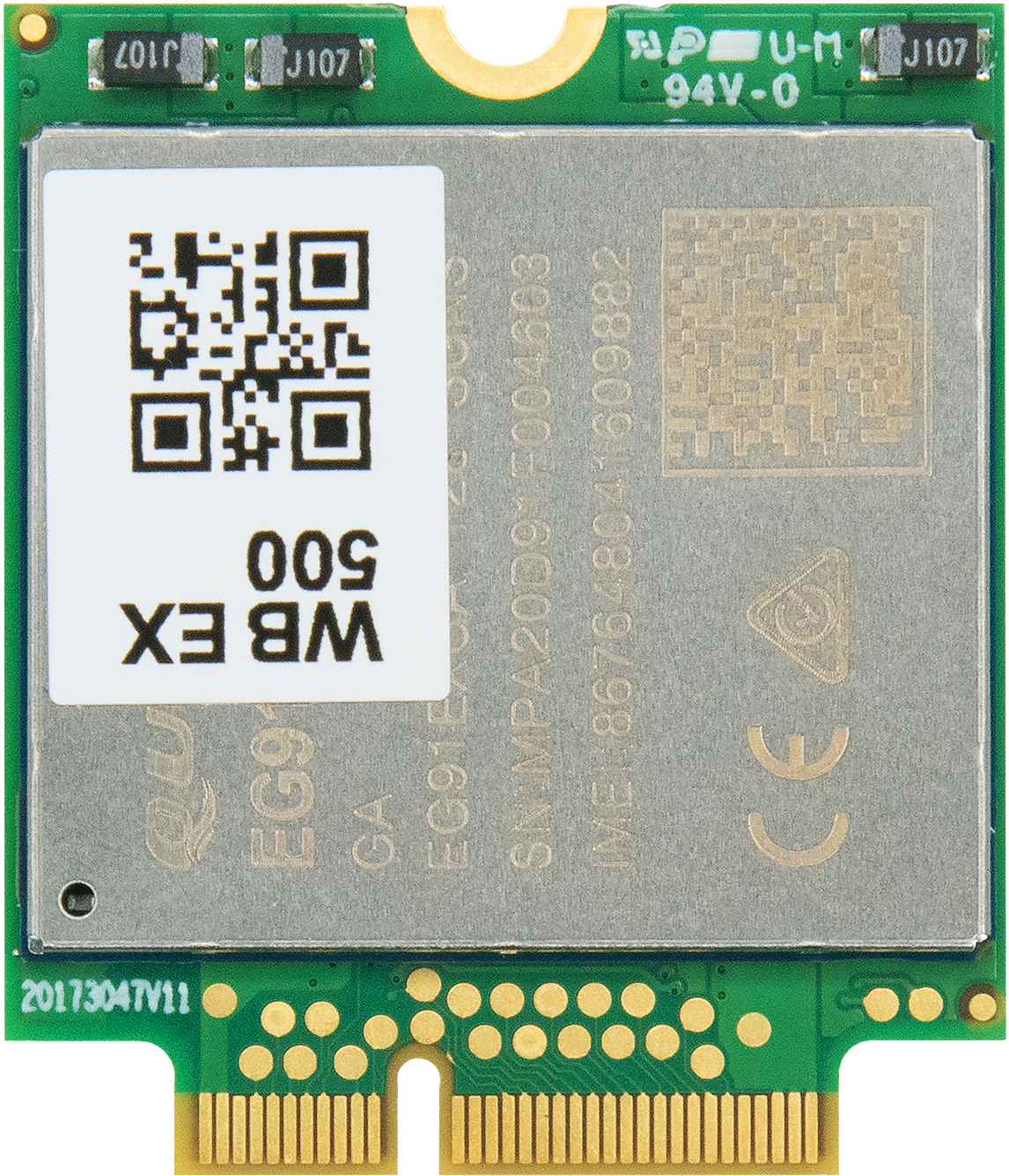
Notecard Cellular (Legacy) is a device-to-cloud data pump that reduces the complexity of building connected solutions with secure, reliable cellular. As an embeddable system on module (SoM), Notecard Cellular (Legacy) can be used with any microcontroller for both greenfield and retrofit projects using your own design, or one of our custom designed Notecarriers.
With just two lines of code you can send data to the cloud in minutes, with no complex device registration or provisioning required. With a powerful JSON-based API, you can program Notecard over USB, or control it from your preferred microcontroller or single-board computer using one of our open-source firmware libraries. Connect from your preferred host to Notecard using Serial or I2C.
Notecard Cellular (Legacy) is designed to work with a cloud service for ingesting and processing device data. Notehub provides secure device connectivity, project and fleet management, and simple routing to 3rd party cloud services.
Notecard is meant to be used with a Notecarrier. Notecard Cellular (Legacy) is compatible with all available Notecarriers. See the Notecarriers section for more details or get started with a Blues Starter Kit.
Ordering Note: Notecards purchased from the Blues Shop will ship with a Developer Firmware Release version pre-installed. If you require a Long-Term Support (LTS) version for a Shop order, please contact Sales for assistance.
Available Variations
- Wideband (LTE Cat 1)
- LTE Cat-1 for North America (Datasheet and Country Coverage)
- LTE Cat-1 for EMEA (Datasheet and Country Coverage)
- Narrowband (LTE Cat M, NB-IoT)
- LTE-M, NB-IoT for North America (Datasheet and Country Coverage)
- LTE-M, NB-IoT for Global Use (Datasheet and Country Coverage)
Key Notecard Cellular Specs
- Includes a secure element with a factory-installed ECC P-384 certificate, provisioned at chip manufacture.
- Integrated GPS and accelerometer.
- Designed to operate on battery power, be "always-on" to maintain time and location, while typically drawing less than 8µA@5V, when idle.
- Bundled with 10 years of service and 500MB of cellular data.
- No cellular subscriptions, SIM fees, or monthly minimums apply.
- PTCRB Certified Module.
Additional Resources


|
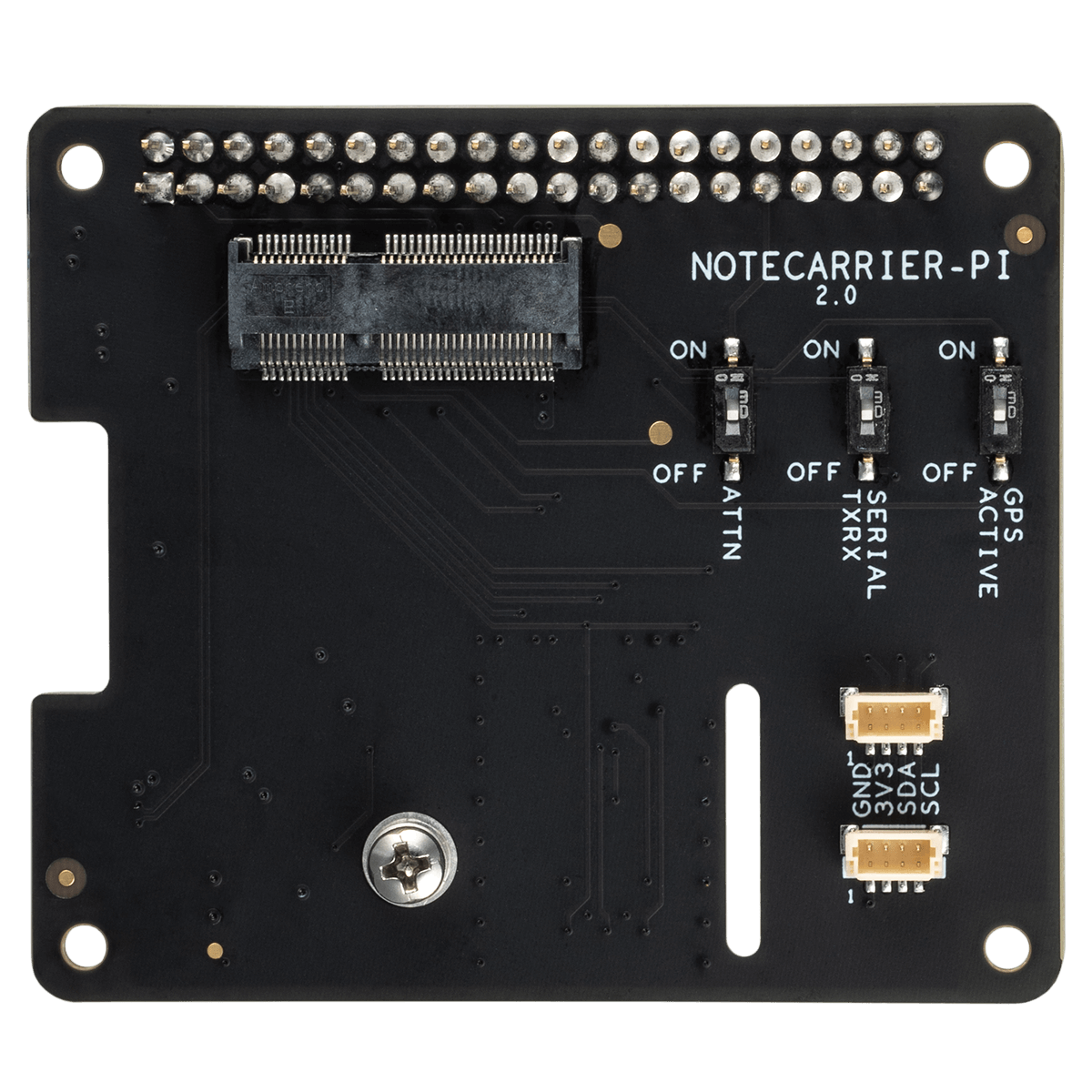
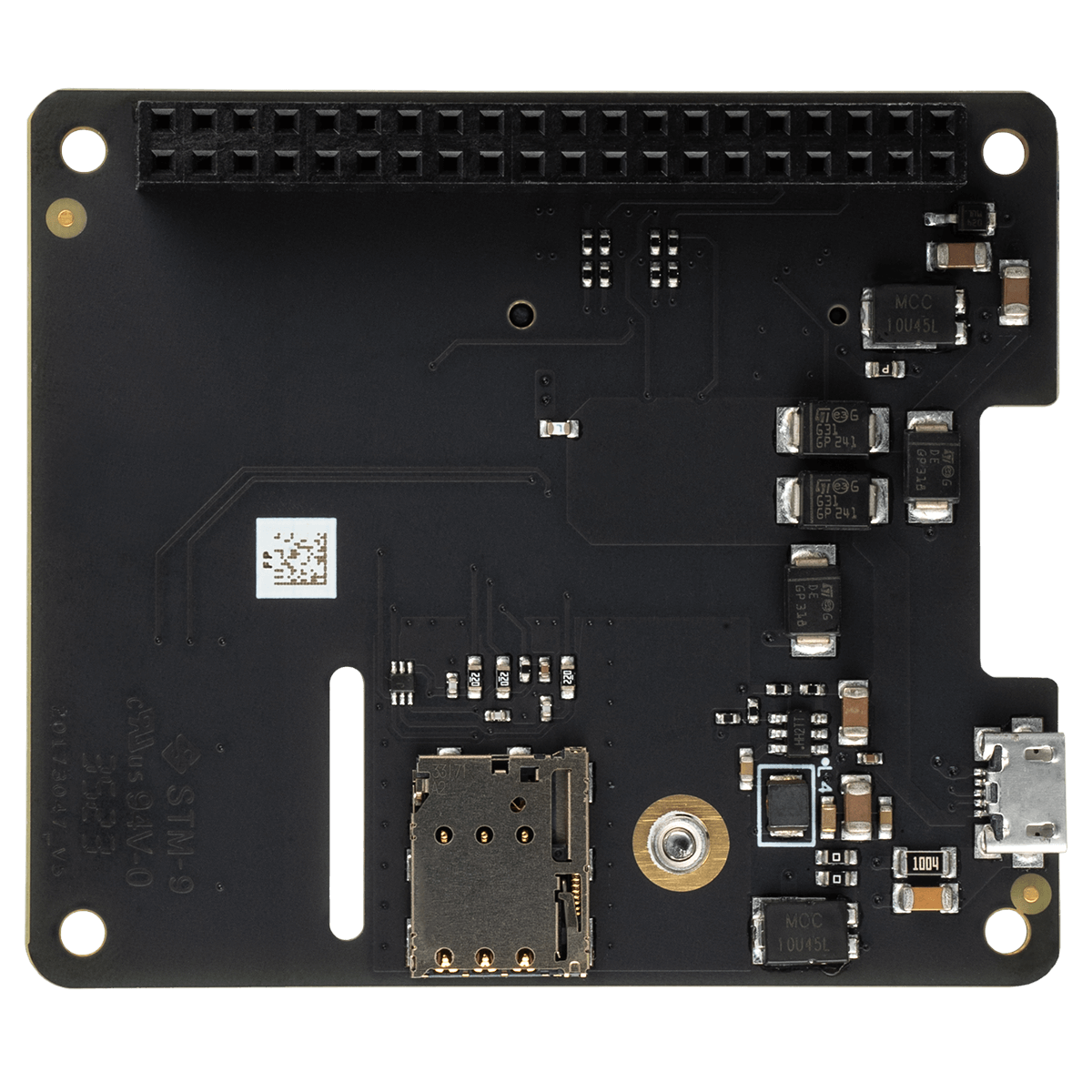
Notecarriers are companion development boards designed to make it easy to prototype and deploy IoT solutions with the Notecard. Notecarrier Pi is designed for drop-in development with a Raspberry Pi or compatible Single Board Computer. It includes a pre-soldered female 40-pin header connector for plugging directly into the Raspberry Pi, and a 40-pin connector on top for stacking other Pi “hats” and devices. It also includes two Qwiic I2C ports for attaching external peripherals. |
Included is a flexible Molex 209142 antenna for use with either LTE or GPS. If you require a dual LTE/GPS antenna, we recommend adding on the flexible LTE+GPS antenna (or you may choose to use your own preferred antenna).
Notecarriers require a Notecard to function. Notecarrier Pi Hat is compatible with all available Notecards. See the Notecards section for more details or get started with a Blues Starter Kit.
Key Notecarrier Pi Specs
- Notecard M.2 Key E connector socket and mounting screw receptacle.
- 2 Qwiic I2C ports for attaching external peripherals to your project.
- Pre-soldered female 40-pin header connector for plugging directly into a Pi or another Pi hat.
- Pre-soldered male 40-pin header connector for stacking additional Pi hats.
- External Nano-SIM slot for use of an optional secondary SIM.
Additional Resources

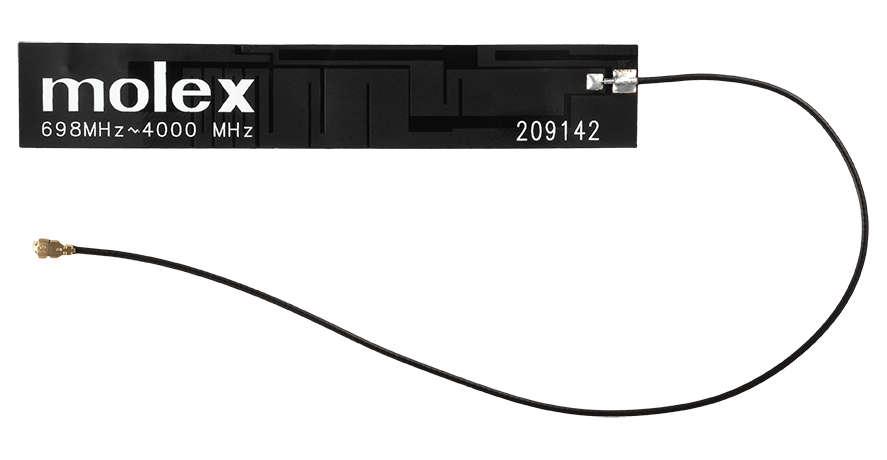
With a supported frequency range of 698 MHz to 4.0 GHz with a u.FL terminator, this Molex flexible antenna is a quick way to get your Notecard online via LTE or WiFi. It can also be used as a GPS/GNSS antenna.
Key Antenna Specs
- Manufacturer: Molex
- Dimensions: 85mm L x 14.5mm W x 0.1mm H
- Cable Length: 180mm
- Cable Type: 180mm coax
- Datasheet
Additional Resources


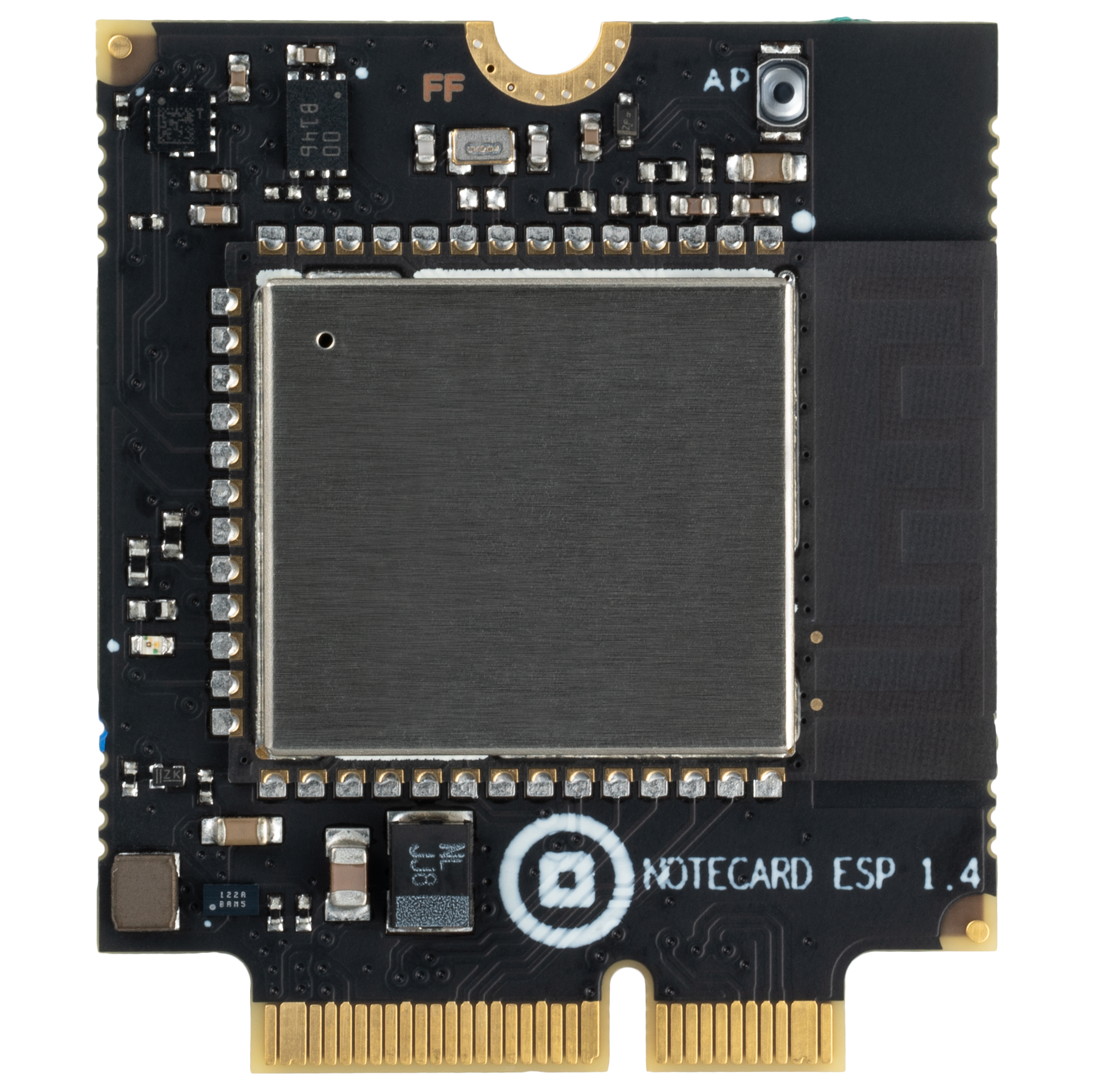


The Starnote for Skylo Starter Kit contains everything you need to add satellite failover to any cellular or WiFi Notecard-based solution. Starnote includes satellite uplink and downlink data with the cost of the device in partnership with Skylo. Starnote for Skylo also provides a JSON-based programing interface consistent with Notecard, providing developers with access to yet another major Radio Access Technology (RAT) using straightforward, accessible semantics. And with 10KB of data included and no monthly fees, it's an affordable satellite IoT backup device!
Starnote for Skylo is a Notecard accessory that is intended to disrupt the conventional wisdom that using satellite requires a high hardware investment (in the hundreds of dollars) of monthly device fees even when devices aren’t communicating with satellites.
As an accessory, Starnote for Skylo is not a Notecard; it is meant to be used with Notecard, and works with Cellular, Cell+WiFi, and WiFi. From a developer’s point of view, Starnote for Skylo operates as an additional available RAT for Notecard. A developer uses the Notecard API to specify in Notecard’s mode of operations when to fallback to Satellite, and Notecard handles communications between itself and Starnote for Skylo.
Kit Contents
-
1x Starnote for Sklyo u.FL
-
1x Notecard WiFi
-
1x Notecarrier XS
-
1x Satellite Antenna
-
1x GPS Antenna
- 1x 500 mAH LiPo battery
The Starnote for Skylo (Antenna) accessory is an optional add on available for purchase with the Starter Kit.
Key Starnote for Skylo Kit Specs
-
JSON-based API for configuration and communication with Notecard
-
M.2 Key E connector for board-to-board usage and a six-pin JST for wire-to-board applications
-
External via u.FL connectors
-
NTN-capable satellite modem with zero-touch configuration
-
Bundled with 10KB of satellite data from Skylo, enough to send 1 message per day for 6 months. Additional data is priced $0.00075/byte, with a minimum of 50 bytes per transmitted or received satellite data packet, billed monthly in arrears.
Additional Resources


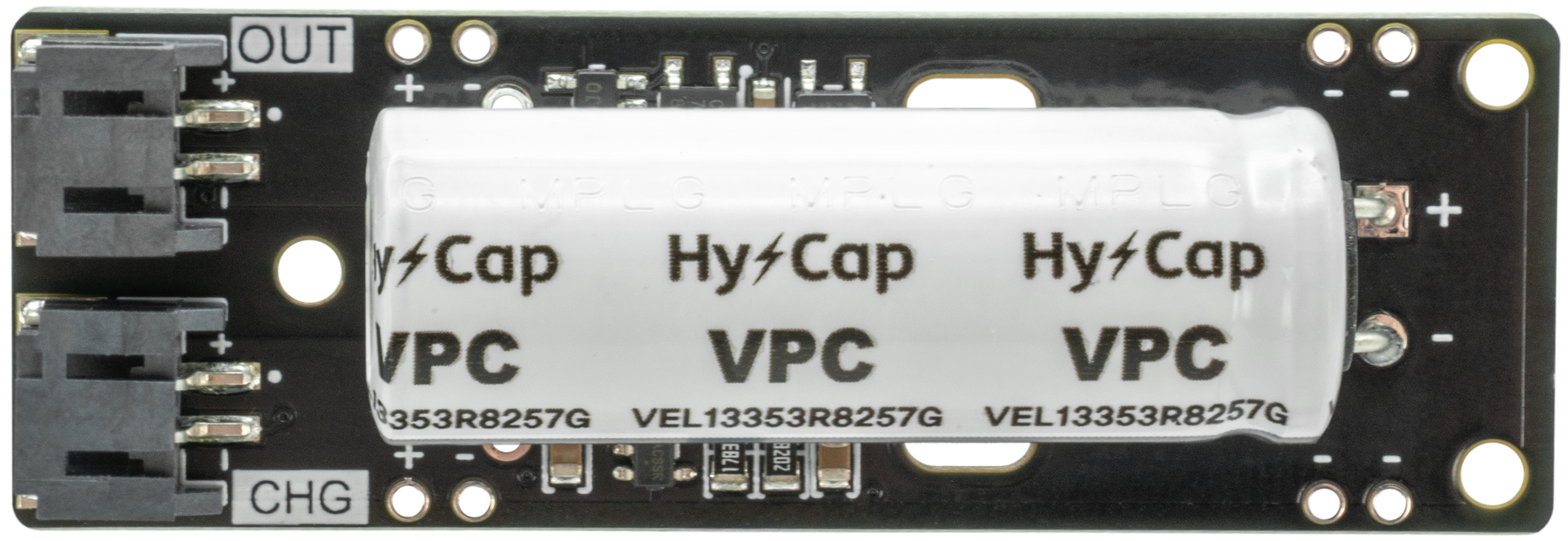
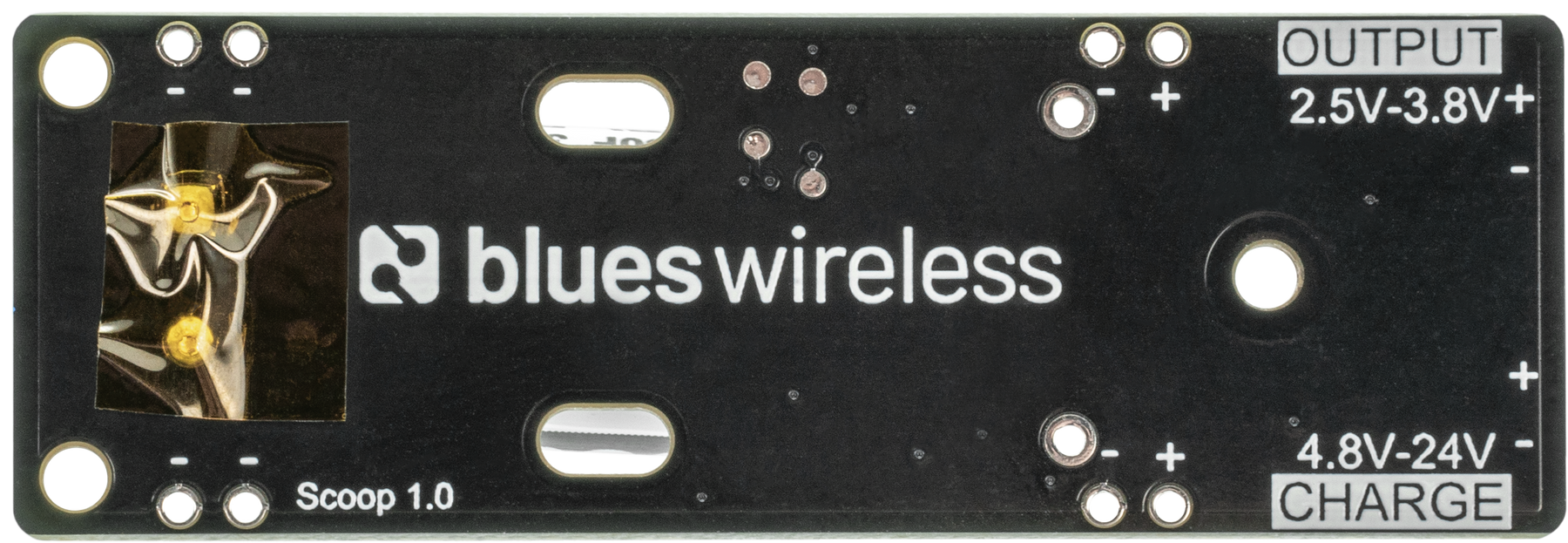
Scoop is designed to provide backup power and facilitate power management in a variety of applications. It features a large capacitor, two JST connectors, and four pairs of header pins for flexible connectivity.
The Scoop component can be powered via its charge connector or a pair of header pins, which accepts an input voltage of 4.8V-24V. The output connector can deliver a voltage in the range of 2.5V-3.8V, making it suitable for powering a wide range of devices.
Based on internal testing, Scoop is able to power up to approximately 20 on/off cellular connection cycles, or up to 240 minutes of a single cellular connection. Results may vary depending on the type of wireless coverage in the area and the amount and frequency of data being sent.
Key Scoop Specs
- Capacitor: Lithium Ion 250F 3.8V -10% +30%
- Connectors: JST PH 2P M SIDE ENTRY Surface Mount
- Charge Connector: Accepts 4.8V-24V
- Output Connector: Outputs 2.5V-3.8V
- Header Pins: 4 pairs of header pins
Additional Resources


|
Notecarriers are companion development boards designed to make it easy to prototype and deploy IoT solutions with the Notecard. Notecarrier X is a small form-factor Notecarrier, only slightly larger than Notecard itself. Notecarrier X is our most capable small-form factor Notecarrier with JST connectors for LiPo battery and charging support, as well as Qwiic and ESLOV ports for connecting Notecard to host MCUs over I2C. |
Included is a flexible Molex 209142 antenna for use with either LTE or GPS. If you require a dual LTE/GPS antenna, we recommend adding on the flexible LTE+GPS antenna (or you may choose to use your own preferred antenna). Our loose header pins are also included.
Notecarriers require a Notecard to function. Notecarrier X is compatible with all available Notecards. See the Notecards section for more details or get started with a Blues Starter Kit.
Key Notecarrier X Specs
-
Notecard M.2 Key E connector socket and mounting screw receptacle.
-
USB C port to power Notecarrier and provide a USB Serial command interface to Notecard.
-
External Nano-SIM slot for use of an optional secondary SIM.
-
2-Pin JST PH connectors for LiPo battery power and charging support.
-
1 Qwiic/StemmaQT I2C port for attaching external peripherals.
-
1 ESLOV port for attaching the Notecard to Arduino MKR or PRO boards.
-
DIP switch for using active or passive GPS/GNSS antenna.
Additional Resources


|
Add satellite failover to any cellular or WiFi Notecard-based solution for $54 with data and no monthly fees. Starnote for Skylo is an affordable satellite IoT backup device that, much like the Notecard does with cellular, includes satellite uplink and downlink data with the cost of the device, in partnership with Skylo. Starnote offers a JSON-based programing interface consistent with Notecard, providing developers with access to yet another major Radio Access Technology (RAT) using straightforward, accessible semantics. |
Starnote for Skylo is a Notecard accessory that is intended to disrupt the conventional wisdom that using satellite requires a high hardware investment (in the hundreds of dollars), and monthly device fees even when devices aren’t communicating with satellites.
As an accessory, Starnote is not a Notecard. It is meant to be used with Notecard, and works with Cellular, Cell+WiFi, and WiFi. From a developer’s point of view, Starnote for Skylo operates as an additional available RAT for the Notecard. A developer uses the Notecard API to specify in Notecard’s mode of operations when to fallback to Satellite, and Notecard handles communications between itself and Starnote.
Available Variations
-
Onboard Satellite and GPS Antennas
-
u.FL Connectors with Provided External Antennas
Key Starnote for Skylo Specs
-
JSON-based API for configuration and communication with Notecard
-
M.2 Key E connector for board-to-board usage and a six-pin JST for wire-to-board applications
-
Available with onboard satellite and GPS antennas or external via u.FL connectors
-
NTN-capable satellite modem with zero-touch configuration
-
Bundled with 10KB of satellite data from Skylo, enough to send 1 message per day for 6 months. Additional data is priced $0.00075/byte, with a minimum of 50 bytes per transmitted or received satellite data packet, billed monthly in arrears.
-
No satellite provider subscriptions, fees, or monthly minimums apply.
Additional Resources


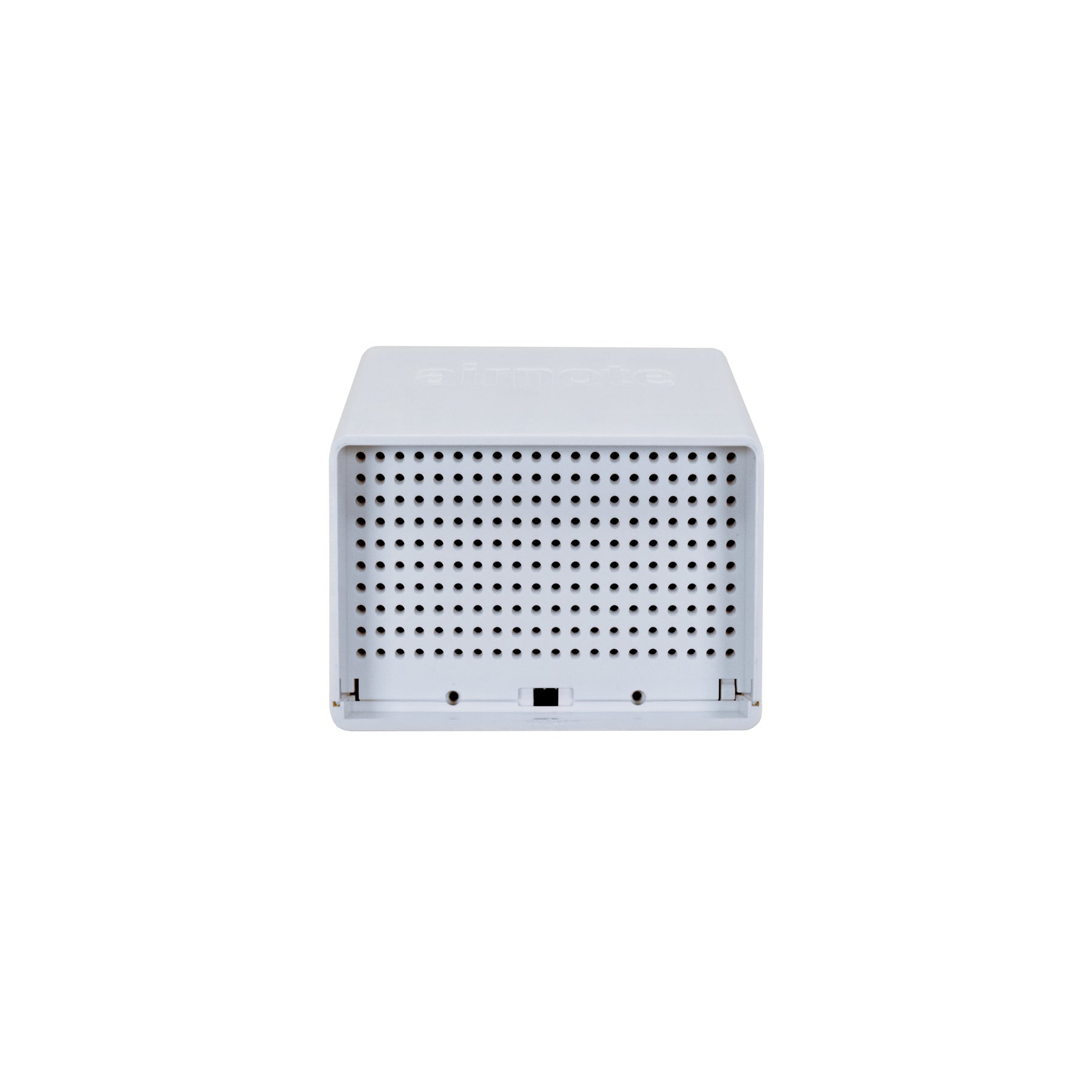
Know your Air. Breathe Easy.
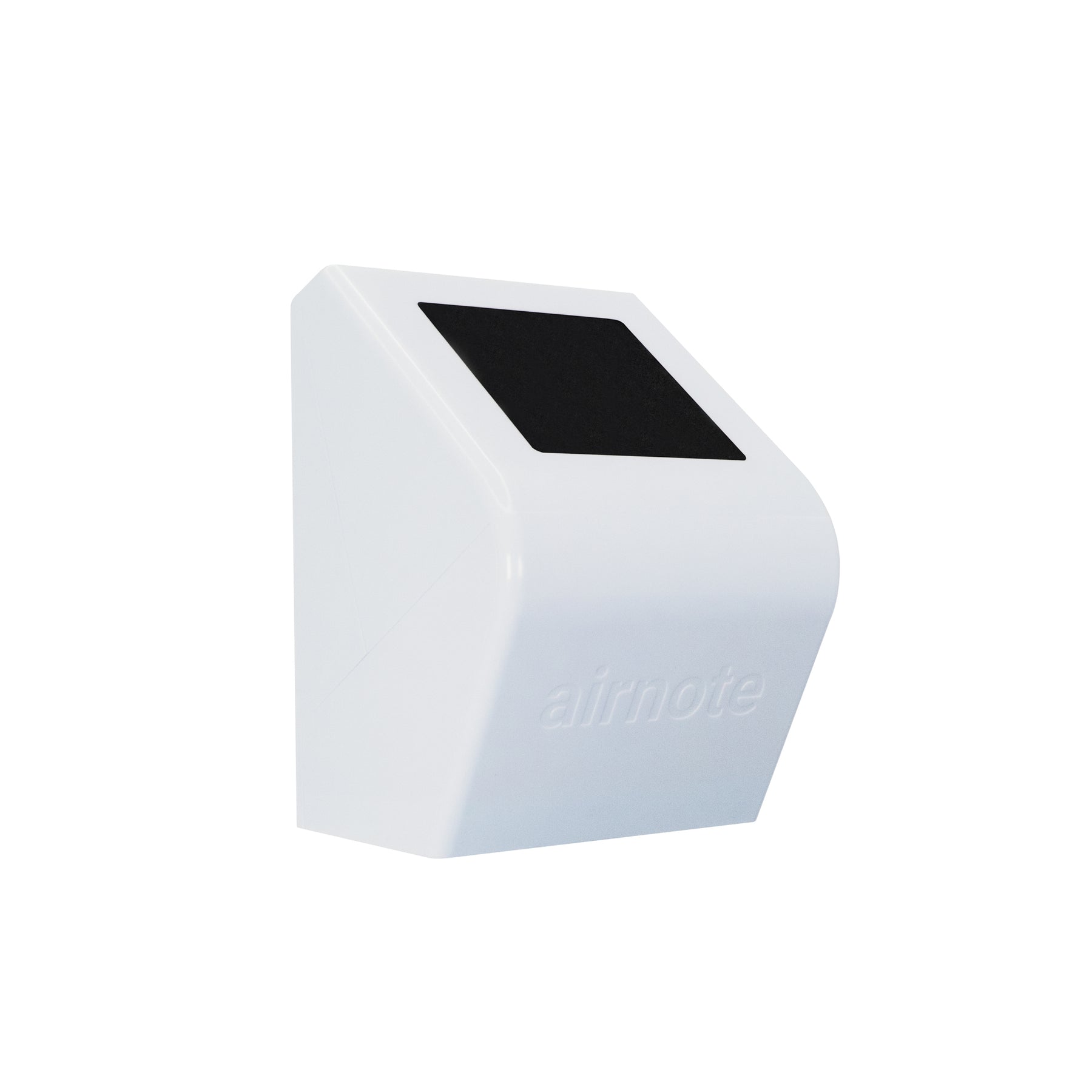
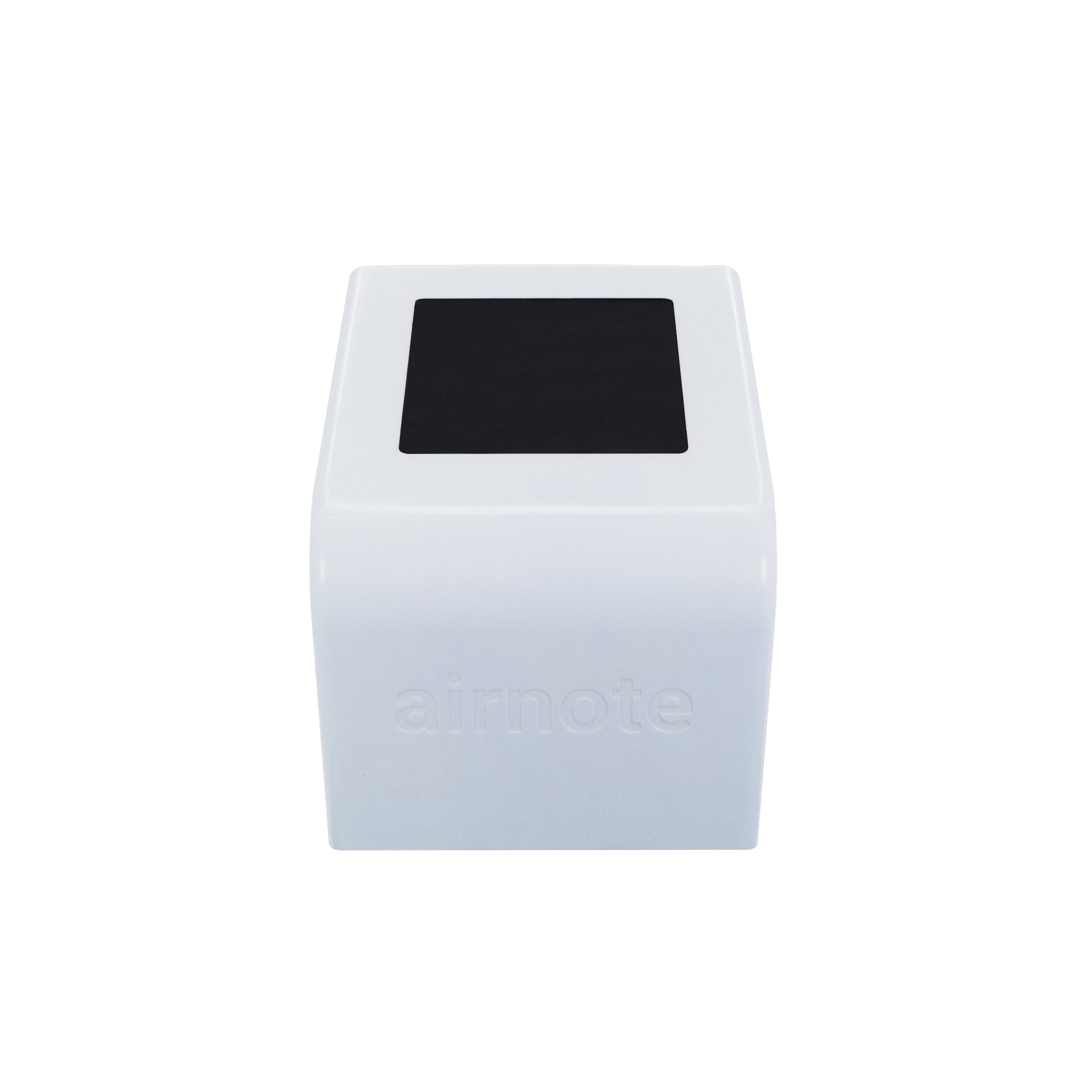
Airnote is an air quality monitoring solution built by Blues, in partnership with Safecast. Unlike other personal air quality products which require manual WiFi provisioning, Airnote uses the global cellular capabilities of Notecard so that the device can be deployed in seconds with no configuration required on the part of the owner.
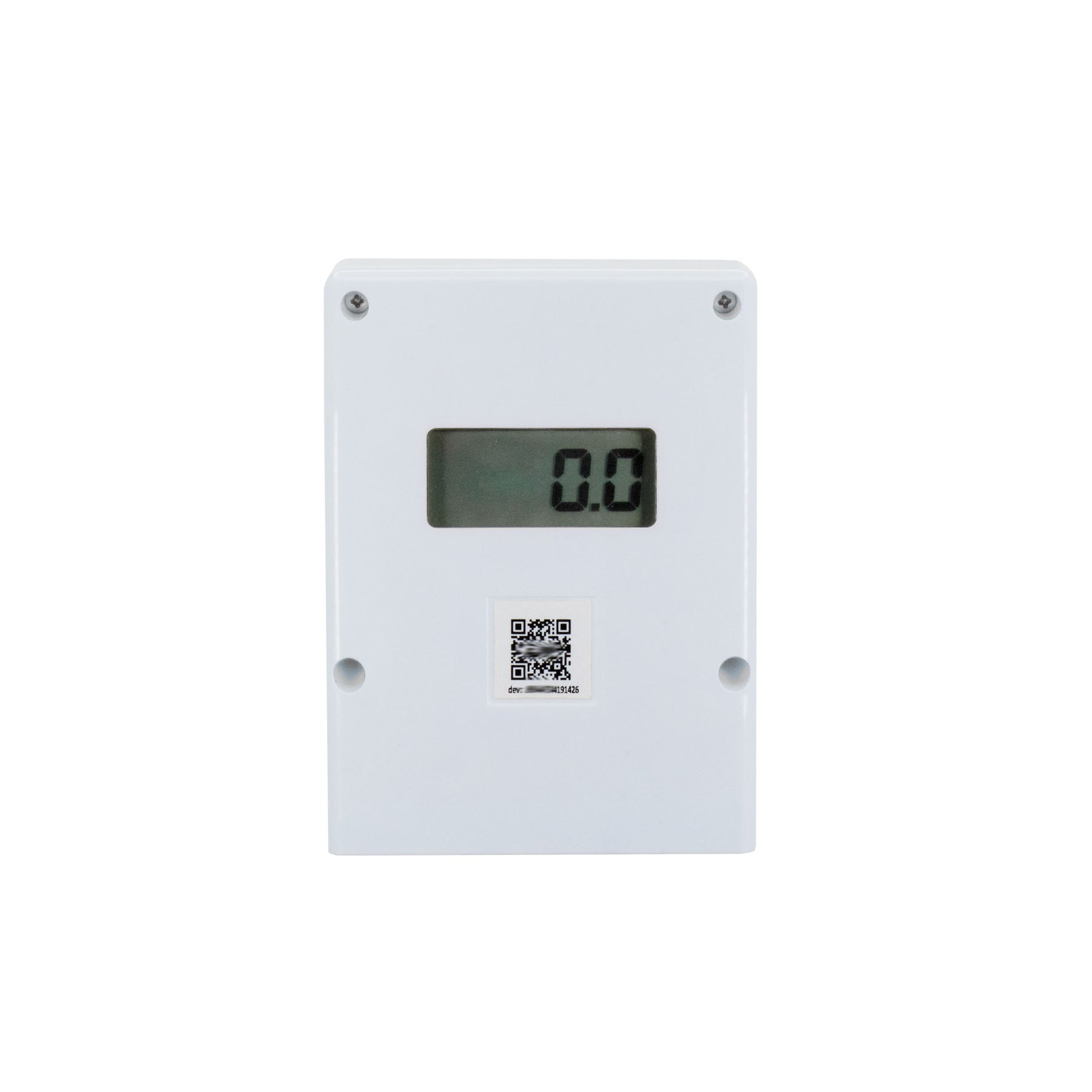
The device includes a solar charging system, a small on-board display for viewing up-to-date sensor readings, and a link to a web-based dashboard where you can view insights from your own device.
Example Airnote Dashboard

Airnote Sensors
- Air Particulate Matter (PM1, PM2.5, and PM10)
- Temperature
- Humidity
- Barometric Pressure
- Device GPS Location
Airnote Specs
- Dimensions: 3.54 in x 3.46 in x 4.96 in (90 mm x 88 mm x 126 mm)
- Color: White
- Intended Use: Outdoor and indoor deployments
- Power (Charging): Solar and Micro USB
- Power (Capacitor): (4x) Lithium Ion 250F 3.8V -10% +30%
- Cellular*: 500 MB of data and 10 years of coverage in over 140 countries included. Automatically connects to LTE Cat-1 bis with a built-in SIM. See here for a list of covered countries.
- Warranty: 30-day limited warranty. See terms and conditions for details.
*Please note Blues cannot guarantee local cellular coverage in your area.
Additional Resources

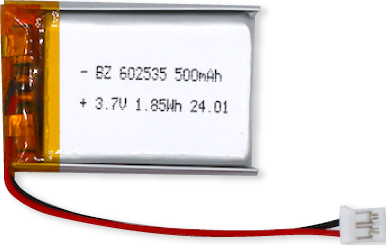
Lithium-ion polymer (also known as "LiPo") batteries are thin, light, and powerful. The output ranges from 4.2V when completely charged to 3.7V. This battery has a capacity of 5,000mAh for a total of about 19 Wh.
The batteries come pre-attached with a 2-pin JST-PH connector and include the necessary protection circuitry which keeps the battery voltage from going too high (over-charging) or too low (over-use). The battery will cut out when completely dead at 3.0V and it will also protect against output shorts.
Due to regulations in shipping batteries containing lithium, international shipments of this product are unavailable at this time.
Safety Warning: Do not use a NiMH/NiCad/lead-acid charger to charge LiPo batteries. Do not abuse these batteries, including shorting, bending, crushing, or puncturing. Never charge unattended or use unattended. Inspect batteries and surrounding circuitry constantly for any damage and loose wiring.
Additional Resources

|
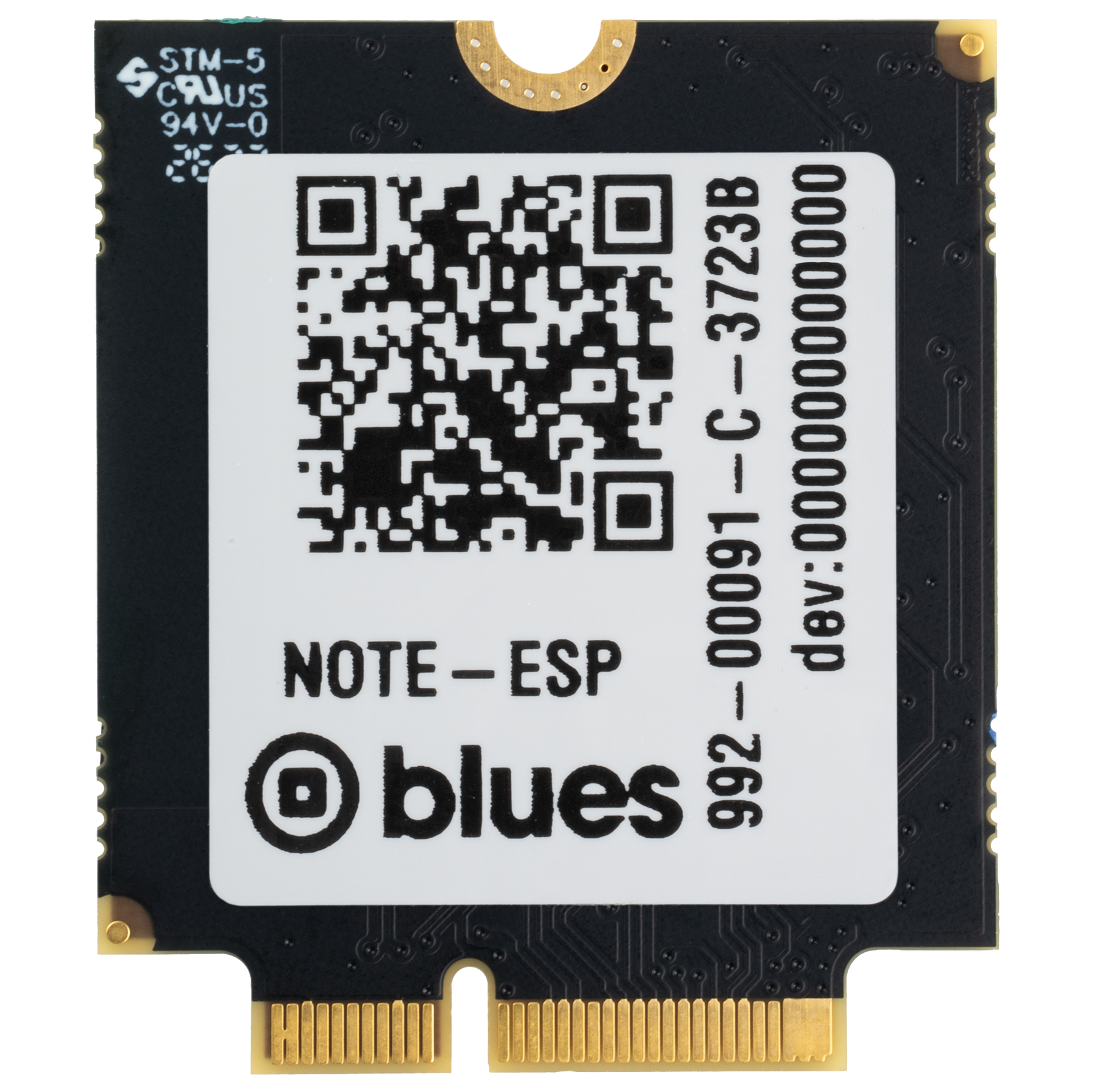
Notecard is a device-to-cloud data pump that reduces the complexity of building connected solutions with WiFi. As an embeddable system on module (SoM), Notecard can be used with any microcontroller for both greenfield and retrofit projects using your own design, or one of our custom designed Notecarriers. Notecard WiFi is a lower-cost version of cellular-based Notecards for 2.4 GHz WiFi only, and is API-compatible with cellular-based Notecards. Notecard WiFi also supports location tracking via WiFi Triangulation. |
With just two lines of code you can send data to the cloud in minutes, with no complex device registration or provisioning required. With a powerful JSON-based API, you can program Notecard over USB, or control it from your preferred microcontroller or single-board computer using one of our open-source firmware libraries. Connect from your preferred host to Notecard using Serial or I2C.
Notecard is designed to work with a cloud service for ingesting and processing device data. Notehub provides secure device connectivity, project and fleet management, and simple routing to 3rd party cloud services.
Notecard is meant to be used with a Notecarrier. Notecard WiFi is compatible with all available Notecarriers. See the Notecarriers section for more details or get started with a Blues Starter Kit.
Ordering Note: Notecards purchased from the Blues Shop will ship with a Developer Firmware Release version pre-installed. If you require a Long-Term Support (LTS) version for a Shop order, please contact Sales for assistance.
Available Variations
- 2.4 GHz WiFi (Datasheet)
Key Notecard WiFi Specs
- Utilizes the ESP32-S3-WROOM-1-N8R2 for connecting to 2.4 GHz WiFi networks.
- JSON- and SoftAP-based provisioning support.
- Onboard ultra-low power ESP32 MCU with 8MB flash memory.
- High-performance 3-axis accelerometer and temperature sensor.
Additional Resources


|
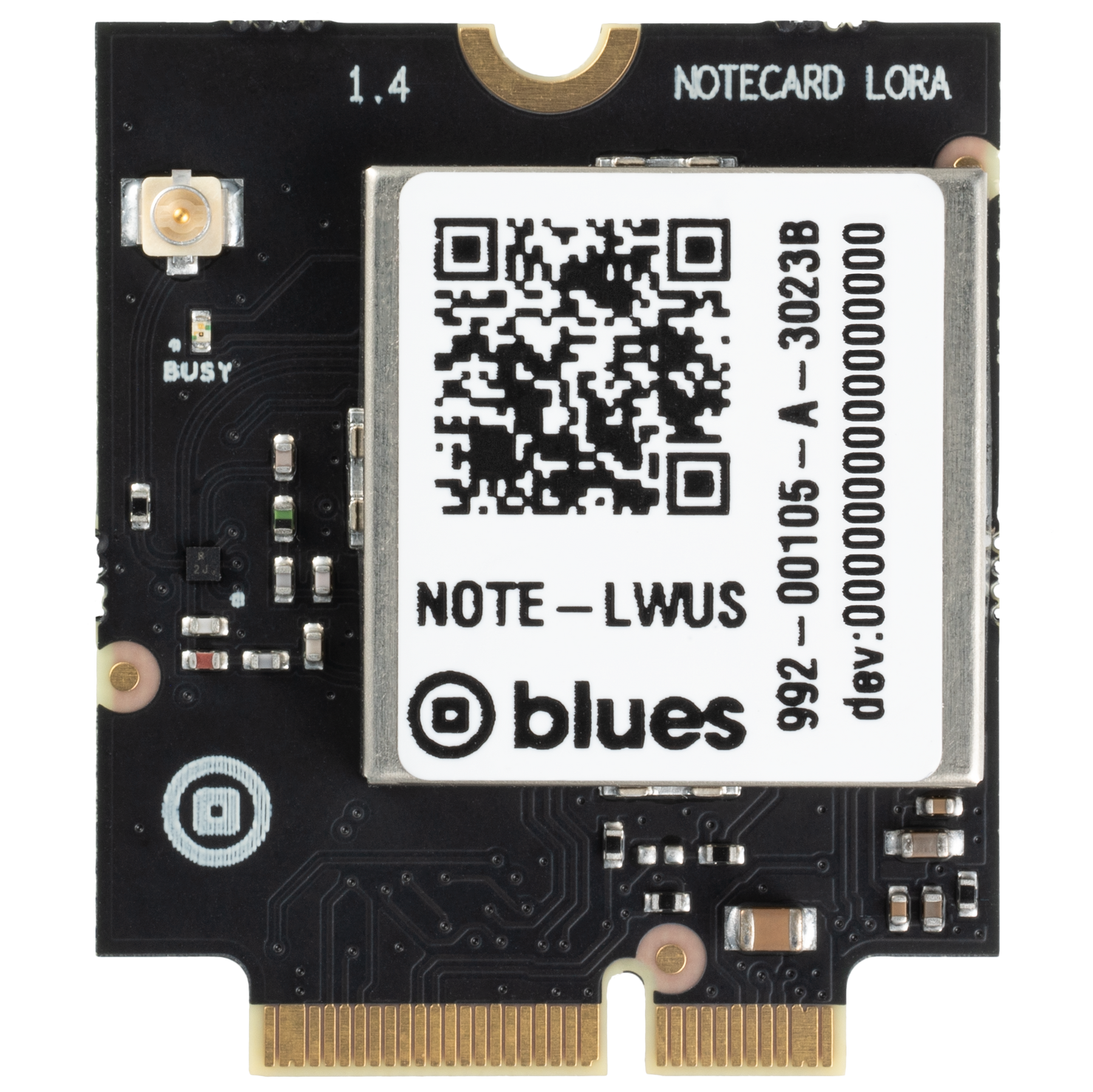
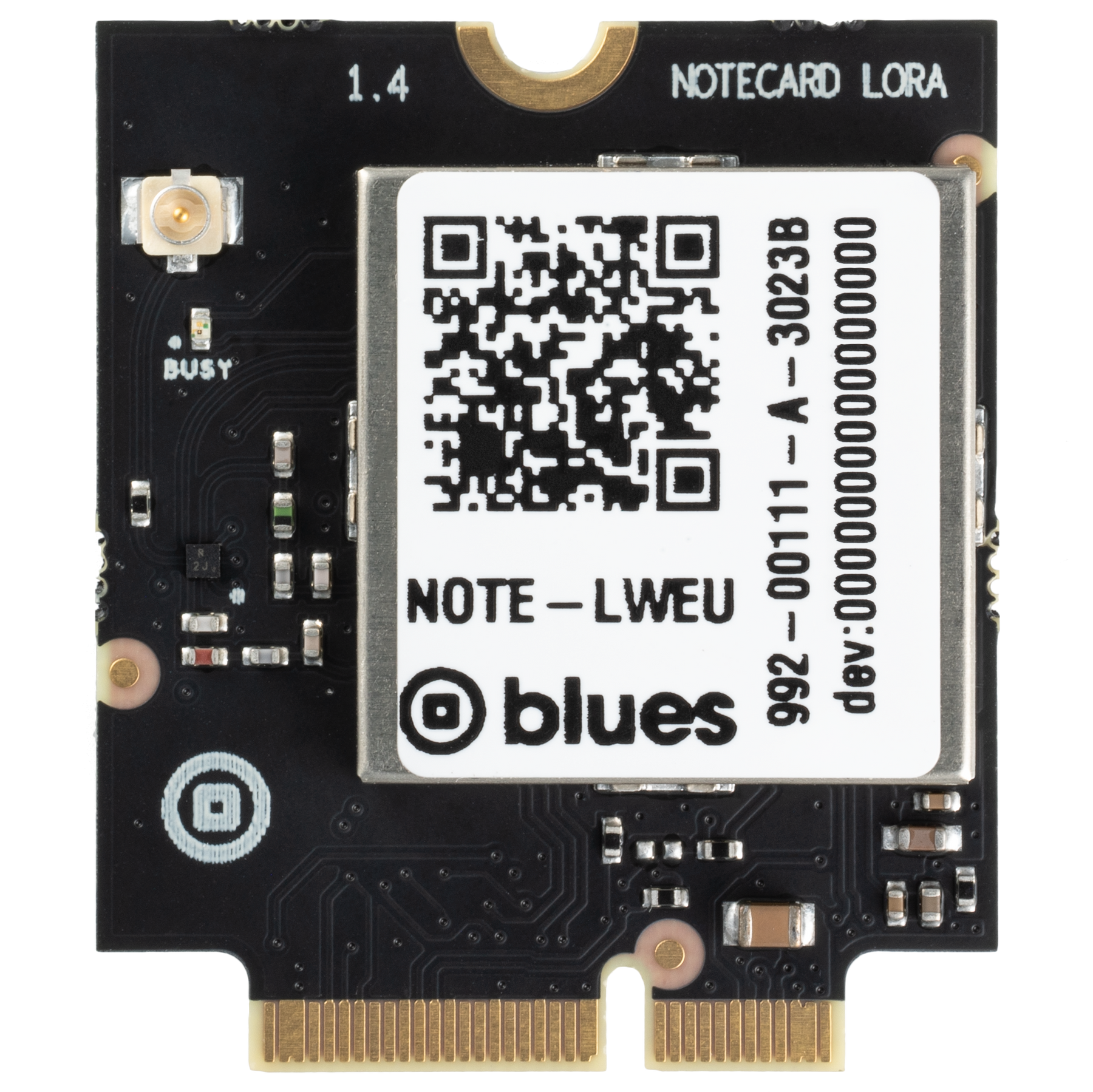
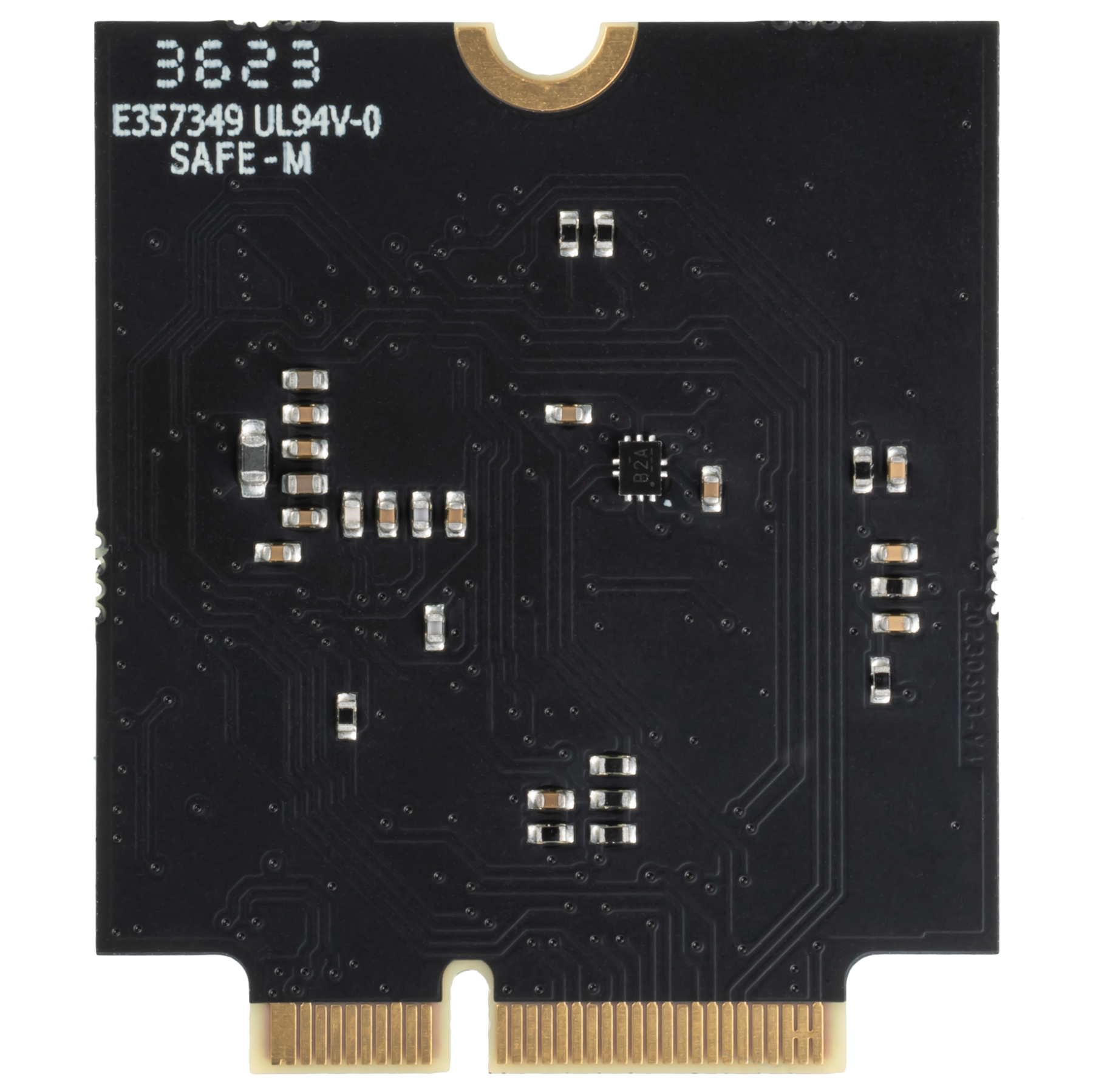
Notecard for LoRa (2.1)—Same ease of use. Same m.2 connector. 100% more castellated edges—enabling product builders to embed Notecard directly onto a PCB for volume production. Notecard is a device-to-cloud data pump that reduces the complexity of building connected solutions with LoRa/LoRaWAN. As an embeddable system on module (SoM), Notecard can be used with any microcontroller for both greenfield and retrofit projects using your own design, or one of our custom designed Notecarriers. |
Notecard for LoRa is a lower-cost version of cellular-based Notecards for LoRa only, and is API-compatible with cellular- and WiFi-based Notecards (with some exceptions). Notecard for LoRa now has the option of being on a single-sided PCB and includes castellated edges. This enables developers to use Notecard in any Notecarrier for a POC or Prototype, and embed the module directly into a commercial product for easy volume production. Notecard for LoRa supports The Things Network gateways. Included is a flexible Molex 211140 antenna that supports both 868 MHz (Europe) and 915 MHz (United States) frequencies.
With just two lines of code you can send data to the cloud in minutes, no complex device registration or provisioning required. With a powerful JSON-based API, you can program Notecard over USB, or control it from your preferred microcontroller or single-board computer using one of our open-source firmware libraries. Connect from your preferred host to Notecard using Serial or I2C.
Notecard is designed to work with a cloud service for ingesting and processing device data. Notehub provides secure device connectivity, project and fleet management, and simple routing to 3rd party cloud services.
For prototyping, Notecard is meant to be used with a Notecarrier. Notecard for LoRa is compatible with all Notecarriers except Notecarrier XS. See the Notecarriers section for more details or get started with a Blues Starter Kit.
Ordering Note: Notecards purchased from the Blues Shop will ship with a Developer Firmware Release version pre-installed. If you require a Long-Term Support (LTS) version for a Shop order, please contact Sales for assistance.
Available Variations
-
United States: Castellated - 915 MHz (Datasheet)
-
Europe: Castellated - 868 MHz (Datasheet)
-
United States v1.4 - 915 MHz (Datasheet)
-
Europe v1.4 - 868 MHz (Datasheet)
Key Notecard Specs
-
Onboard ultra-low-power STM32WL LoRa MCU.
-
Compatible with LoRaWAN and The Things Network.
Additional Resources

This is a 100mm long 4-conductor cable with 1mm JST termination. It’s designed to connect Qwiic-enabled components together for I2C communication.
Each Qwiic cable's wires have been color coded to red (Power), black (GND), blue (SDA), and yellow (SCL).
Additional Resources


|
Notecarriers are companion development boards and designed to make it easy to prototype and deploy IoT solutions with the Notecard. Notecarrier XS is the companion Notecarrier to Starnote and Notecard, providing a platform for prototyping with Satellite failover. Notecarrier XS includes two M.2 Key E connector sockets and internal connectivity for Notecard to Starnote communication. Notecarrier XS also includes JST connectors for LiPo battery and charging support, as well as Qwiic and ESLOV ports for connecting Notecard to host MCUs over I2C. |
Included is Flexible LTE, Wi-Fi, or GPS/GNSS Antenna. If you require a dual LTE/GPS antenna, we recommend adding on the flexible LTE+GPS antenna (or you may choose to use your own preferred antenna).
Notecarriers require a Notecard to function. The Notecarrier XS is compatible with Notecard Cellular, Notecard Cellular (Legacy), Notecard Cell+WiFi, and Notecard WiFi. See the Notecards section for more details or get started with a Starnote Starter Kit.
Key Notecarrier XS Specs
-
Notecard M.2 Key E connector socket and mounting screw receptacle.
-
Starnote M.2 Key E connector socket and mounting screw receptacle.
-
USB-C port to power Notecarrier and provide a USB Serial command interface to Notecard.
-
External Nano-SIM slot for use of an optional secondary SIM.
-
2-Pin JST PH connectors for LiPo battery power and charging support.
-
1 Qwiic/StemmaQT I2C port for attaching external peripherals.
-
1 ESLOV port for attaching the Notecard to Arduino MKR or PRO boards.
Additional Resources


|
Notecarriers are companion development boards designed to make it easy to prototype and deploy IoT solutions with Notecard. Notecarrier CX is a Notecarrier with a pre-soldered and wired STM32L433 MCU (the same part used in Cygnet) along with an onboard JTAG debug jack, RST and BOOT buttons for bootloader access. Notecarrier CX also provides built-in support for Notecard-based Outboard Firmware Update. |
Included is a flexible Molex 209142 antenna for use with either LTE or GPS. If you require a dual LTE/GPS antenna, we recommend adding on the flexible LTE+GPS antenna (or you may choose to use your own preferred antenna). Loose header pins are also included.
Notecarriers require a Notecard to function. Notecarrier CX is compatible with Notecard Cellular, Notecard Cell+WiFi, Notecard for Skylo, Notecard WiFi, and Notecard for LoRa.
Key Notecarrier CX Specs
-
Onboard STM32L433CCU6 Host MCU (80 MHz Clock, 256 KB Flash, 64KB of SRAM)
-
Onboard RST and BOOT buttons for onboard MCU ROM bootloader access and power reset
-
Built-in support for Notecard-based Outboard Firmware Update
-
Notecard M.2 Key E connector socket and mounting screw standoff
-
USB-C port to power Notecarrier and provide a USB Serial command interface to Notecard
-
DIP switch for toggling USB-C access to Notecard or Onboard STM32 Host
-
Castellated Edges for easy of pick-and-place installation in an end product
-
External Nano-SIM slot for use of an optional secondary SIM
-
1-Pin JST PH connectors for LiPo battery power and charging support
-
1 Qwiic/StemmaQT I2C port for attaching external peripherals
-
JTAG (SWD capable) debug jack
Additional Resources


|
Introducing the new Notecard for Skylo, the only device available on the market offering Cellular, WiFi, and Satellite connectivity in a single module with data included and no monthly fees. Notecard for Skylo is an affordable all-in-one solution that includes cellular data, as well as satellite uplink and downlink data with the cost of the device, in partnership with Skylo. Notecard for Skylo offers a JSON-based programming interface consistent with Notecard. |
Notecard for Skylo is offered in a single SKU, with LTE Cat M, 2G, 3G and GPRS global cellular coverage, without requiring a second module in a new or existing design. If you use Narrowband today, this Notecard provides an upgraded capability with Satellite failover. If you require LTE Cat 1 bis or LTE Cat 1 global or regional support, the Starnote accessory is the recommended choice.
Notecard for Skylo is compatible with all Notecarriers. See the Notecarriers section for more details.
Key Notecard for Skylo Specs
- Cellular, WiFi, and Satellite connectivity in a single Notecard form factor
- Factory-installed ECC P-384 certificate, provisioned at chip manufacture
- MAIN u.FL connector for both cellular and satellite communications
- Onboard Antenna for WiFi
- Cellular, GPS, Satellite antenna included
- NTN-capable satellite modem with zero-touch configuration
- Bundled with 10KB of satellite data from Skylo — enough to send 1 message a day for 6 months. Additional data is priced $0.00075/byte, with a minimum of 50 bytes per transmitted or received satellite data packet, billed monthly in arrears
- No satellite provider subscriptions, fees, or monthly minimums apply
Additional Resources


|
Notecarriers are companion development boards designed to make it easy to prototype and deploy IoT solutions with the Notecard. Notecarrier XM is a small form-factor Notecarrier, only slightly larger than the Notecard itself. Notecarrier XM is our most minimal Notecarrier, containing essential circuitry for Notecard and a USB port for USB Serial access to the Notecard. Notecarrier XM was designed as a low-cost companion to Notecard LoRa and Notecard WiFi, though it can be used with any Notecard. Unlike other Notecarriers, Notecarrier XM does not include an external SIM slot. |
Included is a flexible Molex 209142 antenna for use with either LTE or GPS. If you require a dual LTE/GPS antenna, we recommend adding on the flexible LTE+GPS antenna (or you may choose to use your own preferred antenna). Our loose header pins are also included.
Notecarriers require a Notecard to function. Notecarrier XM is compatible with all available Notecards. See the Notecards section for more details or get started with a Blues Starter Kit.
Key Notecarrier XM Specs
-
Notecard M.2 Key E connector socket and mounting screw receptacle.
-
USB C port to power Notecarrier and provide a USB Serial command interface to Notecard.
-
DIP switch for using active or passive GPS/GNSS antenna.
Additional Resources


Cygnet is a Feather-compatible STM32-based MCU, and a lower-cost alternative to our popular Swan MCU. Like Swan, Cygnet is offered in a Feather standard form factor and uses a STM32L4 part while still providing plenty of flash and RAM to run the majority of your Notecard-powered applications.
The board has three independent power options – USB, battery, or line power – and provides a software-switchable 2 Amp regulator for powering external sensors. When operating in its low-power operating mode, the entire Cygnet board draws only 4uA while retaining all of its memory, making it ideal for battery-powered devices.
Cygnet features support for C/C++ and Arduino, and includes a CORTEX Debug connector, enabling the use of debugging frameworks and tooling such as STLink, JLink, OpenOCD, GDB and more. All of which enable both native and custom integrations into advanced development environments such as Visual Studio Code, IAR, and STM32CUBEIDE.
Be sure to add an STLNK-V3MINIE to get that step-debugging goodness!
Key Specs
-
Ultra low-power Arm Cortex-M4 core clocked at 80Mhz.
-
STM32L433-based microcontroller.
-
256KB of flash and 64KB of RAM.
-
Feather-compatible GPIO & Bus pins including:
-
RX & TX
-
SDA & SCL
-
SCK/MOSI/MISO
-
I2C
-
-
Qwiic/StemmaQT connector
-
USB C connector
- Pre-soldered header pins
-
Support for Notecard Outboard Firmware Update.
Additional Resources


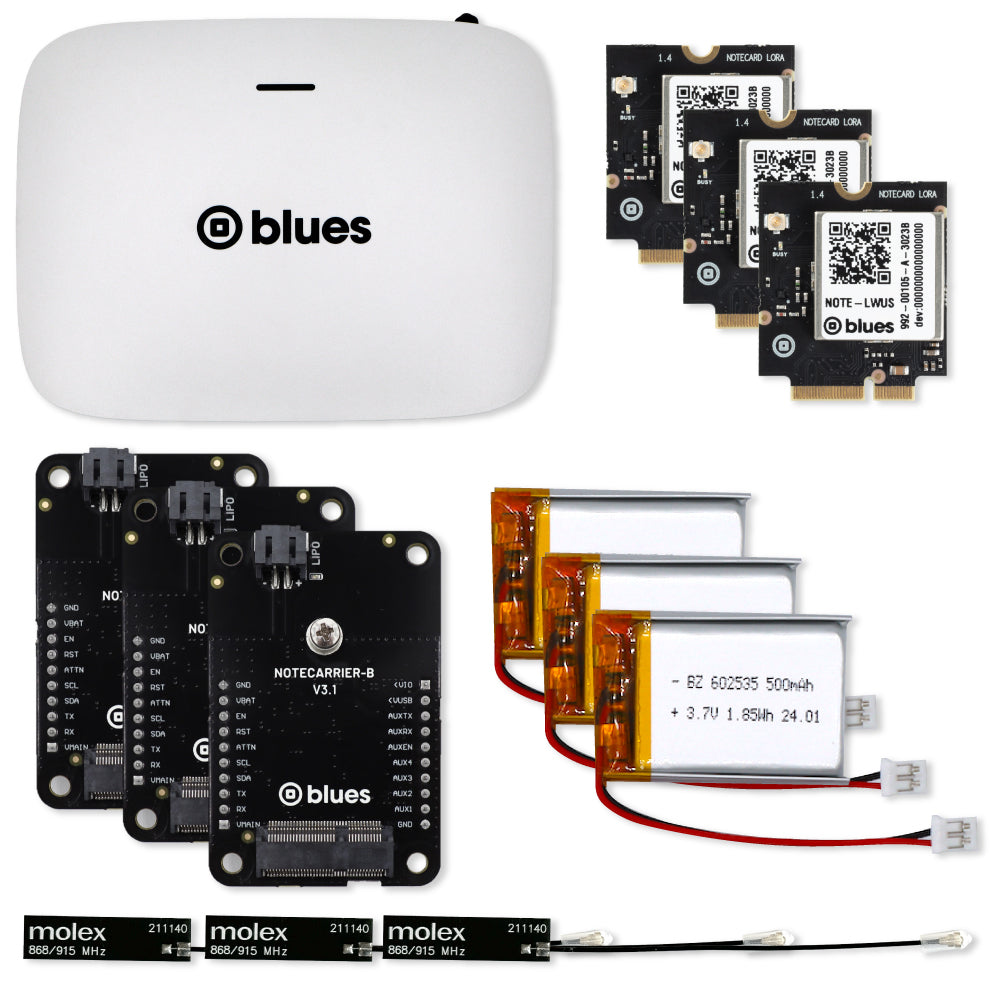
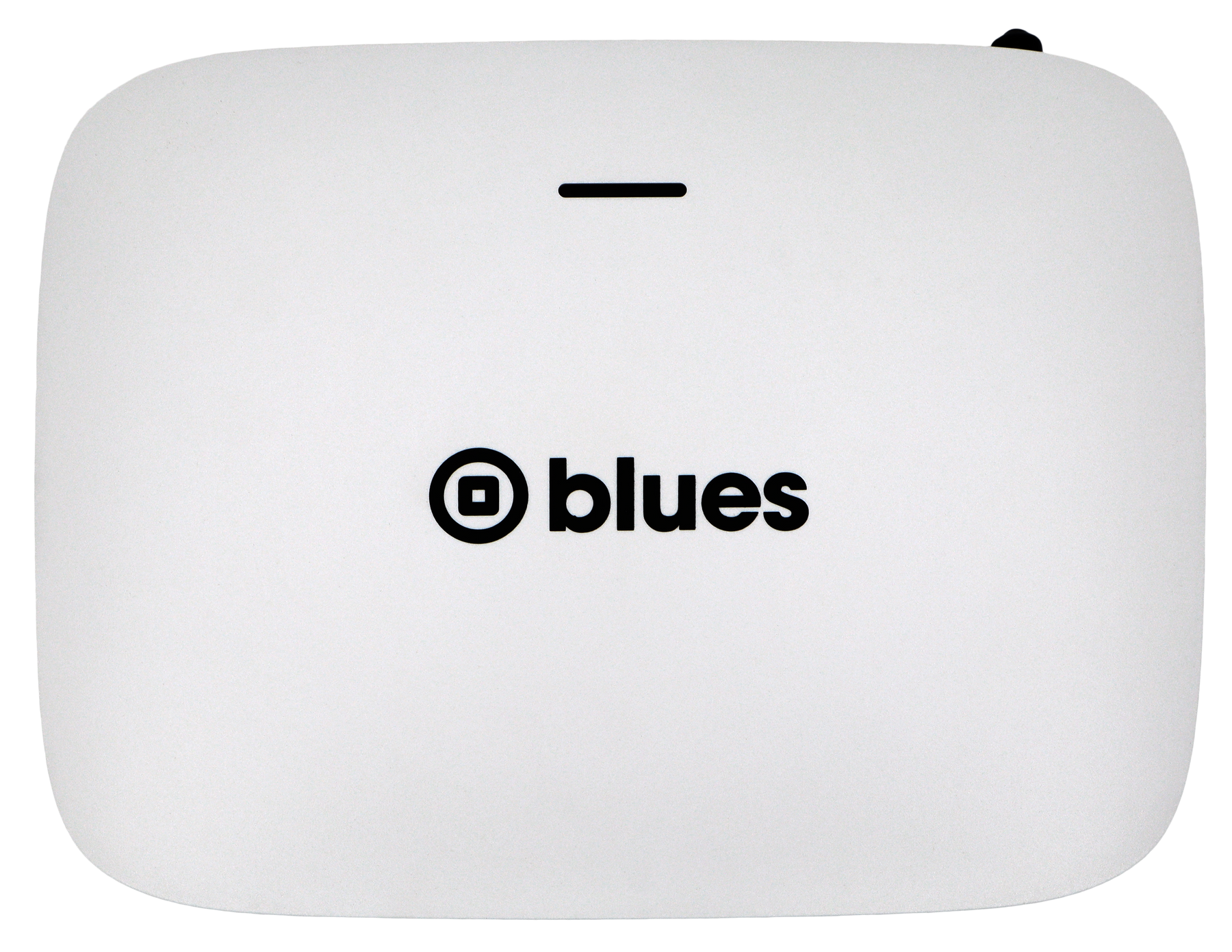
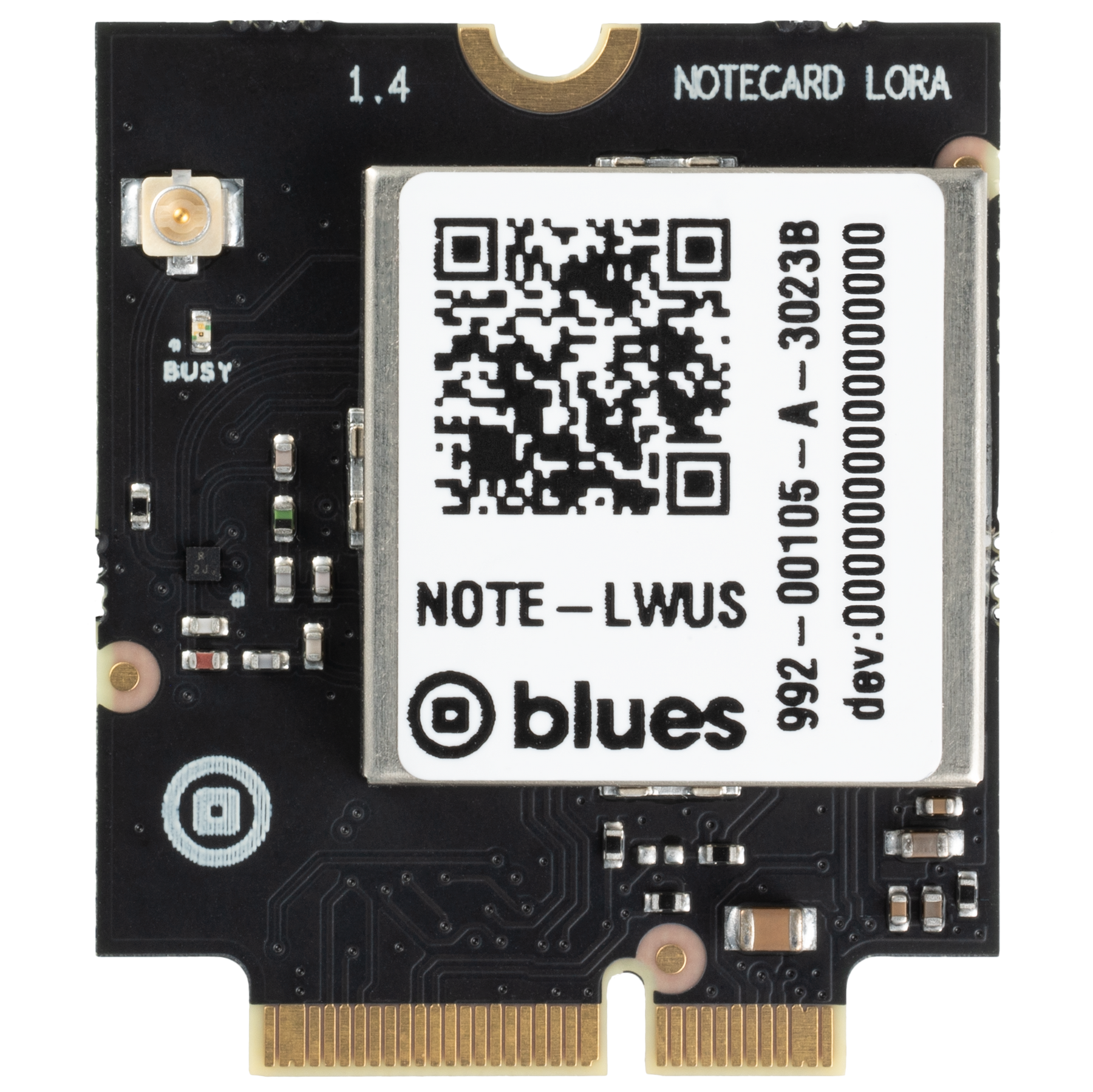
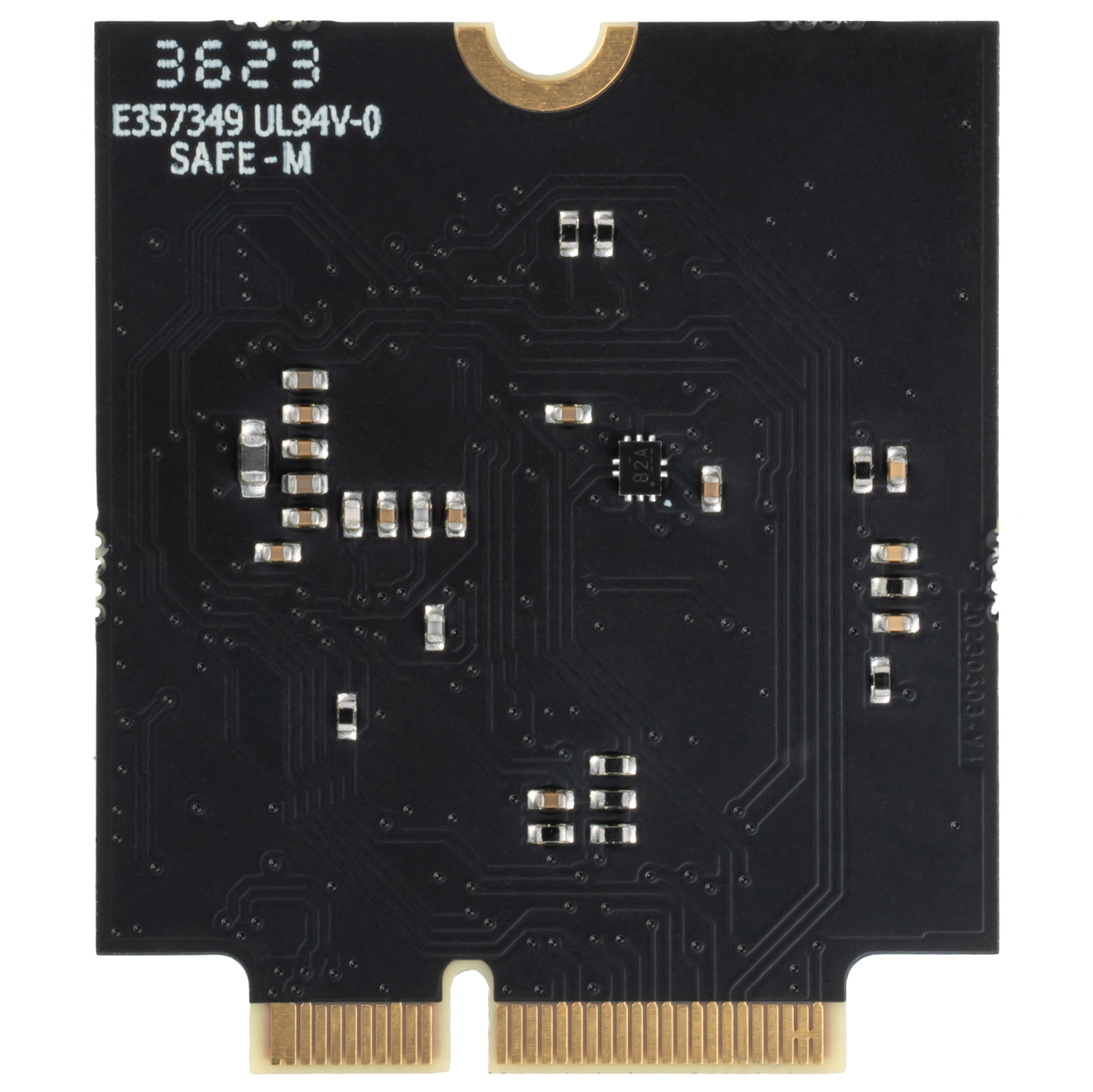
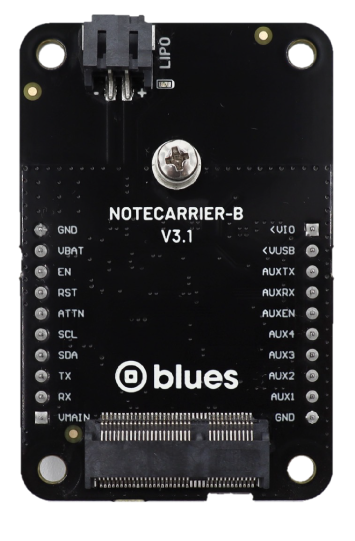
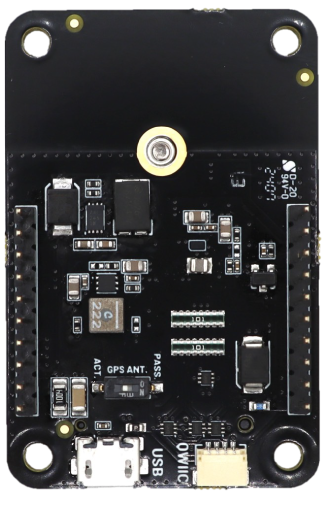

The Blues Starter Kit for LoRaWAN contains everything you need to start building LoRa and LoRaWAN solutions with Notecard and Notehub. Start with a WisGate Edge Lite 2 LoRaWAN Gateway (pre-configured on the Blues Things Stack tenant for out-of-the-box connectivity) and connect it to local WiFi or Ethernet. Then, connect the three included Notecard LoRa devices to the included Notecarriers, place a LoRa antenna on each, and power them up with a LiPo battery. Use the Notecard API to configure the devices, and within minutes, you’ll have LoRa devices talking to Notehub!
Kit Contents
- WisGate Edge Lite 2 LoRaWAN Gateway
- 3x Notecard LoRa
- 3x Notecarrier B
- 3x LiPo Battery
- 3x LoRa Antenna
Key Notecard LoRa Specs
- Onboard ultra-low-power STM32WL LoRa MCU.
-
Compatible with LoRaWAN and The Things Network.
Notecard for LoRa is a lower-cost version of cellular-based Notecards for LoRa only, and is API-compatible with cellular- and WiFi-based Notecards (with some exceptions). Notecard LoRa works with gateways provisioned on The Things Stack. Included is a flexible Molex 211140 antenna that supports both 868 MHz (Europe) and 915 MHz (United States) frequencies.
With just two lines of code, you can send data to the cloud in minutes, no complex device registration or provisioning required. With a powerful JSON-based API, you can program Notecard over USB, or control it from your preferred microcontroller or single-board computer using one of our open-source firmware libraries. Connect from your preferred host to Notecard using Serial or I2C.
Notecard is designed to work with a cloud service for ingesting and processing device data. Notehub provides secure device connectivity, project and fleet management, and simple routing to third-party cloud services.
Available Variants
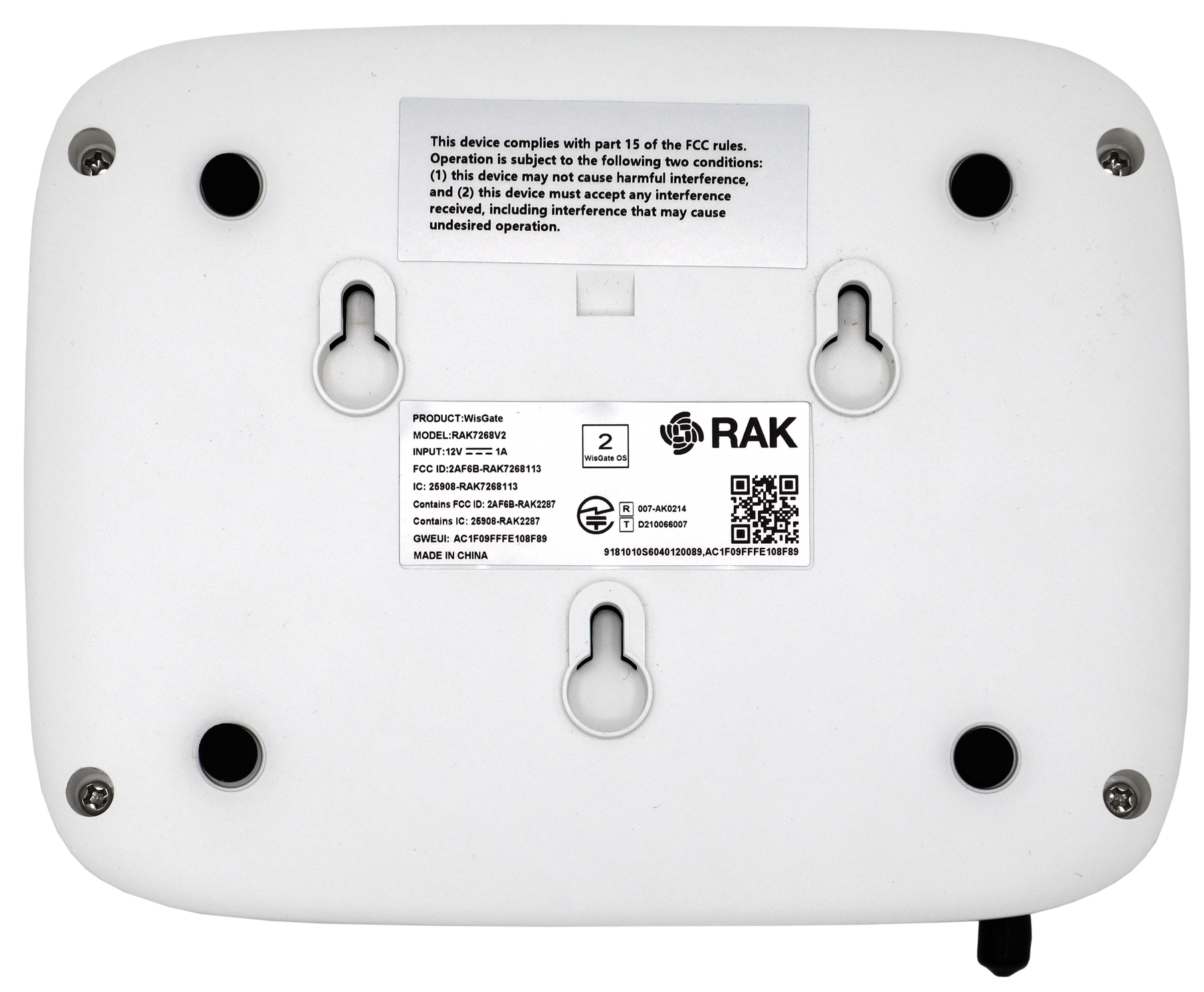
The Blues WisGate Edge Lite 2 is a full 8-channel indoor gateway with full LoRaWAN Stack Support (v1.0.3), Built-in Ethernet and WiFi connectivity. The gateways are pre-provisioned on the Blues Things Stack Tenant to enable out-of-the-box connectivity for Notecard LoRa. See the Blues WisGate Edge Lite 2 product page or RAKWireless documentation for additional details.
Notecarrier B is a small form-factor Notecarrier, only slightly larger than Notecard itself. Unlike other Notecarriers, Notecarrier B does not include an external SIM slot. It includes a Qwiic port for connecting I2C peripherals.
The flexible LoRa antenna has a supported frequency range of 868-870 MHz and 902-928 MHz with a u.FL terminator.
Additional Resources

Add wireless connectivity to your micro PLC projects with Blues Notecard! The Wireless for OPTA adds Cellular and WiFi connectivity, powered by Notecard and Notehub.
The Wireless for OPTA Expansion Module can quickly add Cellular and WiFi capability to any Opta PLC inexpensively with a pluggable module that uses the standard AUX expansion port on an Arduino® Opta® or a Finder OPTA®, and can be daisy-chained with up to 8 other Expansion modules. The Opta communicates with the Expansion and its Notecard via I2C and can leverage the Blues' note-arduino library for configuring Notecard and its backhaul.
Wireless for OPTA Key Specs
- 12 to 24 V Supply Voltage
- Cellular and WiFi communication powered by Notecard (LTE Cat 1 North America or LTE Cat 1 EMEA) including 500 MB of data and 10-years of service with no activation fees or monthly commitments.
- Network backhaul via Blues Notehub cloud service, with support for AWS, Azure, GCP and dozens of other cloud services.
- Communication test button and Neopixel for connectivity status.
- USB C port for direct Notecard programming and debugging.
- External SIM slot for bringing your own Cellular connectivity.
- Power outage detection and notification via an integrated Lithium-Ion Capacitor.
Available Variants
"Arduino" and "Opta" are registered trademarks of Arduino SA.
Finder OPTA® is a registered trademark of Finder S.p.A.