Notecarrier F (v1.3)

Notecarrier F (v1.3)

Available by quote only

Notecarrier F isn't going anywhere — only v1.3 is moving to a 250-unit MOQ on May 1st, 2026 as we redesign the product. Most customers won't be affected, but if you've deployed around v1.3, we'll keep producing it at that MOQ. Questions? Contact support@blues.com.

View Product Details

Notecarriers are companion development boards designed to make it easy to prototype and deploy IoT solutions with the Notecard.

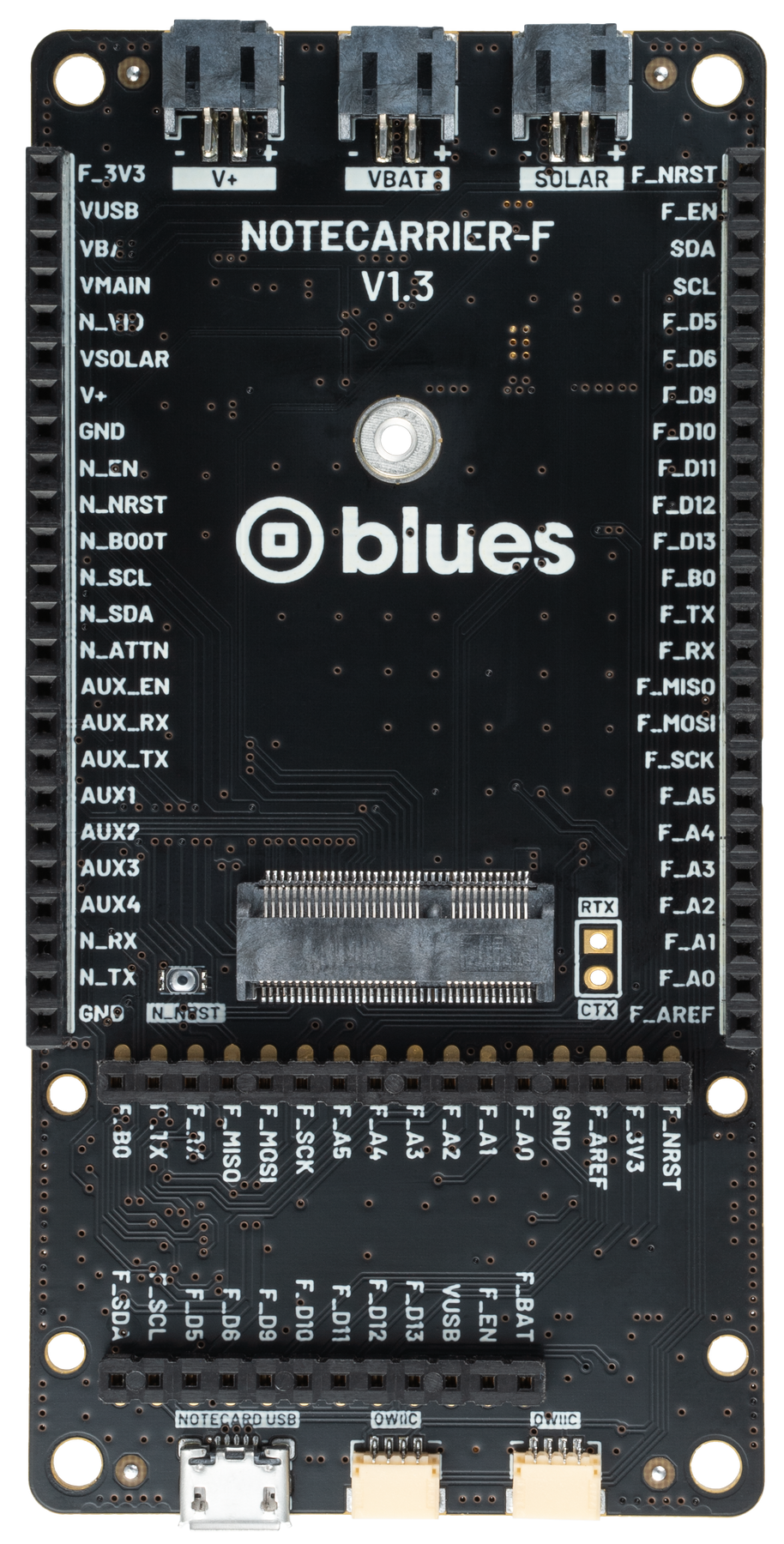
Notecarrier F (v1.3) is a carrier board designed for quick prototyping with Adafruit Feather-based microcontrollers. It can be used with any Feather-compatible device and includes Qwiic ports for connecting I2C peripherals.

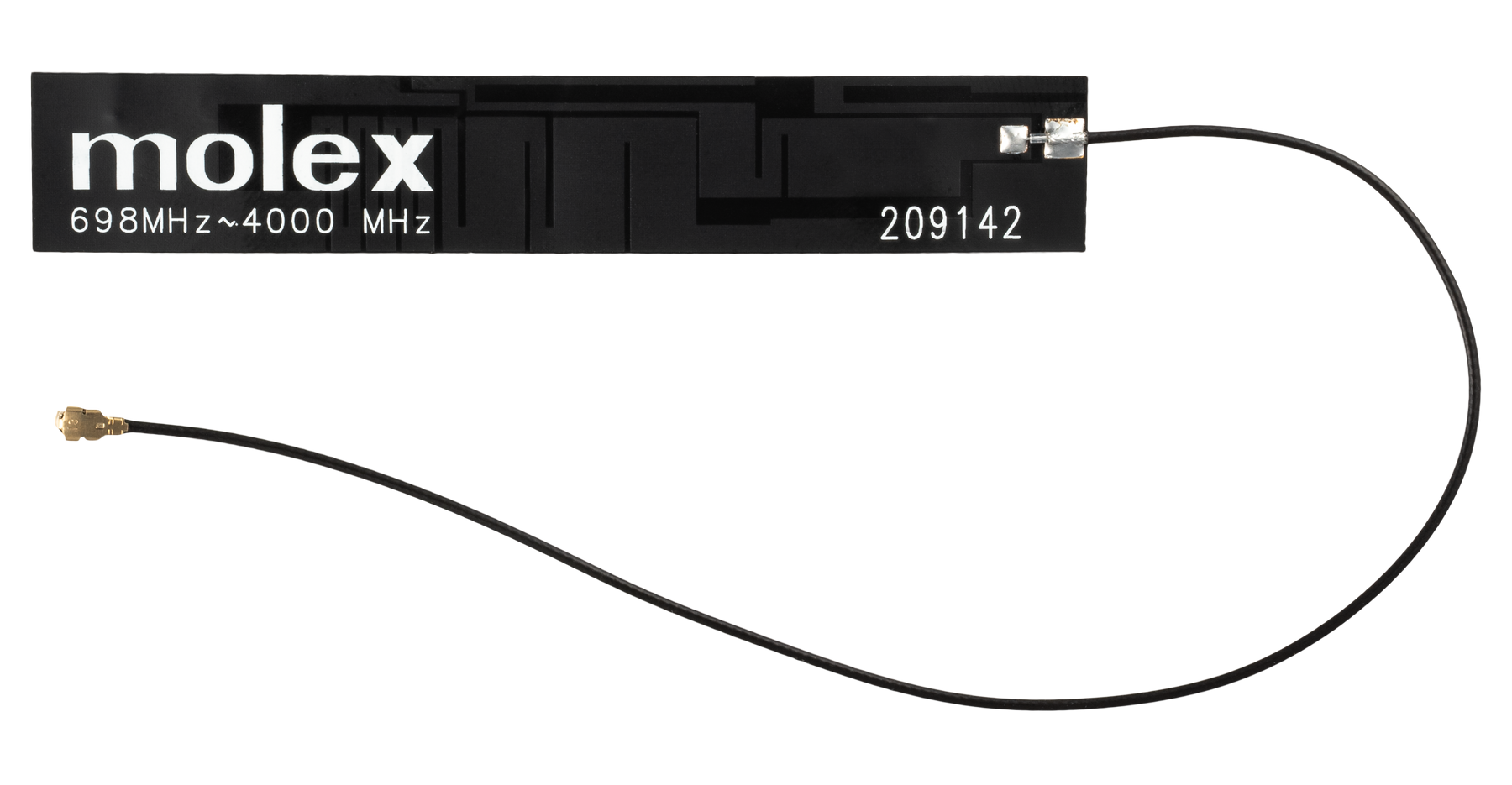
Included is a flexible Molex 209142 antenna for use with either LTE or GPS. If you require a dual LTE/GPS antenna, we recommend adding on the flexible LTE+GPS antenna (or you may choose to use your own preferred antenna).

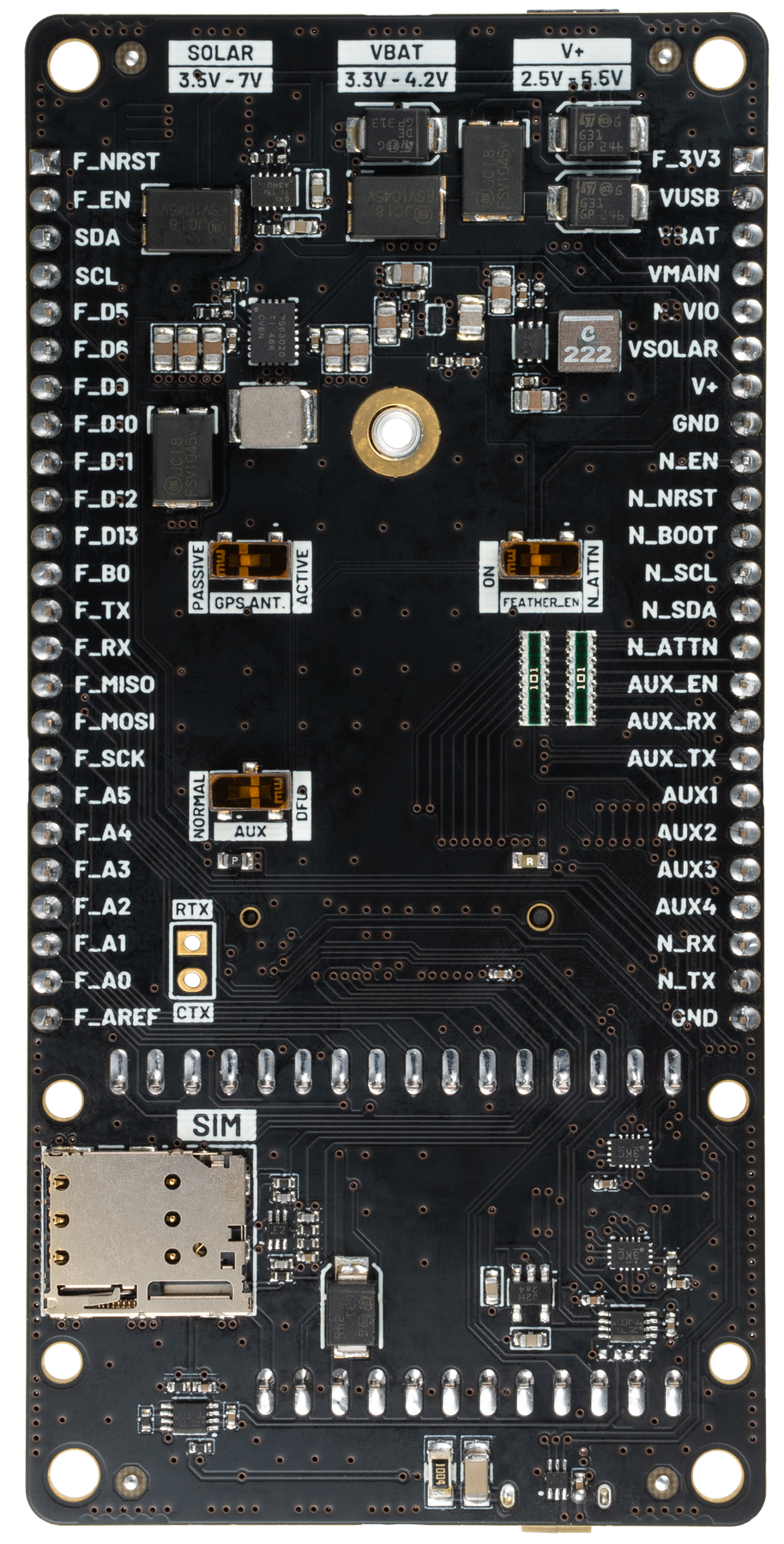
Notecarrier F (v1.3) also features a switch to enable Notecard Outboard Firmware Update. This capability supports "over the air" firmware updates and does not involve firmware running on the host MCU directly.

Notecarriers require a Notecard to function. Notecarrier F is compatible with all available Notecards. See the Notecards section for more details or get started with a Blues Starter Kit.

Available Variations

  • Notecarrier F (v1.3) with Loose Header Pins (Datasheet)
    • CPN: 992-00063
  • Notecarrier F (v1.3) with pre-soldered headers (Datasheet)
    • CPN: 992-00018

Key Notecarrier F Specs

  • Adafruit Feather-compatible header socket.
  • Breadboard-compatible Notecard 13-pin header.
  • Breadboard-compatible 24-pin Adafruit Feather breakout header.
  • Notecard M.2 Key E connector socket and mounting screw receptacle.
  • Micro USB port to power Notecarrier and provide a USB Serial command interface to Notecard.
  • External Nano-SIM slot for use of an optional secondary SIM.
  • 2 Qwiic/StemmaQT I2C ports for attaching external peripherals.
  • JST PH connector for a LiPo battery.
  • JST PH connector for a solar panel.
  • JST PH connector for V+.
  • JST SH 3.3V I2C connector.
  • Battery slide switch to disconnect battery when not in use.
  • Front and back pin labels.

Additional Resources

You may also like


Recently viewed